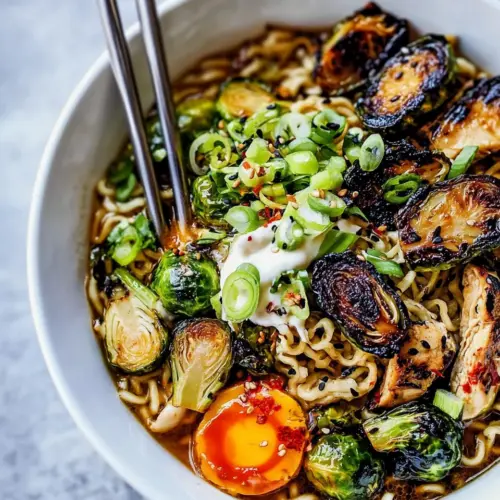
30 Minute Chicken Ramen with Miso Roasted Brussels Sprouts and Ginger Butter
30 Minute Chicken Ramen with Miso Roasted Brussels Sprouts and Ginger Butter combines caramelized miso roasted sprouts, tender shredded chicken, and a fragrant ginger butter finish for a creamy yet crispy, easy weeknight dinner. The broth is savory and bright, while soft boiled eggs and toasted sesame seeds add texture and richness. Make it for a fast, comforting bowl that tastes like effortful cooking in half the time.
Equipment
- Large Baking Sheet
- Large soup pot
- Small Pan
- Two forks
Ingredients
- 1 pound brussels sprouts ends trimmed + quartered Trimmed and quartered to ensure even roasting and tender centers; adds a caramelized, slightly bitter crunch that balances the ramen's richness. Roast until edges are brown to develop savory depth and contrast with the broth. Can be tossed with miso and oils to create a glazed vegetable component that complements the chicken.
- 2 tablespoons olive oil Used to coat the brussels sprouts for roasting and to sauté aromatics; provides a neutral, fruity fat that helps crisp the vegetables without overpowering other flavors. Heats evenly for blistering and browning. Can be combined with miso paste for a glossy finish.
- 2 tablespoons white miso paste Mixed with olive oil to make a savory glaze for the brussels sprouts and to infuse umami into the dish; contributes a fermented, salty depth that amplifies broth and roasted vegetable flavors. Dissolves easily when warmed and helps create a sticky coating on roasted edges. Can be adjusted to taste for saltiness.
- pepper to taste Sprinkled to taste for seasoning during roasting and finishing to balance sweetness and richness; allows control over the final flavor intensity. Enhances other aromatics and prevents the dish from tasting flat. Use sparingly if broth or miso is already salty.
- 2 tablespoons sesame oil Added to the broth and vegetable glaze for a toasted, nutty aroma that complements sesame seeds and Asian flavors. Used as finishing oil and for sautéing mushrooms for depth and shine. Small amounts pack a strong flavor that ties the ramen components together.
- 2 teaspoons fresh ginger grated Grated fresh to release bright, spicy, citrusy notes that lift the broth and roast vegetables; provides warmth without heat and balances savory miso. Added early to infuse the cooking oil and later to freshen the soup before serving. Use freshly grated for the most vibrant aroma.
- 2 cloves garlic minced or grated Minced or grated to build savory foundation in the broth and to flavor the vegetable glaze; contributes pungent, aromatic complexity that deepens savory notes. Sauté briefly to mellow raw bite and release sweetness. Pair with ginger for classic flavor synergy.
- 6 cups low sodium chicken broth or veggie broth Simmered as the liquid base to create a savory, low-sodium soup that carries the aromatics and noodles; acts as the backbone of the ramen, providing body and warmth. Low sodium option allows control over final seasoning with miso and soy. Bring to a gentle simmer to meld flavors without reducing too much.
- 4 ounces shiitake mushrooms OR 2 cups button mushrooms sliced/chopped Sliced or chopped and sautéed to add meaty umami and earthy texture to the bowl; mushrooms absorb broth flavors and enhance savory richness. Shiitake provides a pronounced woodsy character while button mushrooms deliver mildness. Cook until browned to concentrate flavor.
- 2 tablespoons low sodium soy sauce Stirred into the broth to boost salty, savory, and slightly sweet umami that complements miso and chicken. Low sodium option preserves control over overall salt levels. Added near the end to adjust seasoning and deepen taste without overwhelming other elements.
- 1 tablespoon sambal oelek Whisked into the broth or glaze to introduce bright chile heat and tangy fermented flavor; provides controlled spice and complexity. Dissolves easily and can be adjusted for desired heat level. Use sparingly and taste as you go to balance with miso and soy.
- 1/2 -1 pound boneless skinless chicken tenders or small chicken thighs Sliced or cubed as the primary protein, simmered in the broth or seared for caramelized edges; supplies tender, juicy meat that makes the ramen substantial. Choice between tenders and thighs affects richness and cook time. Ensure cooked through to safe internal temperature before serving.
- 8 ounces frozen spinach thawed Thawed and stirred into the broth or briefly wilted for vibrant color, added nutrition, and a silky texture; spinach blends into the soup and absorbs flavors without overpowering. Frozen option offers convenience and immediate use. Squeeze out excess water to avoid diluting the broth.
- 4 packs Ramen noodles seasoning packets discarded Cooked briefly and drained to provide the springy noodle texture expected in ramen while discarding the seasoning for recipe-specific broth seasoning. Packs contain alkaline noodles that hold up well in hot broth. Rinse if needed to separate strands and prevent clumping.
- 4 soft boiled eggs Soft boiled and halved to deliver a creamy, jammy yolk that enriches the broth when pierced; provides a rich contrast to savory, salty components. Prepared to yolk consistency preference and placed on top as a finishing garnish. Season lightly with salt or soy before serving.
- toasted sesame seeds for serving Toasted and sprinkled over each bowl to add nutty crunch and a visual finish that echoes the sesame oil flavor. Small seeds provide textural contrast and a toasty aroma. Use sparingly to accent without overwhelming other garnishes.
- sliced carrots green onions, jalapenos + fresno chilies, basil, cilantro + limes, for serving Sliced and arranged as fresh garnishes to introduce crisp texture, brightness, herbaceous lift, and optional heat; provides customizable topping choices for diners. Lime wedges squeeze over the bowl to add acidity that lifts the broth. Combine different garnishes for color and balanced flavor.
- 4 tablespoons salted butter Added in dollops to the ginger butter mixture to create a rich, savory finish that melts into the hot broth for silkiness and depth. Salted butter contributes creamy mouthfeel and helps carry fat-soluble flavors. Melt gently with ginger for an aromatic finishing touch.
- 1 tablespoon fresh ginger grated Grated fresh and blended into the butter to impart sharp, bright spicy notes that cut through richness and enliven the soup; acts as a key aromatic in the finishing butter. Distributes flavor evenly when softened into the butter. Use fresh root ginger for maximum fragrance.
Instructions
- Preheat oven to 400 degrees F.: When the oven heats you will begin to smell warmth and dry heat, which primes the space for caramelization. This step creates the right environment so the brussels sprouts crisp rather than steam. A common mistake is not giving the oven enough time to reach temperature, which results in pale, soft sprouts. Make sure the rack is in the center and the oven reads steady before you roast.
- On a large baking sheet, toss together the brussels sprouts, olive oil, miso paste and pepper until the brussels sprouts are well coated. Spread the sprouts in an even layer and roast for 20-25 minutes or until the brussels sprouts are lightly charred and caramelized. I like to toss my sprouts around halfway through cooking. Depending on how you cut your brussels sprouts, they may cook quicker or slower.: The coating should glisten and cling to each quartered sprout, releasing a faint miso aroma when you toss. Properly coated sprouts brown more evenly, and you should hear the oil-slicked surface sizzle as they hit the hot pan. Avoid overcrowding the sheet, as crowded sprouts steam and lose crisp edges, which dulls flavor.
- Place a large soup pot over medium heat and add the sesame oil, ginger and garlic. Cook 30 seconds to 1 minute and then slowly pour in the chicken broth. Add the mushrooms, soy sauce and sambal oelek. Bring the soup to a boil, add the chicken and then simmer for 20 minutes or until the chicken is cooked through. Remove the chicken from the soup and add the spinach. Shred with two forks or your hands. Return the chicken to the soup along with the ramen noodle. Cook until the ramen is just soft, about 2 minutes.: As they roast the kitchen fills with a nutty, sweet scent, and you will see edges turn golden to deep brown. I like to toss them halfway so each side gets contact with the hot pan. If you skip tossing, one side may burn while the other remains pale, so check at about 12 minutes to prevent uneven charring.
- To make the ginger butter, combine the butter and ginger in a small pan set over medium heat, cook until the butter is melted and the ginger is fragrant.: The moment the sesame oil warms you will smell its toasted nuttiness, which creates a fragrant base. Cook briefly so the ginger softens and the garlic sweetens without browning. If you let them brown they turn bitter, so keep the heat moderate and stir constantly for the best aromatic lift.
- To serve, divide the soup among the bowls. Top with soft boiled eggs and sprinkle the eggs with pepper. Add the sesame seeds and roasted brussels sprouts. Drizzle the bowl with ginger butter. Enjoy hot!: Pouring slowly tempers the sizzling and helps blend the aromatics into the liquid. You should hear a soft simmer start as the broth meets the pot, releasing a steam that carries the aroma of ginger and garlic . Pour too fast and you risk splattering or shocking the oil, which can make flavors feel disjointed instead of cohesive.
- Add the mushrooms, soy sauce and sambal oelek.: The mushrooms will release their earthy perfume, and the soy and sambal will deepen and layer the stock. As the broth simmers, tiny bubbles should form along the edges, and the color will deepen. Avoid dumping all seasonings at once; taste as it simmers so you can adjust heat and salt without overdoing one element.
- Bring the soup to a boil, add the chicken and then simmer for 20 minutes or until the chicken is cooked through.: A gentle boil followed by a simmer extracts flavor and keeps the chicken tender. You should see the meat change color and become opaque, and the broth will carry faint wisps of steam with savory notes. Over boiling can toughen the meat, so reduce to a steady simmer to preserve juiciness.
- Remove the chicken from the soup and add the spinach.: The hot broth wilts the spinach almost instantly, turning it a deep green and adding soft texture. Removing and shredding the chicken off heat keeps it from breaking down in the pot. A usual pitfall is leaving whole chicken in to simmer longer, which can lead to stringy texture instead of tender shreds.
- Shred with two forks or your hands.: Shredding while the meat is still warm gives you tender ribbons that soak up broth. The tactile process lets you control size, affecting how the chicken sits among the noodles and veg. Avoid shredding into tiny pieces unless you prefer a uniform texture, as larger shreds create pockets of meat in each spoonful.
- Return the chicken to the soup along with the ramen noodle.: Adding the noodles to the hot broth finishes the dish quickly, and you should see them soften and spring back in moments. The noodles absorb flavor fast, so add them last to keep the broth balanced. A common mistake is cooking noodles too long in advance, which results in a mushy texture and a thinner broth.
- Cook until the ramen is just soft, about 2 minutes.: Watch for the noodles to become tender but still slightly springy; they should pull apart easily with chopsticks or a fork. This timing preserves mouthfeel and prevents the soup from becoming starchy. If you let them sit in the hot liquid, they will continue to absorb broth and can make the bowl dry, so serve hot and promptly.
- To make the ginger butter, combine the butter and ginger in a small pan set over medium heat, cook until the butter is melted and the ginger is fragrant.: The butter will foam and the ginger will release a bright, spicy perfume that lifts the whole bowl. Melt gently so the butter does not brown too quickly; browning will change the flavor profile and could overpower the delicate broth. If the butter smokes, lower the heat and start again to avoid a bitter finish.
- To serve, divide the soup among the bowls.: Ladling the broth, noodles, and shredded chicken into warm bowls creates a visually inviting presentation, and you will hear the soft slosh of hot liquid as bowls fill. Warm bowls help keep the dish hot longer at the table. A misstep is using cold bowls, which can cool the soup fast and dull the flavors.
- Top with soft boiled eggs and sprinkle the eggs with pepper.: The sight of halved eggs with jammy yolks adds richness and visual contrast. The pepper on the eggs adds a subtle piquancy against the creamy yolk. Peel eggs carefully to preserve the soft centers, and avoid overcooking them to keep the yolks luscious.
- Add the sesame seeds and roasted brussels sprouts.: Scatter seeds for crunch and nest the roasted brussels sprouts on top so their caramelization stays crisp. These final textures create a satisfying range from tender to crunchy. Avoid covering the bowl too soon, or the sprouts will soften from steam.
- Drizzle the bowl with ginger butter.: The warm butter melts into the broth, releasing a fragrant glossy sheen and rounding the flavors. This last step ties together the aroma of ginger , the salt of the broth, and the richness of the egg. Pour a modest stream to prevent the butter from overpowering the delicate balance.
- Enjoy hot!: Sit down and savor the blend of textures and flavors, from the caramelized sprouts to the silky yolks and warm broth. Eating promptly ensures the noodles remain perfect and the garnishes stay crisp. Letting the bowl sit will soften the noodles and diminish contrasts, so dig in while it is fresh.
Notes
- Use low sodium liquids: Starting with low sodium broth and soy lets you control the final seasoning without over salting the soup.
- Prep while things cook: Quarter the brussels sprouts and grate the ginger while the oven preheats to shave off precious minutes.
- Reserve a little broth: If you need to thin the soup later, keep a cup of warm broth aside to adjust consistency without watering down flavor.
- Toast sesame seeds briefly: A quick toast in a dry pan enhances their nuttiness and adds a crisp finish to each bowl.
- Keep garnishes separate: Arrange sliced chilies, herbs, and lime wedges on a platter so everyone can personalize their bowl at the table.
- Mind the noodle timing: Ramen cooks fast, so add it just before serving and plan to seat everyone quickly to preserve texture.