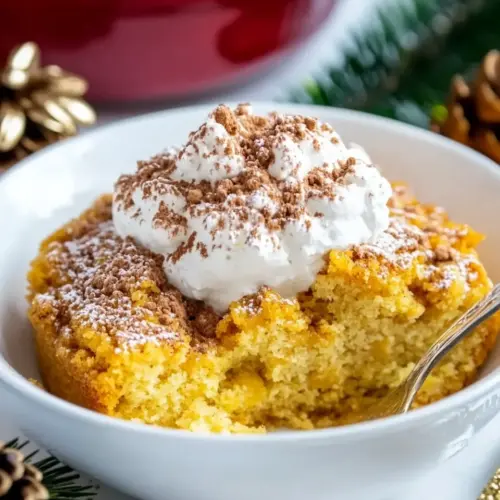
3 Ingredient Eggnog Dump Cake
3 Ingredient Eggnog Dump Cake is a creamy, easy holiday dessert that delivers custardy, spiced flavor with minimal effort. This simple, comforting dish combines eggnog, white cake mix, and butter for a crowd pleasing treat that is perfect for winter gatherings and last minute hosting. Make it when you want an impressive dessert without fuss.
Equipment
- 9x13-inch Baking Dish
- Cooking spray
Ingredients
- 3 cups Eggnog Provide a rich, creamy base that gives the cake its signature holiday flavor and moist crumb; pour evenly over the dry mix so it soaks through before baking. Add warmth and sweetness that melds with the cake mix to create a custard-like interior once baked.
- 1 box white cake mix Offer structure and leavening; the pre-mixed flour, sugar, and raising agents create the cake’s crumb and texture when moistened by the eggnog. Contribute sweetness and a light color while simplifying the recipe into an effortless dump-and-bake format.
- 1/2 cup butter, cut into thin slivers Melt into ribbons to add butterfat that promotes a tender, golden crust and moist interior; distribute slivers across the batter for even browning. Provide richness and flavor contrast that helps the cake brown and develop a slightly crisp, buttery top during baking.
- nutmeg and whipped cream for serving, optional Garnish with warm aromatic depth and a cloud of creamy sweetness to finish each serving; grate nutmeg over portions or dollop whipped cream for an elegant presentation. Elevate the dessert’s aroma and mouthfeel while leaving addition optional to suit preference.
Instructions
- Preheat oven to 350 degrees and lightly spray a 9×13-inch baking dish with cooking spray.: As the oven heats, you will notice the faint hum and gradual warm up that tells you it is ready. Preheating ensures even rise and proper setting of the cake matrix when the white cake mix and eggnog interact, producing consistent texture throughout. A lightly greased 9×13-inch baking dish prevents sticking and encourages the edges to caramelize slightly. A common mistake is skipping the preheat, which can cause uneven baking and a gummy center, so wait until the oven reaches temperature before inserting the dish. If your oven has hot spots, rotate the pan halfway through baking to avoid lopsided browning.
- Pour 1 cup of eggnog into the baking dish.: The first cup of eggnog should pool quietly in the pan, and you may see tiny bubbles form as the liquid settles. This first layer starts the soaking process for the dry mix you will add next, which helps create pockets of custard in the finished cake. Pour slowly so the liquid spreads evenly rather than pooling in one corner. Avoid pouring too swiftly, which can flood one side and yield uneven texture; if you see puddles, gently tilt the pan to level the liquid.
- Sprinkle the dry cake mix evenly into baking dish.: When you scatter the white cake mix , aim for an even dusting so each bite has a balanced crumb. The dry mix will float momentarily before absorbing the first cup of eggnog . Use your fingertips or the back of a spoon to lightly level it without compressing it. A typical error is clumping the mix which leads to dense pockets, so break up any lumps and check for uniform coverage across the pan.
- Pour remaining eggnog over cake mix.: As you pour the rest of the eggnog , watch as the dry mix begins to bloom and sink in certain spots while staying drier in others, which is desirable for texture variation. Pour in a slow, steady stream to promote even saturation. The visual cue is a dampened, slightly glossy surface where the liquid has soaked in. If the top still looks powdery after pouring, gently pat the surface to encourage absorption, but do not stir, because stirring will activate gluten and change the intended tender result.
- Evenly scatter the butter slivers on top. Bake for 50 to 55 minutes.: The thin slivers of butter will sizzle softly as they melt and mingle with the surface sugars, creating small browned islands that crisp slightly. During baking you should smell a warm, spiced aroma rising from the oven, and the edges will set first, turning golden. The center should be set but slightly jiggle like a soft pudding when gently nudged. Avoid opening the oven too frequently, because heat loss can extend bake time and affect texture. If the top is browning too quickly before the center sets, tent the pan loosely with foil for the remaining time.
- Serve with grated nutmeg and whipped cream.: Once out of the oven, the cake will give off a warm, spiced perfume. Let it rest briefly so the interior firms slightly, then spoon into bowls. A light dusting of grated nutmeg heightens the holiday notes, and a scoop of whipped cream adds contrast and creaminess. Watch for the steam that rises as you spoon it, and serve warm for the best sensory experience. A common misstep is serving too hot, which can make the texture feel overly loose, so allow a short resting period before plating.
Notes
- Choose quality eggnog The flavor of the eggnog will be very noticeable, so pick a brand or homemade version you enjoy drinking. Full fat options create a richer mouthfeel and more custardy texture.
- Even distribution matters When sprinkling the white cake mix, aim for uniform coverage so every area bakes the same way. Use the back of a spoon to level if needed to avoid dense spots.
- Butter placement is strategic Scatter the butter slivers evenly and avoid bunching them, because separated bits yield better browning and crisp pockets on top of the cake.
- Watch bake time, not just color Use the gentle jiggle method to test doneness in the center, because oven temperatures vary and color alone can be misleading.
- Garnish last Add grated nutmeg and whipped cream right before serving to preserve aroma and texture contrast.