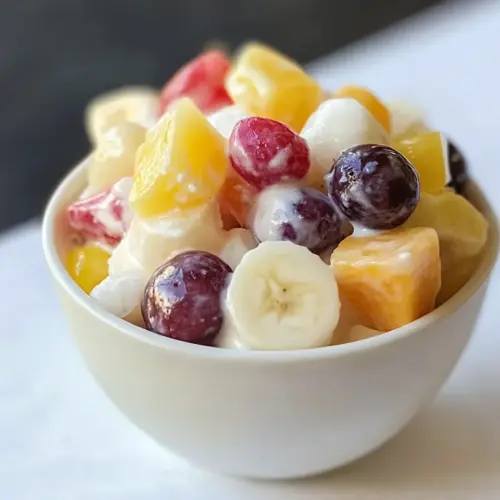
24 Hour Fruit Salad
24 Hour Fruit Salad is a creamy, bright fruit salad featuring a lemon custard folded into whipped heavy cream with grapes, pineapple, cherries, mandarins, marshmallows, and banana. This easy make ahead dish is perfect for potlucks and brunches, offering a nostalgic texture and fresh citrus lift, making it an irresistible choice to bring to your next gathering.
Equipment
- Double boiler or heatproof bowl and saucepan
- Stand mixer or electric hand mixer
- Large Mixing Bowl
Ingredients
- 2 eggs Beaten to add structure and richness, providing lift and a silky texture when incorporated into chilled mixtures; handle gently to avoid overbeating and maintain a smooth consistency. Use pasteurized eggs if serving to vulnerable populations and ensure they are fresh for best flavor and safety.
- 1/4 cup lemon juice (see note 1) Squeezed for bright acidity and brightness, balancing sweetness and helping prevent fruit browning in the salad; use freshly squeezed juice for a clean citrus aroma and vibrant taste. Measure precisely to maintain the intended tartness without overpowering delicate fruits.
- 1/4 cup granulated sugar Measured to sweeten and enhance flavor, dissolving into dressings and creams to provide a clean, sweet backbone without altering color. Adjust slightly if using very sweet canned fruits, but follow the recipe proportions for proper balance.
- 1 cup heavy cream Whipped for richness and a luxurious mouthfeel, contributing body and creaminess to bind the fruit components together in the salad. Chill the cream before whipping for stable peaks and fold carefully to retain volume for a light, airy dressing.
- 1 cup red seedless grapes halved Halved to provide juicy bursts of flavor and a firm, crisp texture; grapes contribute freshness and a pleasant pop in each bite. Use seedless varieties and cut uniformly so they distribute evenly throughout the salad.
- 1 cup canned cherries drained (see note 2) Drained to add sweet, tart cherry flavor and a soft, yielding texture; canned cherries supply consistent sweetness and deepen the fruit salad's color. Pat dry to remove excess syrup so the dressing isn't diluted and the salad maintains its intended texture.
- 1 cup canned pineapple chunks, drained and cut into bite-sized pieces Drained and chopped to introduce tropical sweetness and a slightly fibrous bite; pineapple adds acidity that brightens other ingredients. Rinse briefly if overly sugary, and cut into uniform pieces for even distribution.
- 1 cup mandarin oranges drained Drained to contribute sweet citrus segments and tender juiciness; mandarin oranges offer a gentle, fragrant sweetness that complements creamier elements. Remove any excess syrup to avoid watering down the dressing and ensure an even texture.
- 1 cup mini marshmallows (see note 3) Folded in for chewiness and playful sweetness, mini marshmallows provide a soft, pillowy contrast to the fruit and cream. Add near the end to prevent them from becoming overly soggy, preserving their light texture in the salad.
- 1 banana sliced Sliced to add a soft, sweet, and slightly creamy texture that melds with the dressing, offering immediate flavor and an accessible mouthfeel. Slice just before serving to prevent excessive browning and maintain a fresh appearance.
Instructions
- In the bottom of a double boiler, bring 1 inch water to simmer. Combine eggs, lemon juice, and sugar in top of double boiler and cook until thickened, about 10 to 12 minutes. Remove from heat and cool completely.: The faint hiss of simmering water and the gentle warmth it provides are crucial here, because indirect heat prevents the eggs from curdling. You want a gentle steam, not a rolling boil, so watch for tiny bubbles forming around the edge of the pan. If the water boils vigorously the top bowl will get too hot and the custard can scramble, so reduce heat and skim off excess steam. A common mistake is using direct heat, which makes the sauce grainy rather than velvety.
- Using a stand mixer or electric hand mixer, whip heavy cream until stiff peaks form. Fold in cooled custard sauce until combined.: As these ingredients warm together, you will notice the mixture transform from watery to silkier and slightly thicker, almost like a light pudding. Stir constantly with a heatproof spatula so the heat distributes evenly, and watch for the mixture to coat the back of a spoon, which is the visual cue for proper thickness. If you stop stirring, the mixture can stick and create uneven cooking, so keep a steady motion. Avoid letting the temperature spike, because that can give you lumps instead of a smooth custard.
- In a large bowl, add grapes, pineapple, oranges, cherries, marshmallows, and banana. Pour cream sauce over and stir to combine. Refrigerate at least 8 hours or up to 24 hours before serving.: Once thickened, set the custard bowl over a cool surface or an ice bath to halt cooking, and stir occasionally to release steam and prevent a skin from forming. The aroma will shift from raw egg to a bright, lemon scented cream, and you will feel the weight of the mixture lighten as it cools. A common misstep is assembling while still warm, which wilts whipped cream and makes the salad runny, so patience here makes a marked difference.
- Using a stand mixer or electric hand mixer, whip heavy cream until stiff peaks form: As you whip the chilled heavy cream , you will hear it change from a soft whisper to a thicker, swooshy sound, and visually it will climb the whisk into firm peaks. Stop when the peaks hold their shape, because overwhipping will convert cream into grainy butter. If you see small beads of liquid forming, you have gone too far, and you should start with fresh chilled cream for best texture.
- Fold in cooled custard sauce until combined: Folding should be gentle and deliberate, using a broad spatula to lift through the cream and custard, preserving air while creating a homogenous sauce. The mixture will look glossy and billowy, with streaks of pale lemon merging into the cream. Vigorous stirring collapses the air and yields a denser result, so resist the urge to mix quickly. If the custard is still warm it will deflate the cream, so ensure it is fully cooled before folding.
- In a large bowl, add grapes, pineapple, oranges, cherries, marshmallows, and banana: Combine the fruit so colors and textures layer nicely, and you will notice the bright reds and oranges pop against the pale cream when assembled. Toss gently so the fruit coat each piece without bruising softer items like the banana or mandarin segments. Pressing or over mixing can produce excess juice, which will thin the finished salad, so handle with a light touch.
- Pour cream sauce over and stir to combine: When the luscious lemon cream lands on the fruit, you should hear a soft swoosh and see it glide through the bowl, enveloping each piece with a glossy finish. Stir carefully to ensure even distribution so every bite has a balance of fruit and sauce. Avoid vigorous mixing which can macerate the fruit and create an overly wet salad. The sensory cue here is uniform coating without visible pools of excess liquid.
- Refrigerate at least 8 hours or up to 24 hours before serving: Chilling allows flavors to settle and textures to knit together, transforming separate components into a cohesive salad with softened marshmallows and melded citrus notes. You will notice aroma deepen and mouthfeel become silkier after rest. A trap is serving too soon, which results in a disjointed texture; patience yields the best result. Also, beyond 24 hours the fruit can break down and the salad becomes watery, so plan accordingly.
Notes
- Boost citrus brightness by using freshly grated lemon zest in the custard to add aromatic lift and a more complex lemon profile.
- Control sweetness by reducing the granulated sugar slightly if you prefer a less sweet salad, especially when using very sweet canned fruit.
- Marshmallow timing matters, add mini marshmallows just before serving for chewier texture, or fold them in earlier for a softer, soaked effect.
- Banana handling slice and toss the banana with a little lemon juice if you must prep early, this slows browning but will slightly change the lemon balance.
- Make ahead strategy prepare the custard up to two days in advance and keep chilled, then whip and fold the cream just before assembling for maximum freshness.
- Portion control scoop into individual cups for buffets, which keeps portions tidy and makes transport simpler.