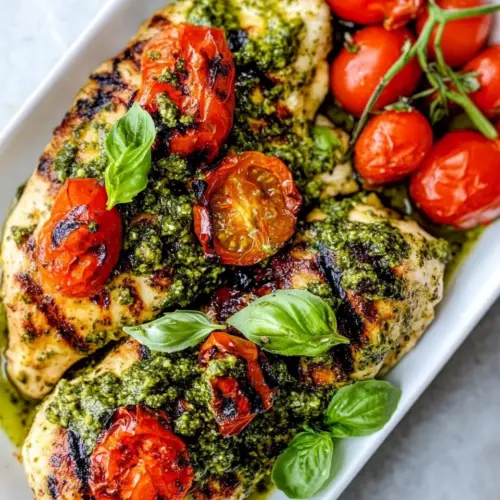
2 Ingredient Pesto Chicken
2 Ingredient Pesto Chicken is a creamy herb forward, easy weeknight dinner that pairs tender chicken with bright basil pesto. Juicy fillets get a glossy, aromatic coating and finish with sweet roasted cherry tomatoes for contrast. Perfect for quick family meals or casual entertaining, this recipe yields flavorful results with minimal effort, making it a must make when you want impressive yet simple dinner.
Equipment
- Skillet
- Grill pan
- Baking Dish
Ingredients
- 4 boneless chicken breast fillets skinless Provide tender, lean protein that forms the base of the dish; cook thoroughly to safe internal temperature and slice or pound to an even thickness for even cooking and better pesto coverage.
- 1/2 cup basil pesto plus 1/4 cup extra for serving. Use this recipe for homemade pesto or you can use store bought. Add vibrant herbal flavor and creamy texture to coat the chicken; use the specified amount for cooking and reserve extra for serving to boost fresh basil and garlic notes.
- 1/4 teaspoons salt optional – adjust to your tastes Season lightly to enhance overall flavor balance; adjust amount to taste and remember that pesto or salted store-bought versions may affect final saltiness.
- 1/4 teaspoon pepper Season mildly to provide subtle heat and depth; distribute evenly over the chicken before cooking to complement the basil and tomatoes.
- 500 g cherry tomatoes optional as a serving idea Present juicy, sweet accompaniment when served; roast or blister briefly to concentrate flavor and offer a fresh, colorful contrast to the pesto-coated chicken.
Instructions
- Smother chicken fillets in the pesto on all sides (about 2 tablespoons of pesto for each chicken breast, depending on your taste). Season with salt and pepper, if desired.: Warm, herbaceous aromas should rise as the pesto meets the surface of the chicken , and you will notice a glossy sheen that signals ample coating. This step infuses fat and seasoning into the outer layer so the meat picks up flavor as it cooks, which is why I press the pesto gently onto each fillet with the back of a spoon. Expect a faint oily feel on your fingers, and a common error is skimping on the coating which leads to uneven flavor; err on the side of generous application for the most consistent result.
- Preheat a barbecue plate, grill pan or skillet over medium-high heat. Cook for 5-6 minutes each side or until completely cooked through. Transfer to a warm plate. Grill the tomatoes, rotating once, until soft and beginning to brown.: You will get a subtle lift of seasoning that tightens the pesto s flavor profile, and the aroma of cracked pepper becomes more apparent once it hits heat. This brief step harmonizes the ingredients and controls the finished taste, but be careful because some pestos are already salty, so add sparingly. A typical mistake is overseasoning at this stage, which is hard to reverse after cooking.
- Top chicken with extra pesto. Serve with the tomatoes.: The pan should whisper with a hot sizzle when the chicken first touches it, creating those satisfying browning notes that mean good flavor. You want even contact heat and a steady sizzle, which produces a savory crust and traps juices inside, so avoid moving the fillet too often. If you hear sputtering and see rapid smoke, the heat is too high and the exterior can char before the center cooks; lower the heat a little and finish more gently.
- Preheat the oven to 350°F | 180°C. Line a baking dish with aluminium foil or parchment paper.: After cooking you will notice the meat holding its juices and a faint citrus herb perfume from the pesto . Resting on a warm plate allows the juices to redistribute and keeps the texture tender, which is why I always give the fillets a short pause before cutting. Cutting too soon is a common error because it lets juices escape and yields drier meat; aim for a brief rest of a few minutes.
- Arrange the coated chicken breasts in the baking dish and bake in a preheated oven for 30 minutes.: As the tomatoes heat they will pop and release a syrupy, sweet scent that pairs beautifully with the savory chicken . Watch for blistered skins and a gentle collapse, which are signs they are done. Crowding will steam them instead of caramelizing, so give them room and rotate once for even color; a routine mistake is overcooking to the point they disintegrate.
- At 30 minutes, remove the chicken from the oven and arrange the tomatoes around each fillet.: The additional dollop adds a final herbal brightness and a glossy finish that makes the plate feel complete. Spoon it on right before serving so the oils remain vivid and fragrant; warmed pesto loses some of its bright edge. Overheating extra pesto is a misstep, so reserve it for the moment of plating to preserve freshness.
- Place the chicken back in the oven and cook a further 20 minutes, or until the chicken is cooked through and no longer pink.: The interplay of juicy, slightly charred tomatoes and rich, herb coated chicken creates a balanced bite with sweet, savory, and herbal notes. Arrange the tomatoes around the fillets for both color and texture contrast, and enjoy the blend of warm and bright elements on the fork. A common mistake is plating too hastily which can result in a lukewarm contrast rather than that pleasing hot and bright interplay.
- Preheat the oven to 350 F | 180 C. Line a baking dish with aluminium foil or parchment paper: The air in the oven should feel reliably warm and even, creating a gentle environment to finish the chicken without aggressive drying. Lining the dish makes cleanup simpler and helps reflect heat, ensuring the underside cooks evenly. Using a dish that is too small will crowd the fillets, preventing proper heat circulation and encouraging steaming rather than roasting, so choose a dish with a bit of breathing room.
- Arrange the coated chicken breasts in the baking dish and bake in a preheated oven for 30 minutes: As the chicken bakes you will notice the pesto mellow slightly and the surface become set and aromatic. The oven s steady heat lets the flavors infuse slowly, preserving juiciness while ensuring doneness. If your fillets are particularly thin, 30 minutes may be excessive and can dry the meat, so check for internal doneness around the 25 minute mark to avoid overcooking.
- At 30 minutes, remove the chicken from the oven and arrange the tomatoes around each fillet: The brief exposure to oven heat will soften the tomatoes, and placing them now ensures they roast in the chicken juices a little without over collapsing. This step builds a sauce like mingling as juices mingle and flavors mingle, and it deepens the overall profile. A mistake to avoid is adding cold tomatoes straight from the fridge which can reduce oven temperature locally and alter cooking times.
- Place the chicken back in the oven and cook a further 20 minutes, or until the chicken is cooked through and no longer pink: In the final stage the oven finishes the job, and you ll notice the aroma turn richer and the surface take on a gentle golden tone. The internal temperature should reach a safe reading, and the meat will feel firm but springy when pressed. Overreliance on timing without checking internal doneness is a common error; use a thermometer if you can to ensure tenderness without dryness.
Notes
- Use extra pesto for finishing, spoon a little warmed pesto over the plated chicken so every bite has fresh herb oil; keep the extra off heat until serving to preserve brightness.
- Adjust salt cautiously, taste your pesto first because many store bought versions vary widely in salt content; add salt at the end only if needed to avoid over salting.
- Give tomatoes room, when roasting or grilling, space them so they blister instead of steam, this concentrates their sweetness and adds color contrast to the plate.
- Rest the meat, letting the chicken rest for a few minutes after cooking keeps it juicy and makes slicing neater; cutting straight away often leads to dry edges.
- Choose even thickness, pound thicker parts of the fillets gently so everything cooks at the same rate, preventing thin pieces from drying while thicker ones finish.
- Serve with simple sides, pair with greens or a grain to keep the meal balanced and let the pesto scented chicken remain the focal point of the plate.