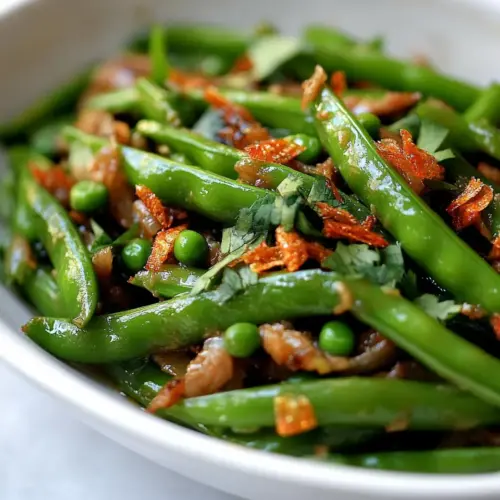
15 Minute Sugar Snap Peas Stir Fry with Southeast Asian Flavor
15 Minute Sugar Snap Peas Stir Fry with Southeast Asian Flavor is a quick, vibrant skillet dish with blistered sugar snap peas, savory fish sauce, and bright lime juice. Crunchy herbs and crispy shallots add texture, making it an easy weeknight dinner or spring side. Fast, flavorful, and satisfying, it’s a small-ingredient recipe that delivers big taste, perfect for busy nights when you still want something fresh.
Equipment
- Large Skillet
- Spatula
Ingredients
- 1 1/2 tablespoon avocado oil Provide fat and high-heat stability to quickly sauté snap peas, helping develop slight browning without smoking; contributes a neutral backdrop that lets Southeast Asian flavors shine. Use at the start of cooking to coat the pan and promote even heat transfer for crisp-tender vegetables.
- 1 pound sugar snap peas strings removed Deliver crisp, juicy texture and natural sweetness that form the base of the dish; strings removed improves eating quality and prevents fibrous bits. Add to the hot oil to blister and cook briefly so they remain vibrant green and satisfyingly crunchy.
- Diamond Crystal kosher salt Season to taste and enhance overall flavor balance with clean, saline notes that lift other seasonings; Diamond Crystal has a lighter grain so measurements differ from other kosher salts. Sprinkle gradually during cooking to avoid over-salting and to bring out the peas' sweetness.
- 4 garlic cloves minced Infuse aromatic pungency and savory depth when minced finely, offering both sharpness and a subtle sweetness once briefly cooked; helps build umami-forward layers typical of Southeast Asian stir-fries. Add early enough to bloom in the oil but avoid prolonged cooking to prevent bitterness.
- 1 tablespoon Red Boat fish sauce or 1 tablespoon coconut aminos + 1/4 teaspoon Diamond Crystal kosher salt Introduce concentrated umami and savory-salty complexity; Red Boat fish sauce provides authentic Southeast Asian anchovy-derived depth while the coconut aminos plus salt alternative offers a gluten-free, less fish-forward option. Stir in toward the end of cooking to season without overpowering the fresh herbs and lime.
- 2 tablespoons freshly squeezed lime juice Brighten the dish with acidic citrus lift, balancing richness and salt while accentuating herbaceous notes; freshly squeezed juice offers clean, vibrant flavor unlike bottled concentrates. Add right before serving to maintain its fresh brightness and prevent bitterness from cooking.
- 1 tablespoon chopped fresh mint Contribute cool, sweet, and slightly peppery herbaceousness that pairs well with lime and fish sauce; chopped fresh mint adds refreshing contrast to the warm, savory elements. Scatter over the finished stir-fry to preserve texture and aromatic impact.
- 1 tablespoon chopped fresh Thai basil Provide a sweet-anise and slightly peppery basil fragrance emphasizing Southeast Asian character; chopped fresh Thai basil withstands brief heat yet releases aromatic oils when tossed with hot vegetables. Add near the end to let leaves wilt slightly while retaining their perfume.
- 2 tablespoons Crispy Shallots Add crunchy texture and deep savory-sweet shallot flavor for finishing contrast; crispy shallots supply a caramelized onion note and a crisp bite that elevates mouthfeel. Sprinkle just before serving to keep them crisp and impactful against the tender snap peas.
Instructions
- Heat a large skillet over medium-high heat until hot. Swirl in the avocado oil.: The moment you add the avocado oil you should hear a thin hiss and smell a light toasty note as the pan reaches cooking temperature, this signals the right heat for blistering the pods rather than steaming them. Use a skillet that conducts heat evenly so the peas cook consistently. A common mistake is not waiting for the skillet to be properly hot, which results in pale, limp peas rather than vibrant, blistered ones. If the oil smokes heavily, reduce the heat slightly to avoid burning the oil which will impart a bitter flavor. Keep a spatula ready to move the peas quickly across the pan to promote even charring.
- Toss in the sugar snap peas and a 1/4 teaspoon Diamond Crystal kosher salt and cook, stirring frequently, until bright green, tender-crisp, and blistered in parts, about 2 minutes. Don’t overcook them!: As the sugar snap peas hit the hot oil you will hear sharp crackles, and the pods will go from dull to glossy bright green, with little blistered spots appearing where they contact the pan. This quick, high heat sear concentrates their sweetness while preserving snap. Pay attention to color changes more than the clock, because pan temperature varies. One pitfall is overcrowding the pan, which leads to steaming and a loss of char, so cook in a single layer and keep them moving for even contact.
- Toss in the minced garlic and fish sauce and stir well, making sure the garlic doesn’t burn.: Right after the peas develop their blistered marks add the minced garlic and the fish sauce , you should immediately smell a savory, briny lift. The garlic will sizzle and release fragrant oils, so stir constantly to distribute heat and prevent charring. Burnt garlic tastes acrid and will overpower the dish, so once you sense the garlic aroma, be ready to move to the next step. The fish sauce will seem intense at first, but it merges with the peas and seasoning to provide depth.
- Turn off the heat. Then, add the lime juice and toss well. Taste for seasoning and adjust with additional fish sauce or lime juice if needed.: With the heat off, pour in the lime juice so the citrus remains bright and aromatic rather than cooked away, you should hear a brief hiss as residual heat hits the liquid. Tossing now helps distribute acidity and balance the umami from the fish sauce . Pause and taste, seeking harmony between salty and tangy notes. A common error is overdoing either element, so add small increments when adjusting. If the dish tastes flat, a touch more salt or acid usually corrects it.
- Transfer the snap peas to a serving platter. Scatter on the fresh herbs and crispy shallots and enjoy!: Moving the peas off the hot pan stops cooking so they keep their tender crisp texture; you will notice steam quickly rise but the pods will still have a lively snap. Scatter the chopped mint and Thai basil so their aroma remains vivid, and top with crispy shallots for crunchy contrast. Serve immediately, because the contrast between warm peas and fresh herbs is part of the appeal. A typical mistake is letting the shallots sit on the hot peas too long, which softens them, so add them just before serving.
Notes
- Swap for vegan umami Use 1 tablespoon coconut aminos plus 1/4 teaspoon Diamond Crystal kosher salt in place of fish sauce, this preserves a savory backbone while keeping the dish plant based.
- Control the heat If your skillet tends to run hot, lower to medium and extend the cooking by small increments, this prevents burned oil and bitter garlic while still allowing the peas to develop color.
- Batch cooking herbs Chop the mint and Thai basil just before serving and store them in a cool place to keep their aroma, bruised herbs lose fragrance quickly.
- Keep crispy shallots crunchy Store them separately and sprinkle them at the last moment, this ensures they provide the intended texture contrast instead of softening on the warm peas.
- Salt mindfully Because the recipe uses Diamond Crystal kosher salt, which has a lighter grain, measure by feel and taste; you may need a different amount if using a finer salt.