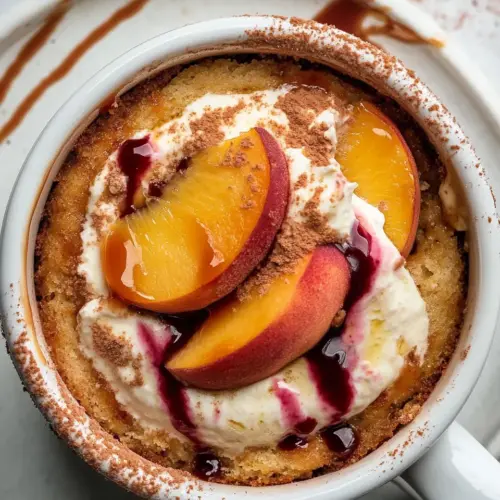
10 Minute Gooey Vanilla Peach Mug Cake
10 Minute Gooey Vanilla Peach Mug Cake is a warm, gooey single serving dessert that highlights juicy peach, rich brown sugar, and comforting vanilla. This quick mug cake offers a tender crumb with chewy oats and caramel like notes, perfect for an easy weeknight treat or solo dessert. Make it when you crave something fast, satisfying, and effortlessly delicious.
Equipment
- Microwave safe mug
- Microwave
- Mixing Bowl
- Whisk
- Spoon
Ingredients
- 1/2 of a peach, sliced thin or chopped Sliced thin or chopped to provide fresh, juicy sweetness and pleasant texture contrast in the mug cake; helps create pockets of gooey fruit that release flavor when baked. Adds natural moisture which balances the batter and complements the vanilla and brown sugar notes. Works best when ripe but still slightly firm to maintain shape during quick cooking.
- 3 tablespoons brown sugar Provides deep caramel-like sweetness and a hint of molasses that enhances the peach flavor and creates a slightly sticky, gooey crumb. Helps with browning on the surface and pairs with butter to form a rich, tender bite. Can be adjusted for desired sweetness level without altering structure.
- 2 tablespoons salted butter Melted to contribute rich fat that tenderizes the cake and helps dissolve sugar for a smooth, cohesive batter. Adds a salty, buttery flavor that balances sweetness and promotes browning in the quick cook time. Using salted butter also seasons the batter, so overall salt additions should be considered accordingly.
- 1 egg Beaten to supply structure, leavening support, and moisture, creating a tender yet set crumb in the mug cake. Helps bind ingredients together and contributes to the cake’s rise during the brief cooking period. Also adds richness and a smooth mouthfeel when mixed thoroughly.
- 1 teaspoon vanilla extract Added for aromatic sweetness and to enhance the overall flavor profile with warm vanilla notes that brighten the peach. Concentrated flavor delivers a pronounced background note without adding moisture or texture. A small amount markedly elevates the perceived sweetness and complexity.
- 1/4 cup all-purpose flour Incorporated as the primary dry component to form the cake’s structure by providing gluten and bulk; helps thicken the batter to the correct consistency. Works with the egg to set the crumb and with baking powder to allow light rise. Sifting or whisking can prevent lumps for an even texture.
- 2 tablespoons old fashioned oats Included to add a hint of wholesome texture and subtle nutty flavor while contributing light absorbency to the batter. Helps balance softness from the fruit and butter by introducing tiny bits of chewiness and fiber. Old fashioned oats hold up well in quick microwave or oven cooking without turning mushy.
- 1/4 teaspoon baking powder Used sparingly to provide chemical leavening that encourages a modest rise and creates a tender, airy crumb in the mug cake. Reacts with moisture and heat to produce lift during the short cooking time so the cake remains soft rather than dense. Ensures a light, pleasant texture when measured accurately.
- 1/4 teaspoon kosher salt Added in small amount to enhance overall flavor balance and to strengthen the structural network in the batter slightly. Offsets sweetness and accentuates other flavors while preventing a flat-tasting cake. Proper measurement is important to avoid over-salting the dessert.
- 1 pinch cinnamon Sprinkled for warm aromatic notes that complement the peach and brown sugar, providing depth and a subtle spiced finish. Enhances perceived sweetness and adds a cozy flavor dimension without overpowering the vanilla. Use lightly to keep the fruit’s flavor centerstage.
Instructions
- Melt 1/2 tablespoon butter in a (10-12 ounce) microwave-safe mug with 3-4 peach slices and 1 tablespoon brown sugar for 30 seconds to 1 minute. In a bowl, whisk 1 tablespoon melted butter with 1 tablespoon brown sugar, the egg, and vanilla. Add the flour, oats, baking powder, and salt, stirring until just combined. Spoon the batter over the peaches in the mug. Do not stir. Place the remaining peach slices on top. Sprinkle with 1 tablespoon of brown sugar and a pinch of cinnamon. Add 1/2 a tablespoon of butter. Microwave on full power for 1 minute 45 seconds to 2 minutes (I always do 2 minutes). Serve with ice cream. ENJOY.: Warmth releases the peach juices and begins caramelizing the sugar, creating a sticky bed of fruit that will flavor the cake as it cooks. You should see the butter melt into a glossy pool and the sugar dissolve into the peach juices while the peach softens slightly, giving off a sweet, fruity aroma. This preheat step prevents a raw fruit center and helps the batter set against already warmed fruit, which improves texture. A common mistake is overheating it to the point the peach becomes mushy, so watch the mug closely and stop when the butter is melted and the peach is warmed but still holds shape.
- In a bowl whisk 1 tablespoon melted butter with 1 tablespoon brown sugar the egg and vanilla: The mixture should smell richly of vanilla and brown sugar, with the egg smoothing the mixture into a glossy batter base. Whisking combines fats and liquids so the dry ingredients will incorporate evenly, which matters for a consistent crumb. If the butter is too hot when added to the egg, you risk cooking the egg, so let melted butter cool briefly before whisking. Overwhisking can also trap air and create a spongier texture than intended.
- Add the flour oats baking powder and salt stirring until just combined: Stirring until just combined preserves tenderness; you want streaks of flour gone but no dense overworked batter. The oats will soak some moisture and add texture, and you should notice the batter thicken slightly and become cohesive. If you mix vigorously you may develop gluten, which can yield a chewy or rubbery cake, so fold gently with a spatula and stop when the ingredients are incorporated.
- Spoon the batter over the peaches in the mug: After spooning, the batter should sit atop the warmed fruit like a blanket, showing some separation between fruit and dough. This layering allows juices to mingle into the batter during cooking, creating pockets of gooeyness without saturating the entire cake. Avoid stirring here, as mixing will bury the fruit and lead to a uniform, less interesting texture; instead, let the batter rest on top.
- Do not stir: Keeping layers distinct results in a pleasant contrast between tender cake and syrupy peach pockets. You will notice steam rising from the mug as the microwave works, and the edges will begin to firm while the center remains soft. A common error is stirring at this point which causes the fruit to sink and the cake to become overly wet in the middle, so resist the urge to blend.
- Place the remaining peach slices on top: These top peaches will caramelize slightly and act as a sweet, attractive crown, adding both visual appeal and concentrated fruit flavor. They will warm quickly and begin to release sugary juices that mingle with the surface of the batter, creating a glossy finish. If you place them too thickly they may weigh the batter down and slow even cooking, so arrange a few thin slices for best results.
- Sprinkle with 1 tablespoon of brown sugar and a pinch of cinnamon: The sugar on top melts into a thin caramel layer and the cinnamon adds aromatic warmth, enhancing the peach. You should see the sugar granules begin to sink slightly into the peach during microwaving and form a shiny surface. Be cautious with quantity, as too much sugar can create a very sweet crust, masking the delicate fruit notes.
- Add 1/2 a tablespoon of butter: Dotting the top with extra butter helps the surface brown and gives a richer mouthfeel to each spoonful. As it melts it carries the sugar and cinnamon into a caramel like finish. A common oversight is skipping this fat, which can result in a drier top, so include it for best texture and flavor.
- Microwave on full power for 1 minute 45 seconds to 2 minutes: During this time you will hear subtle bubbling and see the edges set first, turning slightly drier and firmer while the center remains tender and gooey. The cake will rise slightly, and the aroma of cooked peach and browned sugar will fill the kitchen. If it is undercooked the center may be too wet and eggy, so if your microwave is less powerful you may prefer the longer end of the time window. Overcooking will dry the cake, so monitor closely and adjust time by 10 to 15 second increments once you know your microwave's performance.
- Serve with ice cream: A scoop of cold ice cream contrasts delightfully with the warm, gooey interior, offering creamy texture and temperature balance. The melting ice cream brings extra creaminess into the cake's nooks and crannies, making each bite lush. Be mindful when adding ice cream to a very hot mug, as the temperature differential can cause a rapid melt; serve promptly so the textures remain distinct.
- ENJOY: Pause to relish the warm combination of fruit sugar and tender cake, and use the moment as a small celebration of simple pleasures. Savoring slowly allows you to notice the layers of flavor and texture achieved with minimal effort. A frequent mistake is rushing through this final moment, which reduces the enjoyment, so take a breath and enjoy.
Notes
- Swap the fruit timing: Use slightly firmer peach slices if you want more pronounced fruit texture after microwaving, arranging them like petals on top for a pretty finish.
- Toast the oats first: Toasting the old fashioned oats briefly in a dry pan until fragrant adds a nutty note and firmer chew to the finished cake.
- Brown sugar topping: Sprinkle the top with an even layer of brown sugar to encourage a glossy, slightly crisp caramelized surface when microwaved.
- Butter distribution: If you want richer pockets, dot the fruit with small bits of cold butter so they melt into concentrated buttery spots during cooking.
- Vanilla emphasis: Increase the vanilla to 1 1/2 teaspoons for a more aromatic result, which lifts the peach and brown sugar flavors.
- Oat texture control: For a smoother cake, pulse the oats once in a food processor; for more chew, keep them whole.