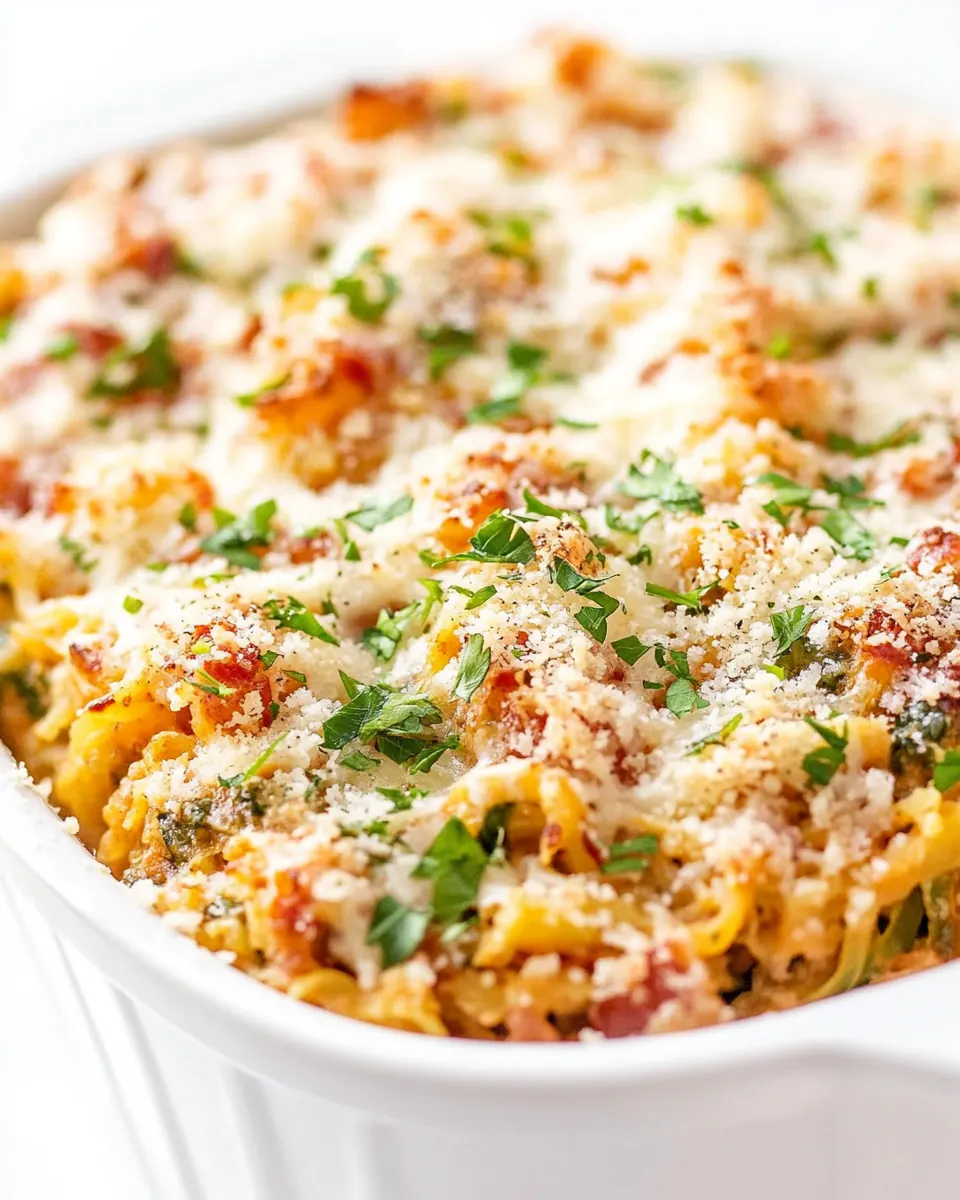
Spaghetti Squash Casserole
Spaghetti Squash Casserole is one of those dishes I reach for when I want comfort food without the heaviness of pasta. The first time I made this, it was a blustery evening in fall and I had a hunch the roasted squash would make a cozy base for a layered, cheesy bake. I remember the kitchen filling with a warm roasted aroma as the squash softened, and the contrast of the tender strands with the savory filling immediately won me over.
I like how this version balances lean protein and bright tomato notes, while letting the squash play the supporting role. Over the years I learned small tricks that make it reliably satisfying, like draining the tomatoes well and stirring in just the right amount of cheese so the casserole is creamy without becoming greasy. Whether I serve it for a relaxed weeknight dinner or bring it to a potluck, it always disappears fast.
Recipe Snapshot
1 hr 25 mins
10 mins
75 mins
Medium
290 kcal
Italian
Keto, Gluten-Free
Dinner
Oven, Large deep skillet, 8×8 inch baking dish, Fork, Slotted spoon
Why Try This Spaghetti Squash Casserole
It is a lighter comfort food
I adore that Spaghetti Squash Casserole gives you the familiar casserole warmth but with a lighter, vegetable forward base. The roasted spaghetti squash strands act like a tender, slightly sweet canvas that soaks up flavors without feeling dense. Because I use lean ground turkey and controlled amounts of cheese, it feels like indulgence that does not weigh you down.
Flavor layering that actually works
The combination of sautéed onion, bell pepper, garlic, and seasoned tomatoes builds a savory backbone. I love how the Italian herbs and a flicker of crushed red pepper create depth. When you fold the filling into the roasted spaghetti squash, each forkful has multiple flavor notes, from sweet roasted flesh to bright tomato and herb accents.
Flexible and make ahead friendly
One reason I keep this recipe in rotation is its make ahead potential. You can roast and shred the spaghetti squash in advance, and assemble later, which makes dinner night effortless. For gatherings, I prepare the filling earlier, combine everything before baking, then pop it in the oven for fresh bubbly cheese and a golden top.
Textural contrast is delightful
There is a pleasing contrast between the slightly crisp top layer of melted cheese and the softer, stringy spaghetti squash beneath. I purposely reserve half the cheese to sprinkle at the end so you get that gooey, melted finish plus a hint of browning. The result is a comforting mouthfeel that is never monotonous.
Approachable for cooks of all levels
If you are new to roasting squash or layering casseroles, this is forgiving. The steps are intuitive, and small adjustments like reducing red pepper flakes or swapping herbs are straightforward. I find that even friends who claim they do not like squash come around once they taste this version, which always feels like a win.
What to Buy for Spaghetti Squash Casserole
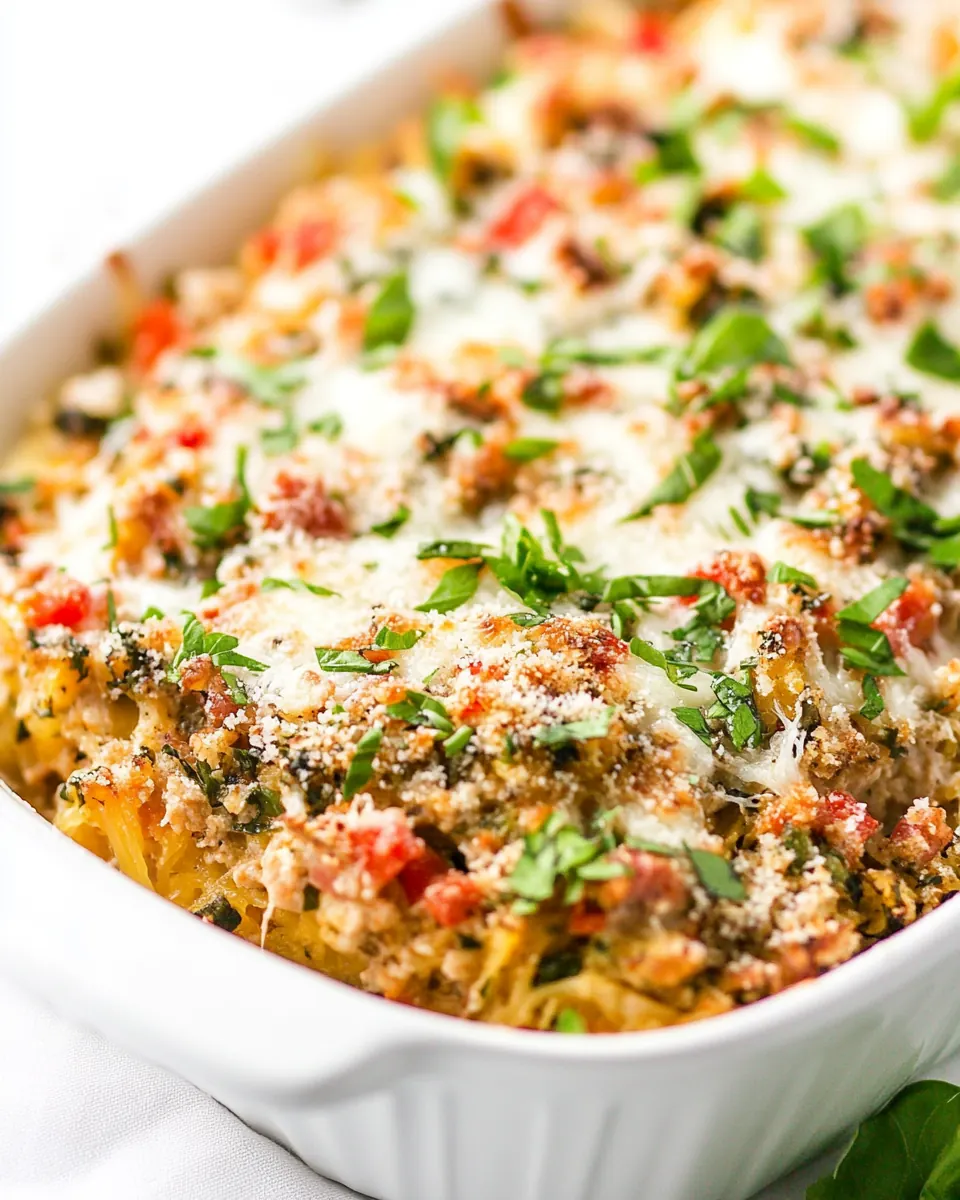
I pick ingredients for this casserole with a simple philosophy, choose sturdy, flavorful components that complement the roasted spaghetti squash instead of overpowering it. The key players are the squash for texture, lean ground turkey for savory body, and the cheese for a creamy finish. Each item plays a clear role so the dish stays balanced and satisfying.
- 1 small/medium spaghetti squash about 2 pounds: Roast and scrape the squash strands to provide a low-carb noodle-like base for the casserole; its mild, slightly sweet flesh soaks up sauces and seasonings, adding bulk and texture. Peel and halve before baking to concentrate flavor and make shredding easier for even distribution throughout the dish.
- 2 teaspoons extra-virgin olive oil: Lightly coat vegetables and meat to prevent sticking and to help brown aromatics; olive oil adds subtle fruitiness that enhances savory flavors. Use sparingly to control fat content while promoting caramelization of onions and peppers for depth.
- 1 pound 93% lean ground turkey: Brown and crumble to supply a lean, protein-rich foundation that carries the savory and herbal notes of the casserole; lean turkey keeps the dish lighter while still providing structure. Cook thoroughly and season while browning so it absorbs aromatics and spices evenly.
- 1 small red onion diced: Sweat or caramelize to introduce natural sweetness and foundational savory flavor; diced texture melds with softened peppers and meat for cohesive bites. Add to the skillet early to develop depth that balances tomato acidity and squash mildness.
- 1 green bell pepper cored and diced: Sauté until tender to contribute bright, vegetal sweetness and crunchy-turned-soft texture; diced pieces blend with onions and garlic to create a flavorful vegetable base. Use green pepper to add color contrast and a touch of bitterness that enhances overall balance.
- 1 teaspoon kosher salt: Season generously during cooking to bring out the natural flavors of meat and vegetables; kosher salt enhances savory and sweet notes while helping to draw moisture from vegetables. Adjust to taste near the end to account for other salty ingredients and to avoid over-seasoning.
- 1/2 teaspoon ground black pepper: Season moderately to provide sharp, savory warmth without overwhelming other flavors; freshly ground black pepper adds a subtle heat and aromatic complexity. Sprinkle during cooking and again to finish if a more noticeable peppery bite is desired.
- 1 can 14.5-ounce diced tomatoes with Italian spices, drained: Add savory acidity and herbaceous tomato flavor after draining to keep texture from becoming too watery; diced tomatoes with Italian spices contribute moisture, umami, and built-in seasoning. Fold into the cooked meat and vegetables so the tomato pieces distribute evenly throughout the casserole.
- 3 cloves garlic minced: Sauté briefly with aromatics to release pungent, fragrant oils that brighten the entire dish; minced garlic delivers a savory bite and pairs well with Italian herbs and tomatoes. Add toward the end of sautéing to prevent burning and bitterness.
- 1 teaspoon Italian seasonings of choice or a mix of oregano, basil, and thyme: Season blends to infuse classic Italian herb flavors such as oregano, basil, and thyme; use as a cornerstone herb mix to tie together tomato, meat, and cheese components. Sprinkle during cooking to allow the herbs to bloom and merge into the sauce.
- 1/2 teaspoon crushed red pepper flakes reduce to 1/4 teaspoon if sensitive to spice: Add a controlled kick of heat to contrast the mild squash and creamy cheese; adjust amount based on spice tolerance to maintain balance. Incorporate early enough to diffuse heat through the filling but sparingly to keep family-friendly heat levels.
- 1 cup freshly grated part-skim mozzarella or provolone cheese divided: Melted into and atop the casserole to provide creamy, stretchy texture and a satisfying golden finish; part–skim mozzarella or provolone delivers melty cheese that binds ingredients without excessive greasiness. Reserve some to sprinkle on top for a bubbly, attractive crust when baked.
- Chopped fresh parsley or basil: Garnish finely chopped to deliver fresh, herbal brightness and color contrast at serving; parsley or basil adds a fragrant finish that lifts the richness of meat and cheese. Scatter just before serving to maintain vibrant flavor and visual appeal.
Recipe Steps for Spaghetti Squash Casserole
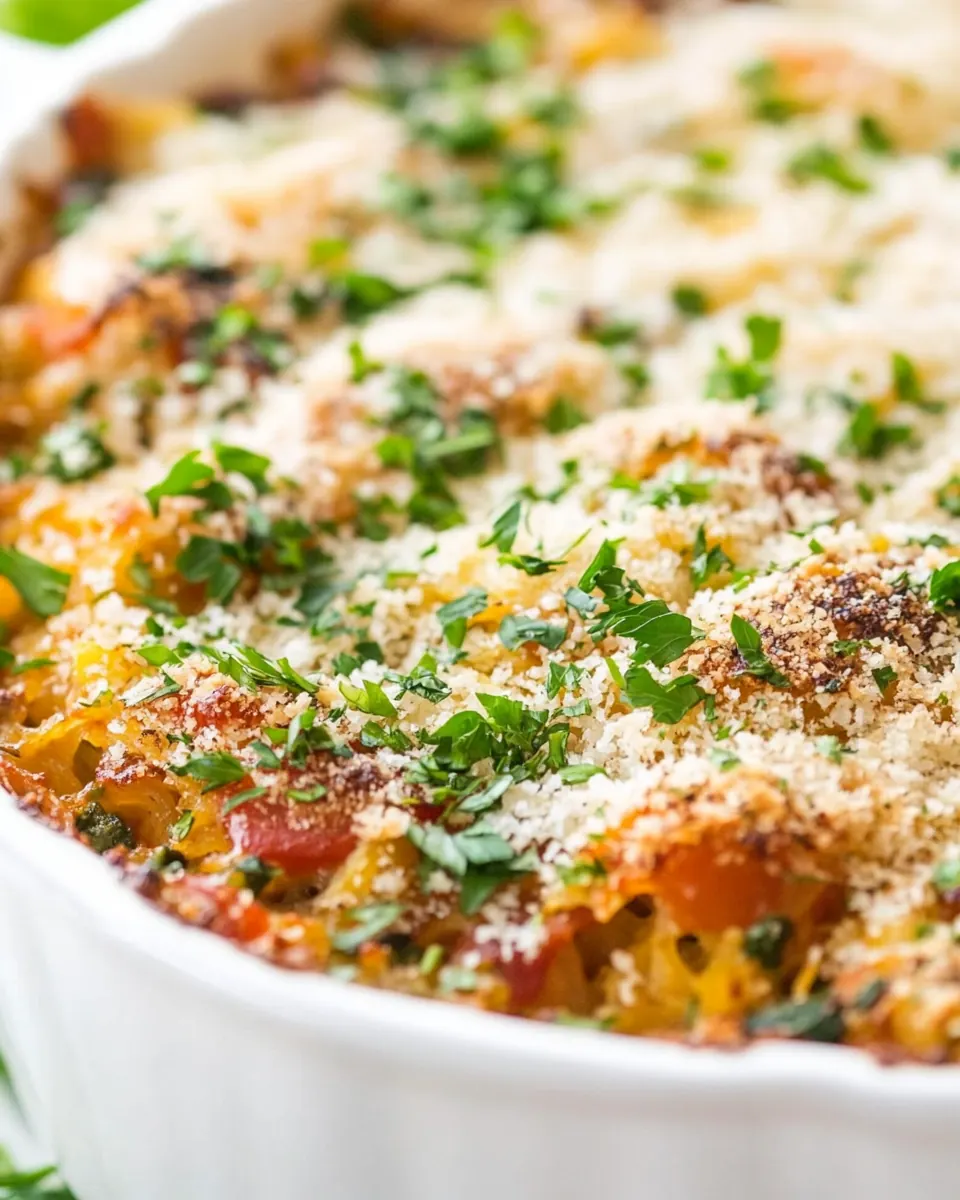
This recipe comes together in a few stages, and I find the process meditative once you get into the rhythm of roasting, sautéing, and assembling. Follow each step to capture the right textures and flavors, and trust your senses as you go.
- Place a rack in the center of your oven and preheat the oven to 400 degrees F. Roast the spaghetti squash according to this recipe for Roasted Spaghetti Squash. When cool enough to handle, pull the squash strings out of the squash's center with a fork and transfer to a large mixing bowl. The squash strings should look like spaghetti.: As the oven warms to 400 degrees F, you will notice the air fill with a sweet, nutty aroma as the squash roasts, signaling caramelization of its natural sugars. The flesh should become tender enough that a fork glides through and the strands separate cleanly, resembling al dente pasta. This roasted scent and the slightly toasted edges are clues that the squash is done. Gently scraping the strands releases steam and that roasted perfume, and transferring them to a large bowl keeps them from cooling too quickly. A common mistake is under roasting which leaves the strands dense and chewy, so if the fork meets resistance, return the squash to the oven for a few more minutes.
- Reduce the oven temperature to 350 degrees F. Heat the olive oil in a large, deep skillet over medium high. Add the turkey, onion, bell pepper, salt, and black pepper. Cook, breaking apart the meat, until meat is browned and the vegetables are tender, about 8 minutes. Add the drained tomatoes, garlic, Italian seasoning, and red pepper flakes. Let cook until most of the liquid from the tomatoes has cooked off, about 4 minutes, and then add the reserved squash. Cook and stir until most of the remaining liquid has cooked off, about 1 to 2 minutes more, increasing the heat if needed. Stir in 1/2 cup of the shredded cheese. There may be some liquid remaining in the pan.: The sizzle when the extra–virgin olive oil hits the pan is your first hint that flavors are building; as the ground turkey browns you will smell a toasty, savory note and see small caramelized bits forming on the pan surface. The diced red onion and green bell pepper should soften and release a sweeter aroma, while the salt helps draw out moisture to intensify flavor. Browning the meat adds Maillard complexity, which deepens the filling's taste. Avoid overcrowding the pan, which can steam the ingredients instead of browning; if your skillet seems crowded, cook in batches to achieve proper caramelization.
- Lightly coat a deep 8×8-inch baking dish or 2-quart casserole dish with nonstick spray. With a slotted spoon, scoop the squash mixture into the pan in an even layer, discarding any excess liquid (some in the pan is OK—just not too much). Bake, uncovered, for 20 minutes. Remove from the oven and sprinkle with the remaining 1/2 cup cheese, and then return to the oven and bake until the cheese melts, about 5 to 10 additional minutes. For an extra-golden-brown top, place the casserole under the broiler for a few minutes. Remove from the oven, sprinkle with parsley and/or basil, and let rest 5 minutes. Serve hot.: When you add the drained diced tomatoes , the mixture will hiss briefly and then settle into a saucy simmer; the garlic will release a warm, aromatic perfume that blends with the herbs. Cooking until most of the tomato liquid evaporates concentrates the flavors and prevents a watery casserole, while the slightly reduced tomato base clings to the browned bits from the pan. Folding in the reserved spaghetti squash after reduction ensures the strands absorb flavor rather than sit in excess liquid. A frequent error is skipping the reduction, which results in a soggy texture after baking.
- Cook and stir until most of the remaining liquid has cooked off, about 1 to 2 minutes more, increasing the heat if needed. Stir in 1/2 cup of the shredded cheese. There may be some liquid remaining in the pan: At this point, increase your attention to visual cues, the mixture should tighten and cling together, releasing a concentrated aroma of herbs and tomato. The brief final cook evaporates residual moisture, leaving a cohesive filling that will hold up in the casserole dish. When you stir in the reserved 1/2 cup of mozzarella or provolone , it lends creamy silkiness that helps bind the strands and meat without overpowering the squash. If you see puddles of liquid, continue to cook a little longer; the goal is a moist but not soupy filling. Overcooking here can dry the mixture, so keep it balanced.
- Lightly coat a deep 8×8-inch baking dish or 2-quart casserole dish with nonstick spray. With a slotted spoon, scoop the squash mixture into the pan in an even layer, discarding any excess liquid (some in the pan is OK—just not too much): As you spoon the filling into the prepared baking dish, listen for the soft gloop of the strands settling and watch for an even layer that will bake uniformly. Using a slotted spoon helps leave behind excess liquid, which prevents a soggy bottom while retaining enough moisture for a creamy interior. The evenness of the layer affects how well the top browns, so smooth gently without compressing the strands. A mistake is packing tightly, which makes the casserole dense instead of light and tender.
- Bake, uncovered, for 20 minutes. Remove from the oven and sprinkle with the remaining 1/2 cup cheese, and then return to the oven and bake until the cheese melts, about 5 to 10 additional minutes: During the initial uncovered bake, the kitchen will fill with bubbling, savory scents and the surface will begin to set. You want to see edges lightly bubbling and the top firming, that indicates moisture has tightened and the casserole will hold its shape. After you add the remaining 1/2 cup of cheese , return to the oven to allow the top to melt into a glossy, inviting layer. Watch closely during the final minutes so the cheese melts and begins to brown without burning; broil briefly if you want a golden finish but monitor continuously to avoid charring.
- For an extra-golden-brown top, place the casserole under the broiler for a few minutes. Remove from the oven, sprinkle with parsley and/or basil, and let rest 5 minutes. Serve hot: Sliding the dish under the broiler for a short time adds those toasty, browned notes and a crispness to the cheese that contrast wonderfully with the soft interior. You will smell a nutty, baked cheese aroma and see beautiful bronzing on top. Resting for about 5 minutes after baking lets juices settle and makes portioning cleaner, while the finish of chopped fresh parsley or basil brightens the palate with herbal freshness. Avoid leaving it too long, or the casserole will cool and the cheese will firm up making it harder to serve smoothly.
Pro Tips and Tweaks
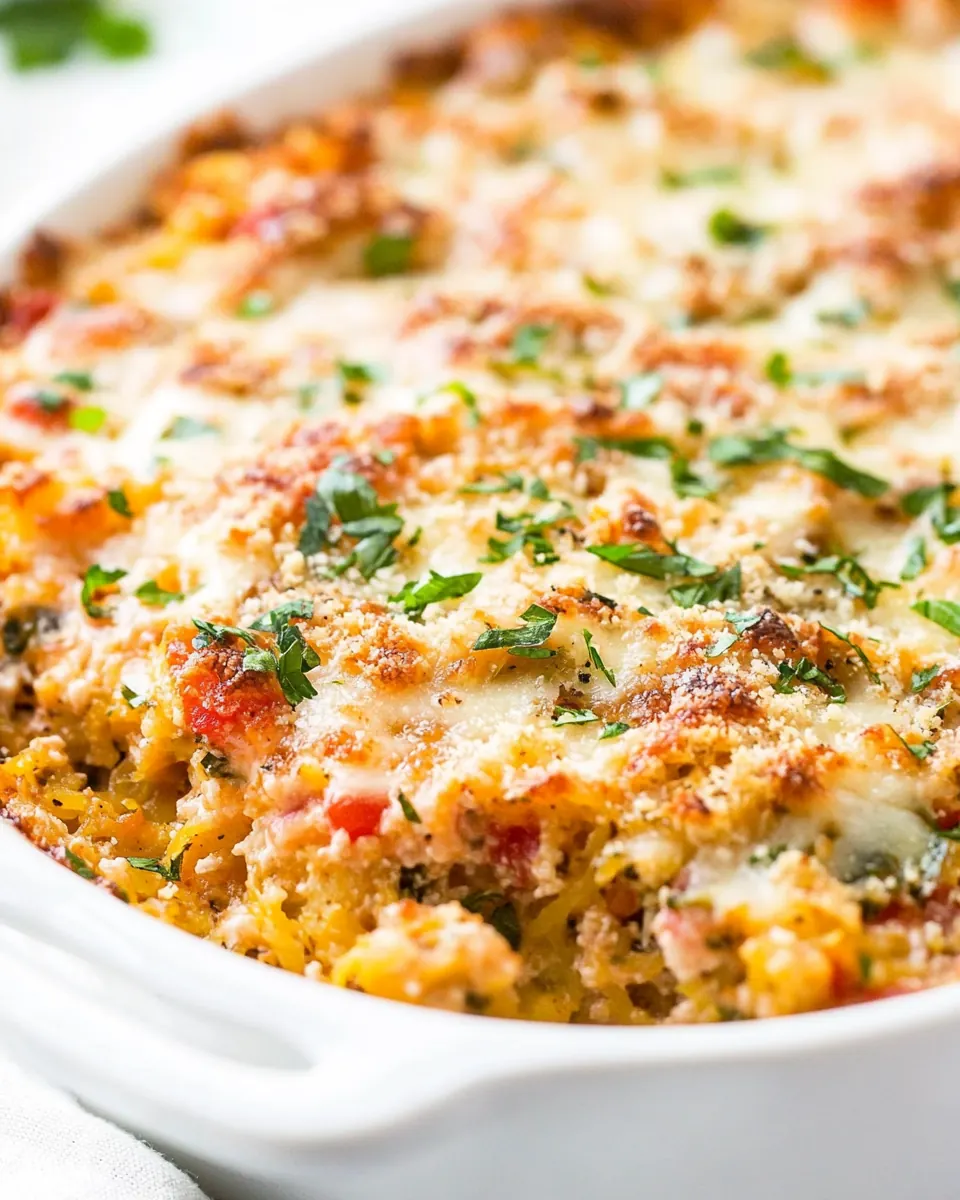
I like to think of these tips as small nudges that consistently improve the final casserole. They cover timing, texture, and simple swaps so the dish stays reliable and crowd friendly.
- Make ahead: Roast and shred the spaghetti squash up to three days in advance, store in an airtight container, and assemble the casserole when you are ready to bake for a quick weeknight meal.
- Cheese control: Use part skim mozzarella or provolone and divide it, stirring half into the filling and reserving the rest for a gooey top that browns beautifully.
- Tomato drainage: Thoroughly drain the canned diced tomatoes to avoid excess liquid, but do not squeeze them too dry, a little juice helps bind the filling.
- Spice adjustment: Reduce the crushed red pepper flakes to 1/4 teaspoon if you are sensitive to heat, the small amount still adds brightness without overpowering.
- Herb freshness: Finish with chopped fresh parsley or basil for a lively note and visual contrast against the cheesy top.
- Pan readiness: Use a deep 8 by 8 inch dish or 2 quart casserole to ensure the layers fit comfortably and bake evenly, avoiding overflow or underfilled pans.
What to Serve Alongside Spaghetti Squash Casserole
This casserole pairs well with simple sides and suits a range of occasions from casual weeknights to family gatherings. Consider light salads or warm breads and think about seasonal produce to complement the roasted flavors.
- Green salad: A crisp leafy salad with a bright vinaigrette counters the casserole’s richness with acidic freshness, ideal for lunch or dinner.
- Light soup: A clear vegetable or broth based soup makes a gentle starter and keeps the meal balanced, especially in colder months like fall.
- Grain side: Serve a small portion of whole grains if you want added heft, such as a simple herbed quinoa for texture and nutty flavor.
- Occasions: This casserole works well for weeknight dinners, potlucks, or cozy fall gatherings where you want a warming, approachable dish.
- Storage tips: Refrigerate leftovers for up to five days in an airtight container, reheat in a 350 degrees F oven until warmed through for best texture.
- Seasonal pairing: In fall, pair with roasted root vegetables or a pear and arugula salad to echo autumnal flavors and add variety.
FAQ
Conclusion
This Spaghetti Squash Casserole stands out because it delivers classic casserole comfort with lighter, vegetable forward texture. Give it a try the next time you want a cozy, family friendly meal that does not feel heavy, especially during fall or when you want make ahead convenience. I hope you enjoy the layered flavors and the golden cheesy finish as much as I do, and that it becomes one of your reliable weeknight or gathering dishes.
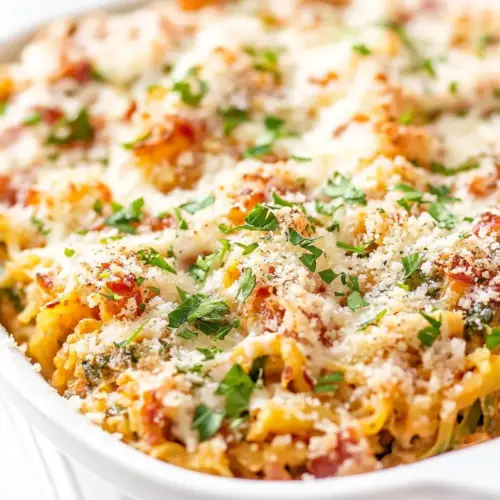
Spaghetti Squash Casserole
Equipment
- Oven
- Large deep skillet
- 8×8 inch baking dish
- Fork
- Slotted Spoon
Ingredients
- 1 small/medium spaghetti squash about 2 pounds Roast and scrape the squash strands to provide a low-carb noodle-like base for the casserole; its mild, slightly sweet flesh soaks up sauces and seasonings, adding bulk and texture. Peel and halve before baking to concentrate flavor and make shredding easier for even distribution throughout the dish.
- 2 teaspoons extra-virgin olive oil Lightly coat vegetables and meat to prevent sticking and to help brown aromatics; olive oil adds subtle fruitiness that enhances savory flavors. Use sparingly to control fat content while promoting caramelization of onions and peppers for depth.
- 1 pound 93% lean ground turkey Brown and crumble to supply a lean, protein-rich foundation that carries the savory and herbal notes of the casserole; lean turkey keeps the dish lighter while still providing structure. Cook thoroughly and season while browning so it absorbs aromatics and spices evenly.
- 1 small red onion diced Sweat or caramelize to introduce natural sweetness and foundational savory flavor; diced texture melds with softened peppers and meat for cohesive bites. Add to the skillet early to develop depth that balances tomato acidity and squash mildness.
- 1 green bell pepper cored and diced Sauté until tender to contribute bright, vegetal sweetness and crunchy-turned-soft texture; diced pieces blend with onions and garlic to create a flavorful vegetable base. Use green pepper to add color contrast and a touch of bitterness that enhances overall balance.
- 1 teaspoon kosher salt Season generously during cooking to bring out the natural flavors of meat and vegetables; kosher salt enhances savory and sweet notes while helping to draw moisture from vegetables. Adjust to taste near the end to account for other salty ingredients and to avoid over-seasoning.
- 1/2 teaspoon ground black pepper Season moderately to provide sharp, savory warmth without overwhelming other flavors; freshly ground black pepper adds a subtle heat and aromatic complexity. Sprinkle during cooking and again to finish if a more noticeable peppery bite is desired.
- 1 can 14.5-ounce diced tomatoes with Italian spices, drained Add savory acidity and herbaceous tomato flavor after draining to keep texture from becoming too watery; diced tomatoes with Italian spices contribute moisture, umami, and built-in seasoning. Fold into the cooked meat and vegetables so the tomato pieces distribute evenly throughout the casserole.
- 3 cloves garlic minced Sauté briefly with aromatics to release pungent, fragrant oils that brighten the entire dish; minced garlic delivers a savory bite and pairs well with Italian herbs and tomatoes. Add toward the end of sautéing to prevent burning and bitterness.
- 1 teaspoon Italian seasonings of choice or a mix of oregano, basil, and thyme Season blends to infuse classic Italian herb flavors such as oregano, basil, and thyme; use as a cornerstone herb mix to tie together tomato, meat, and cheese components. Sprinkle during cooking to allow the herbs to bloom and merge into the sauce.
- 1/2 teaspoon crushed red pepper flakes reduce to 1/4 teaspoon if sensitive to spice Add a controlled kick of heat to contrast the mild squash and creamy cheese; adjust amount based on spice tolerance to maintain balance. Incorporate early enough to diffuse heat through the filling but sparingly to keep family-friendly heat levels.
- 1 cup freshly grated part-skim mozzarella or provolone cheese divided Melted into and atop the casserole to provide creamy, stretchy texture and a satisfying golden finish; part-skim mozzarella or provolone delivers melty cheese that binds ingredients without excessive greasiness. Reserve some to sprinkle on top for a bubbly, attractive crust when baked.
- Chopped fresh parsley or basil Garnish finely chopped to deliver fresh, herbal brightness and color contrast at serving; parsley or basil adds a fragrant finish that lifts the richness of meat and cheese. Scatter just before serving to maintain vibrant flavor and visual appeal.
Instructions
- Place a rack in the center of your oven and preheat the oven to 400 degrees F. Roast the spaghetti squash according to this recipe for Roasted Spaghetti Squash. When cool enough to handle, pull the squash strings out of the squash's center with a fork and transfer to a large mixing bowl. The squash strings should look like spaghetti.: As the oven warms to 400 degrees F, you will notice the air fill with a sweet, nutty aroma as the squash roasts, signaling caramelization of its natural sugars. The flesh should become tender enough that a fork glides through and the strands separate cleanly, resembling al dente pasta. This roasted scent and the slightly toasted edges are clues that the squash is done. Gently scraping the strands releases steam and that roasted perfume, and transferring them to a large bowl keeps them from cooling too quickly. A common mistake is under roasting which leaves the strands dense and chewy, so if the fork meets resistance, return the squash to the oven for a few more minutes.
- Reduce the oven temperature to 350 degrees F. Heat the olive oil in a large, deep skillet over medium high. Add the turkey, onion, bell pepper, salt, and black pepper. Cook, breaking apart the meat, until meat is browned and the vegetables are tender, about 8 minutes. Add the drained tomatoes, garlic, Italian seasoning, and red pepper flakes. Let cook until most of the liquid from the tomatoes has cooked off, about 4 minutes, and then add the reserved squash. Cook and stir until most of the remaining liquid has cooked off, about 1 to 2 minutes more, increasing the heat if needed. Stir in 1/2 cup of the shredded cheese. There may be some liquid remaining in the pan.: The sizzle when the extra-virgin olive oil hits the pan is your first hint that flavors are building; as the ground turkey browns you will smell a toasty, savory note and see small caramelized bits forming on the pan surface. The diced red onion and green bell pepper should soften and release a sweeter aroma, while the salt helps draw out moisture to intensify flavor. Browning the meat adds Maillard complexity, which deepens the filling's taste. Avoid overcrowding the pan, which can steam the ingredients instead of browning; if your skillet seems crowded, cook in batches to achieve proper caramelization.
- Lightly coat a deep 8×8-inch baking dish or 2-quart casserole dish with nonstick spray. With a slotted spoon, scoop the squash mixture into the pan in an even layer, discarding any excess liquid (some in the pan is OK—just not too much). Bake, uncovered, for 20 minutes. Remove from the oven and sprinkle with the remaining 1/2 cup cheese, and then return to the oven and bake until the cheese melts, about 5 to 10 additional minutes. For an extra-golden-brown top, place the casserole under the broiler for a few minutes. Remove from the oven, sprinkle with parsley and/or basil, and let rest 5 minutes. Serve hot.: When you add the drained diced tomatoes , the mixture will hiss briefly and then settle into a saucy simmer; the garlic will release a warm, aromatic perfume that blends with the herbs. Cooking until most of the tomato liquid evaporates concentrates the flavors and prevents a watery casserole, while the slightly reduced tomato base clings to the browned bits from the pan. Folding in the reserved spaghetti squash after reduction ensures the strands absorb flavor rather than sit in excess liquid. A frequent error is skipping the reduction, which results in a soggy texture after baking.
- Cook and stir until most of the remaining liquid has cooked off, about 1 to 2 minutes more, increasing the heat if needed. Stir in 1/2 cup of the shredded cheese. There may be some liquid remaining in the pan: At this point, increase your attention to visual cues, the mixture should tighten and cling together, releasing a concentrated aroma of herbs and tomato. The brief final cook evaporates residual moisture, leaving a cohesive filling that will hold up in the casserole dish. When you stir in the reserved 1/2 cup of mozzarella or provolone , it lends creamy silkiness that helps bind the strands and meat without overpowering the squash. If you see puddles of liquid, continue to cook a little longer; the goal is a moist but not soupy filling. Overcooking here can dry the mixture, so keep it balanced.
- Lightly coat a deep 8×8-inch baking dish or 2-quart casserole dish with nonstick spray. With a slotted spoon, scoop the squash mixture into the pan in an even layer, discarding any excess liquid (some in the pan is OK—just not too much): As you spoon the filling into the prepared baking dish, listen for the soft gloop of the strands settling and watch for an even layer that will bake uniformly. Using a slotted spoon helps leave behind excess liquid, which prevents a soggy bottom while retaining enough moisture for a creamy interior. The evenness of the layer affects how well the top browns, so smooth gently without compressing the strands. A mistake is packing tightly, which makes the casserole dense instead of light and tender.
- Bake, uncovered, for 20 minutes. Remove from the oven and sprinkle with the remaining 1/2 cup cheese, and then return to the oven and bake until the cheese melts, about 5 to 10 additional minutes: During the initial uncovered bake, the kitchen will fill with bubbling, savory scents and the surface will begin to set. You want to see edges lightly bubbling and the top firming, that indicates moisture has tightened and the casserole will hold its shape. After you add the remaining 1/2 cup of cheese , return to the oven to allow the top to melt into a glossy, inviting layer. Watch closely during the final minutes so the cheese melts and begins to brown without burning; broil briefly if you want a golden finish but monitor continuously to avoid charring.
- For an extra-golden-brown top, place the casserole under the broiler for a few minutes. Remove from the oven, sprinkle with parsley and/or basil, and let rest 5 minutes. Serve hot: Sliding the dish under the broiler for a short time adds those toasty, browned notes and a crispness to the cheese that contrast wonderfully with the soft interior. You will smell a nutty, baked cheese aroma and see beautiful bronzing on top. Resting for about 5 minutes after baking lets juices settle and makes portioning cleaner, while the finish of chopped fresh parsley or basil brightens the palate with herbal freshness. Avoid leaving it too long, or the casserole will cool and the cheese will firm up making it harder to serve smoothly.
Notes
- Make ahead: Roast and shred the spaghetti squash up to three days in advance, store in an airtight container, and assemble the casserole when you are ready to bake for a quick weeknight meal.
- Cheese control: Use part skim mozzarella or provolone and divide it, stirring half into the filling and reserving the rest for a gooey top that browns beautifully.
- Tomato drainage: Thoroughly drain the canned diced tomatoes to avoid excess liquid, but do not squeeze them too dry, a little juice helps bind the filling.
- Spice adjustment: Reduce the crushed red pepper flakes to 1/4 teaspoon if you are sensitive to heat, the small amount still adds brightness without overpowering.
- Herb freshness: Finish with chopped fresh parsley or basil for a lively note and visual contrast against the cheesy top.
- Pan readiness: Use a deep 8 by 8 inch dish or 2 quart casserole to ensure the layers fit comfortably and bake evenly, avoiding overflow or underfilled pans.
