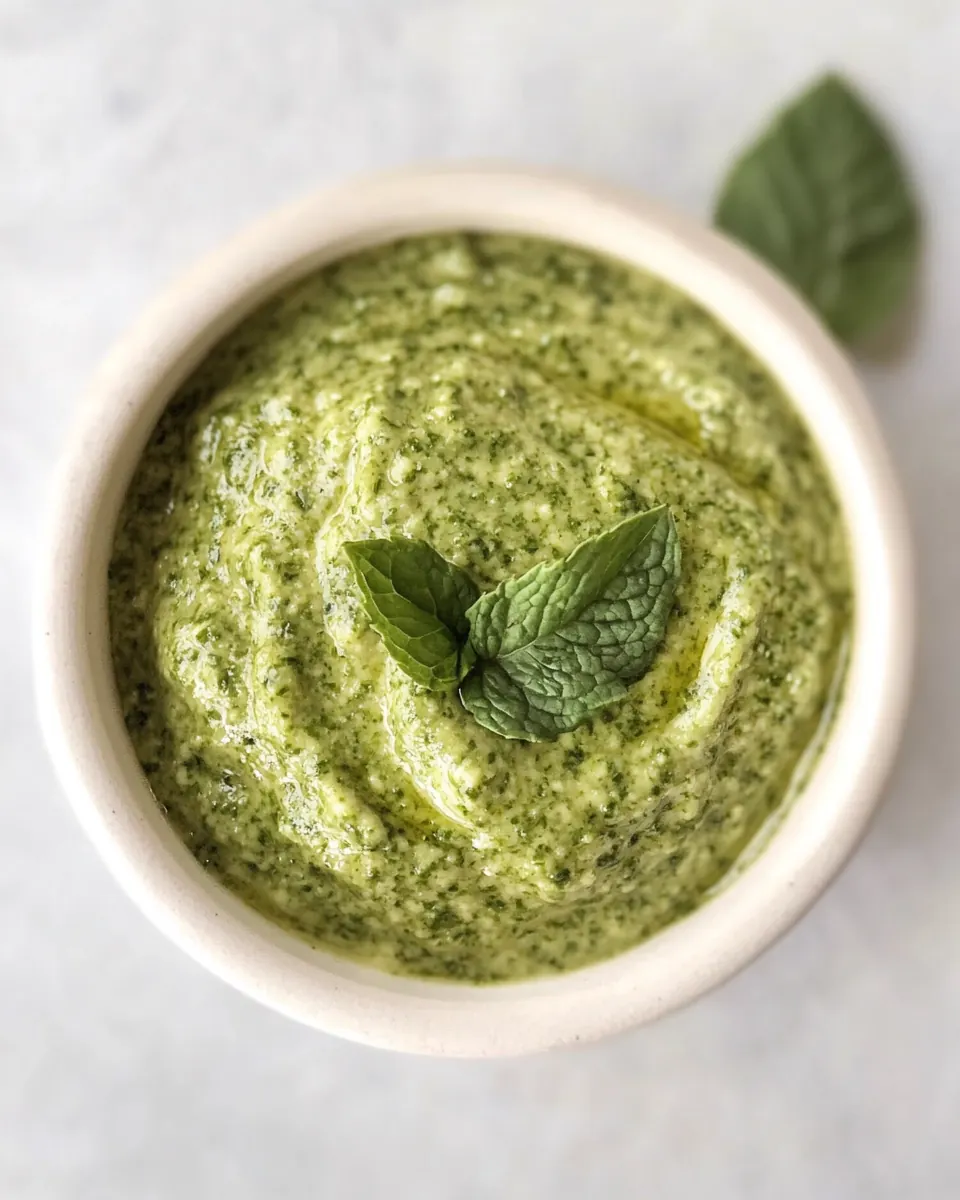
Pistachio Mint Pesto
Pistachio Mint Pesto is one of those bright, herbaceous sauces I reach for when spring herbs are overflowing in my kitchen. The first time I made it I was trying to use up a bundle of mint that came with a farmer market haul, and the combination of fresh mint and crunchy pistachios surprised me with how lively it tasted. I served it with warm bread and it instantly lifted the whole meal.
I remember standing at the counter, smelling the cool, green aroma as I pulsed the mint and dill together, thinking how pesto does not always need parmesan or pine nuts to feel complete. This version is bright, slightly nutty, and perfect for spreading, tossing, or dolloping. Over the years I have used it on roasted vegetables, stirred into grain bowls, and smeared across sandwiches for a quick flavor upgrade. You will notice the texture is a little chunkier than a classic basil pesto, which I like because it gives you little pockets of pistachio crunch in every bite.
When friends come over, I often set out a jar of Pistachio Mint Pesto with crudites and olives, and it becomes the thing everyone keeps asking about. It is one of those sauces that always makes me feel like I put more effort into a meal than I actually did. Keep a container in the fridge for weeknight rescues, and don’t be shy about using the lemon and green onion to balance the richness of the pistachios and olive oil.
Recipe Snapshot
5 mins
5 mins
Easy
250 kcal
Mediterranean
Vegan, Gluten-Free
Appetizers
Food processor, High speed blender, Measuring cups, Jar with lid
Why This Pistachio Mint Pesto Works
Bright herbal flavor that wakes up simple dishes
I love how Pistachio Mint Pesto transforms plain things into something memorable. The mint gives a cooling lift, while the dill adds a subtle anise note, so even simple toast or roasted vegetables feels elevated. You get an herbaceous punch without heavy sauces getting in the way.
Crunch and cream from unexpected nuts
The pistachios provide both texture and a naturally buttery quality, so you get a satisfying mouthfeel. I appreciate how they stand in for more traditional nuts, making the pesto feel a little nuttier and more interesting on the tongue.
Versatile and pantry friendly
This recipe is forgiving, and I often tweak it depending on what I have. A splash of lemon juice brightens it, and a little olive oil smooths the texture, so it plays nice with pastas, sandwiches, or as a dip. I frequently turn to it for quick weeknight meals because it is fast and flavorful.
Fresh but long lasting when stored correctly
I adore that you can make a batch and enjoy it all week. Floating a thin layer of olive oil on top keeps oxygen away and preserves the vibrant green color, which means you can rely on it for several days when you need a reliable condiment.
Bright, clean ingredient list
There is something satisfying about a recipe that reads like an ingredient list from a garden. With just mint, dill, green onions, pistachios, and simple seasonings, it’s approachable and feels wholesome. I often recommend it to people who want big flavor without too many steps.
Essential Ingredients for Pistachio Mint Pesto
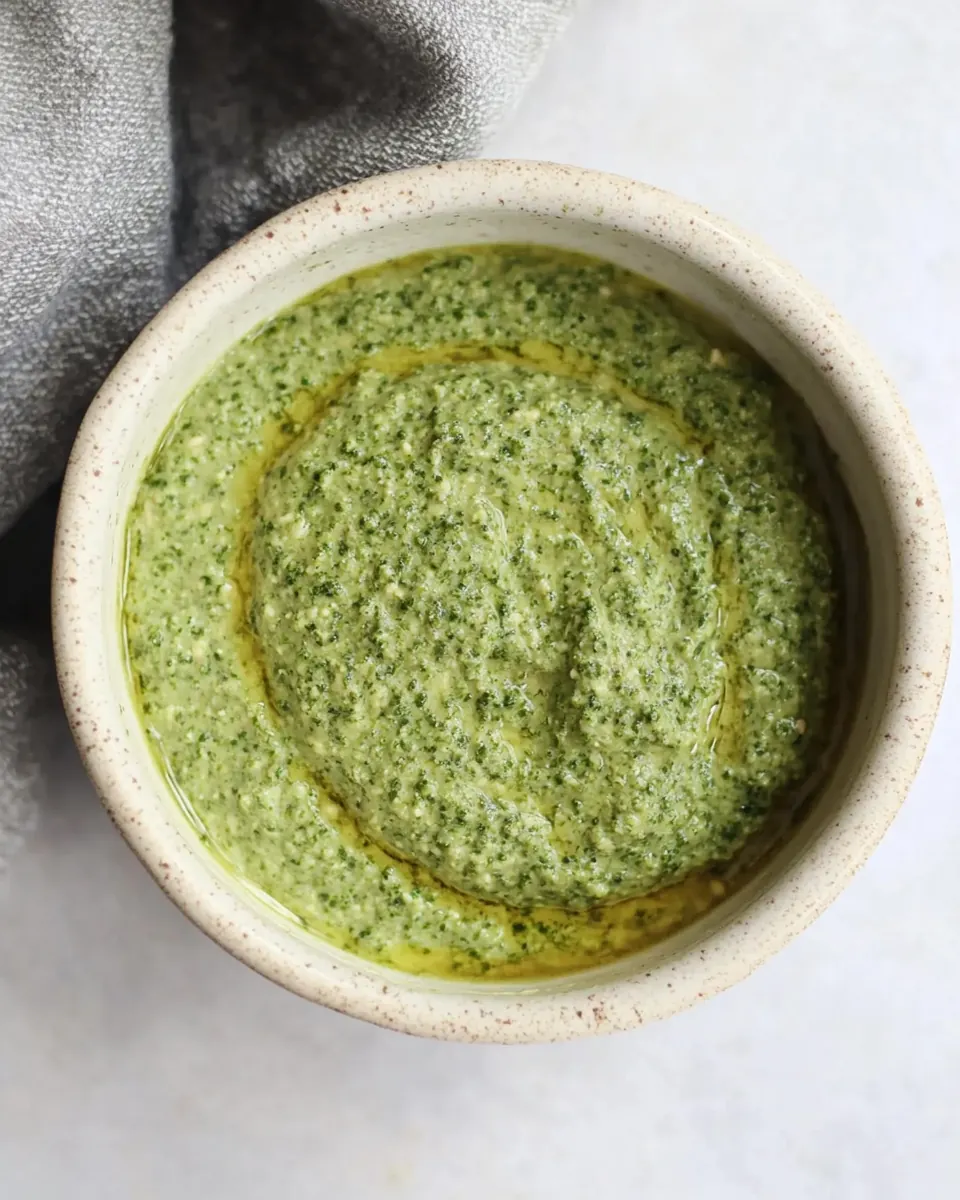
These elements work together to create a pesto that is bright, nutty, and balanced. The key players each bring a specific role: herbs for lift, nuts for body, aromatics for depth, and oil for cohesion. Together they form a sauce that is at once fragrant and textured, perfect for spreading or stirring into grains.
- 1/4 cup whole raw pistachios: Provide a toasty, nutty backbone to the pesto and add richness; pulse until coarsely ground to release oils and create texture. Support the sauce with protein and healthy fats, balancing bright herbs and citrus while contributing a pleasant bite.
- 2 cups packed mint leaves washed well: Add a bright, cooling herbaceous lift that defines the pesto's fresh flavor profile; gently pack and wash leaves to remove grit before processing. Combine with other herbs to create a vibrant green color and aromatic top note that complements the pistachios and lemon.
- 1/2 cup packed dill: Introduce a fragrant, slightly anise-like depth that rounds out the herb flavors and enhances complexity; tightly pack and chop or pulse to release aromatic oils. Work with mint to provide savory herbaceousness and a nuanced background that keeps the pesto balanced.
- 2 green onions chopped: Contribute a mild allium sharpness and subtle sweetness that adds savory depth without overpowering; chop finely to distribute flavor evenly. Help brighten the sauce and meld the herbs and nuts together, offering a gentle oniony undertone.
- 2 teaspoons lemon juice: Provide a bright, acidic counterpoint to the richness of the nuts and oil; add gradually and taste to balance. Help lift and freshen the overall flavor, preventing the pesto from tasting too heavy while preserving herbal brightness.
- 1 teaspoon lemon zest: Deliver intense citrus aroma and concentrated lemon flavor that boosts freshness; grate finely to avoid bitter pith and stir into the mixture. Enhance the pesto's brightness and complement the lemon juice without adding more acidity, amplifying overall fragrance.
- Big pinch salt: Season and enhance all flavors by bringing out the herbs' and nuts' natural tastes; sprinkle in a large pinch and adjust to preference. Help balance acidity and richness, ensuring the pesto is well-rounded and savory rather than flat-tasting.
- Pinch of ground black pepper: Add a subtle warming note and mild bite that sharpens the pesto's profile; include a small pinch and taste to avoid overpowering. Complement the salt and acidity while providing a classic finishing seasoning that rounds out the sauce.
- 1/4 cup olive oil: Create a silky mouthfeel and carry flavors while melding ingredients; drizzle in gradually as you process to reach desired consistency. Provide healthy fat that smooths the pesto, helps it cling to pasta or bread, and preserves flavor by suspending aromatic compounds.
- Hot water if needed: Adjust consistency by loosening the pesto without diluting flavor when it becomes too thick; add sparingly until smooth. Serve to achieve the ideal spreadable or sauce-like texture, especially useful if the mixture tightens during blending or chilling.
Preparation Steps for Pistachio Mint Pesto
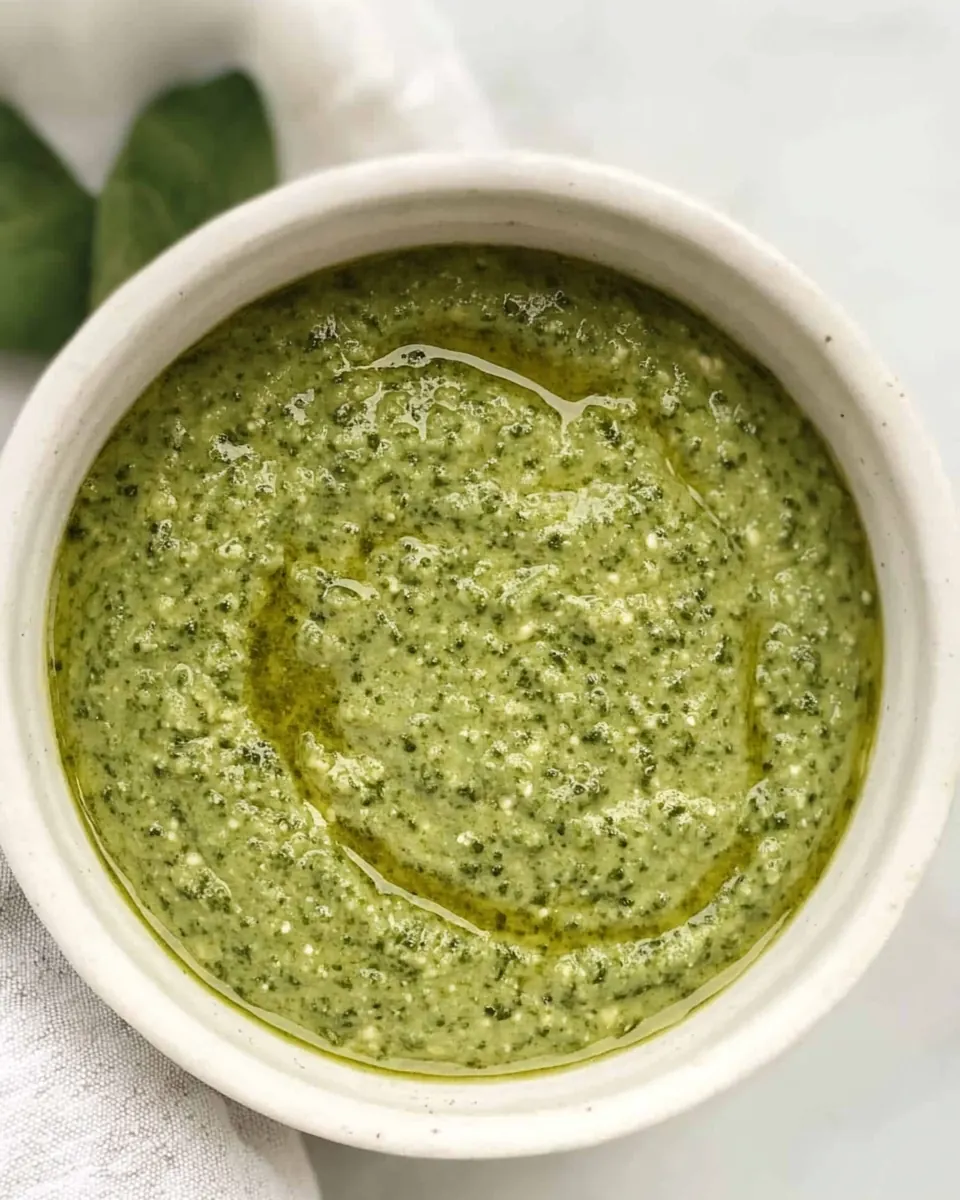
This pesto comes together in minutes, and the directions are straightforward. I like to prepare all ingredients before I start the machine so the process feels smooth. Keep an ear and nose out for the change in aroma as you blend, that is often the best guide.
- Add all of the ingredients except the olive oil to a food processor or a high speed blender. Pulse until finely chopped.: The first aroma you will notice is the sharp, herbaceous scent of mint and dill that fills the kitchen, which signals the herbs are breaking down and releasing their essential oils. The pulsing action gives you control, creating small, even pieces of pistachio and green onion without turning everything into a puree. Listen for a change from leafy rustle to a denser, fuller sound, and watch for a uniformly chopped mixture with no large chunks of herb. This technique matters because overblending warms the herbs and turns the texture too smooth, losing the lively mouthfeel. A common mistake at this stage is blending continuously instead of pulsing, which can produce a pasty result and a slightly bitter cooked flavor.
- With the motor running, drizzle in the olive oil. If needed you can add in a tablespoon of hot water as needed to make a smooth pesto. Taste and adjust seasoning.: As you drizzle olive oil with the motor running, you will see the mixture begin to come together into a glossy, emusified sauce, and the scent becomes more rounded and less sharp. The oil binds the tiny chopped pieces into a cohesive texture, giving a satiny sheen and carrying the flavors. If the mixture feels too thick, add hot water a tablespoon at a time until it loosens, being careful not to overshorten the flavor intensity. I always taste for salt and acid at this stage, adjusting with another pinch of salt or a touch more lemon juice to brighten. One frequent error here is adding too much liquid too quickly, which dilutes the herbal punch and results in a watery pesto.
- Use immediately or store for up to 1 week in a tightly sealed container.: Fresh pesto has a vivid green color and a lively herbal aroma that fades over time as oxidation sets in, so using it right away gives the best sensory experience. If you are storing it, pour it into a clean jar and press the surface down so there are minimal air pockets, then float a thin layer of olive oil on top to slow browning. Refrigerated, the pesto will maintain good flavor for several days, and you can also freeze it in small portions for longer storage. A common mistake is leaving air trapped under the lid which accelerates discoloration and flavor loss, so make sure the surface is sealed.
Tips and Tricks about Pistachio Mint Pesto
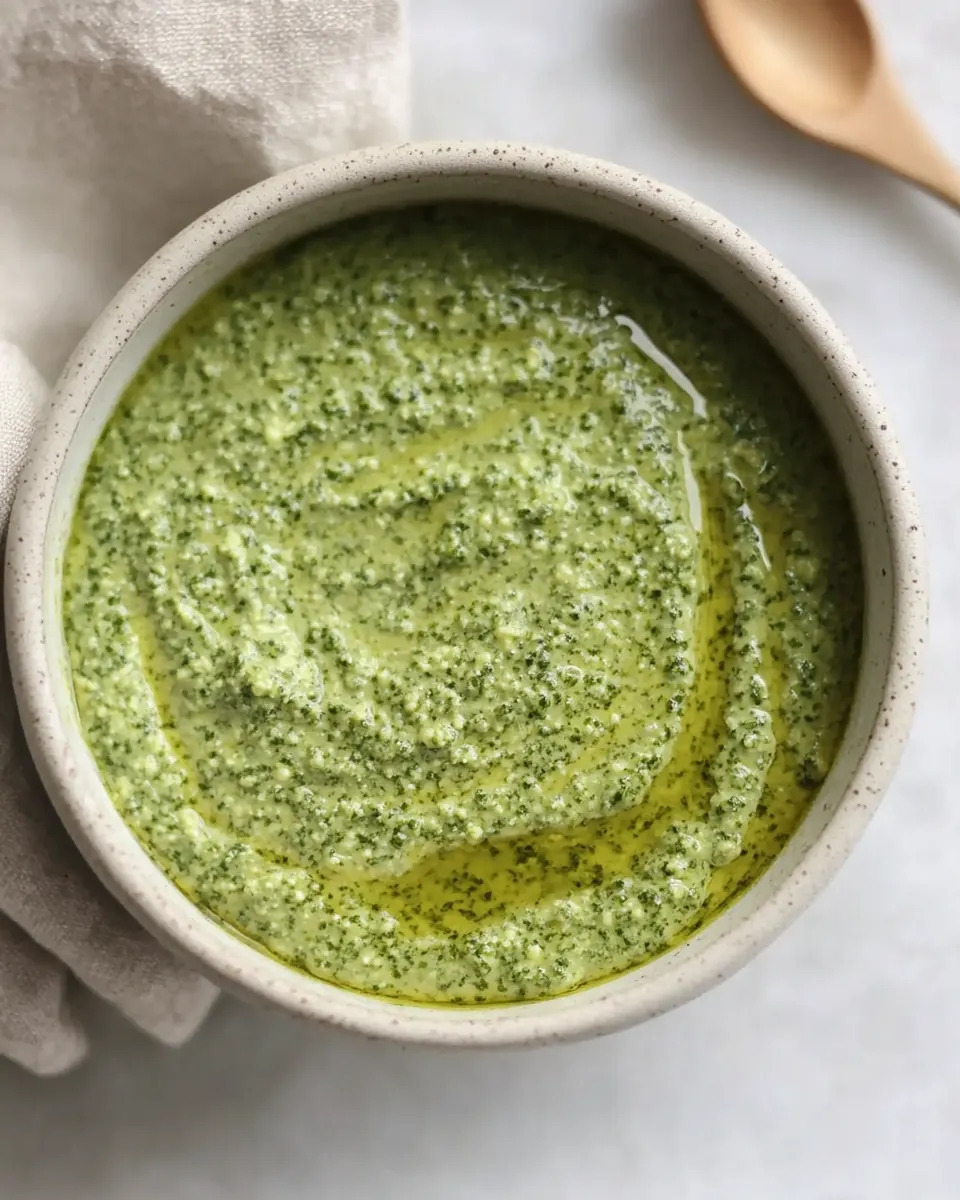
This short intro gives context to the tips below, focusing on practical ways to get the best results with your Pistachio Mint Pesto. Use these ideas to adapt texture, storage, and serving methods.
- Prep the herbs properly: Pat mint and dill dry after washing so they chop cleanly rather than becoming slippery and watery, which can dilute the pesto.
- Control texture with pulsing: Use short pulses in your processor to retain small pieces of pistachio for pleasant crunch, rather than running the machine until everything is completely smooth.
- Use room temperature oil: Slightly warmed olive oil blends more readily and helps the sauce emulsify into a glossy consistency without clumping.
- Taste before adding salt: The natural oils from pistachios can make the pesto seem rich, so add salt gradually and adjust at the end to avoid oversalting.
- Seal for storage: When refrigerating, press the surface down and pour a thin layer of olive oil on top to reduce oxidation and keep the green color.
Serving This Pistachio Mint Pesto
This pesto is wonderfully adaptable and works across many serving styles. Below are thoughtful ways to present it, pair it, and store leftovers so you get the best results each time.
- As a spread: Serve a spoonful on crusty bread or toast for an easy appetizer or snack that showcases the fresh herbal notes and crunchy pistachios.
- With pasta: Toss warm pasta with a few tablespoons of pesto and a splash of pasta cooking water to create a light, herb forward sauce for lunch or dinner.
- On roasted vegetables: Drizzle over roasted vegetables to add brightness and a nutty texture, perfect for a spring or summer side dish.
- For sandwiches and wraps: Use as a condiment in place of mayonnaise to bring freshness and complexity to sandwiches, burgers, or wraps.
- Storage tips: Keep in a sealed jar in the refrigerator for up to one week, and freeze in ice cube trays for single serve portions that thaw quickly when needed.
FAQ
Conclusion
This Pistachio Mint Pesto stands out for its lively herbal character and satisfying nutty texture. It brings a bright, springlike flavor to everything from toast to pasta, and it is both quick to make and endlessly adaptable. I encourage you to try it when mint and dill are in season, and keep a jar ready in the fridge for easy flavor boosts. It is one of those simple recipes that feels impressive, yet takes almost no time, and I promise it will become a regular in your rotation.
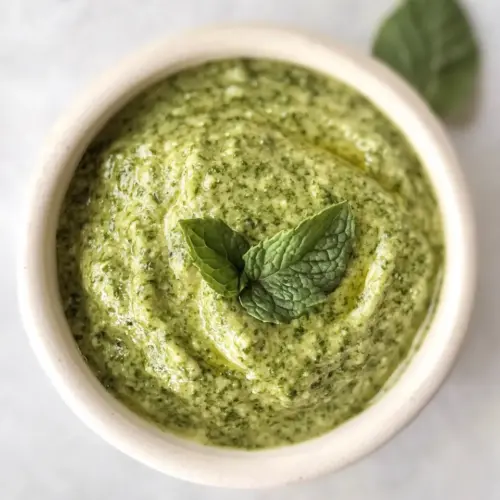
Pistachio Mint Pesto
Equipment
- Food Processor
- High Speed Blender
- Measuring Cups
- Jar with Lid
Ingredients
- 1/4 cup whole raw pistachios Provide a toasty, nutty backbone to the pesto and add richness; pulse until coarsely ground to release oils and create texture. Support the sauce with protein and healthy fats, balancing bright herbs and citrus while contributing a pleasant bite.
- 2 cups packed mint leaves washed well Add a bright, cooling herbaceous lift that defines the pesto's fresh flavor profile; gently pack and wash leaves to remove grit before processing. Combine with other herbs to create a vibrant green color and aromatic top note that complements the pistachios and lemon.
- 1/2 cup packed dill Introduce a fragrant, slightly anise-like depth that rounds out the herb flavors and enhances complexity; tightly pack and chop or pulse to release aromatic oils. Work with mint to provide savory herbaceousness and a nuanced background that keeps the pesto balanced.
- 2 green onions chopped Contribute a mild allium sharpness and subtle sweetness that adds savory depth without overpowering; chop finely to distribute flavor evenly. Help brighten the sauce and meld the herbs and nuts together, offering a gentle oniony undertone.
- 2 teaspoons lemon juice Provide a bright, acidic counterpoint to the richness of the nuts and oil; add gradually and taste to balance. Help lift and freshen the overall flavor, preventing the pesto from tasting too heavy while preserving herbal brightness.
- 1 teaspoon lemon zest Deliver intense citrus aroma and concentrated lemon flavor that boosts freshness; grate finely to avoid bitter pith and stir into the mixture. Enhance the pesto's brightness and complement the lemon juice without adding more acidity, amplifying overall fragrance.
- Big pinch salt Season and enhance all flavors by bringing out the herbs' and nuts' natural tastes; sprinkle in a large pinch and adjust to preference. Help balance acidity and richness, ensuring the pesto is well-rounded and savory rather than flat-tasting.
- Pinch of ground black pepper Add a subtle warming note and mild bite that sharpens the pesto's profile; include a small pinch and taste to avoid overpowering. Complement the salt and acidity while providing a classic finishing seasoning that rounds out the sauce.
- 1/4 cup olive oil Create a silky mouthfeel and carry flavors while melding ingredients; drizzle in gradually as you process to reach desired consistency. Provide healthy fat that smooths the pesto, helps it cling to pasta or bread, and preserves flavor by suspending aromatic compounds.
- Hot water if needed Adjust consistency by loosening the pesto without diluting flavor when it becomes too thick; add sparingly until smooth. Serve to achieve the ideal spreadable or sauce-like texture, especially useful if the mixture tightens during blending or chilling.
Instructions
- Add all of the ingredients except the olive oil to a food processor or a high speed blender. Pulse until finely chopped.: The first aroma you will notice is the sharp, herbaceous scent of mint and dill that fills the kitchen, which signals the herbs are breaking down and releasing their essential oils. The pulsing action gives you control, creating small, even pieces of pistachio and green onion without turning everything into a puree. Listen for a change from leafy rustle to a denser, fuller sound, and watch for a uniformly chopped mixture with no large chunks of herb. This technique matters because overblending warms the herbs and turns the texture too smooth, losing the lively mouthfeel. A common mistake at this stage is blending continuously instead of pulsing, which can produce a pasty result and a slightly bitter cooked flavor.
- With the motor running, drizzle in the olive oil. If needed you can add in a tablespoon of hot water as needed to make a smooth pesto. Taste and adjust seasoning.: As you drizzle olive oil with the motor running, you will see the mixture begin to come together into a glossy, emusified sauce, and the scent becomes more rounded and less sharp. The oil binds the tiny chopped pieces into a cohesive texture, giving a satiny sheen and carrying the flavors. If the mixture feels too thick, add hot water a tablespoon at a time until it loosens, being careful not to overshorten the flavor intensity. I always taste for salt and acid at this stage, adjusting with another pinch of salt or a touch more lemon juice to brighten. One frequent error here is adding too much liquid too quickly, which dilutes the herbal punch and results in a watery pesto.
- Use immediately or store for up to 1 week in a tightly sealed container.: Fresh pesto has a vivid green color and a lively herbal aroma that fades over time as oxidation sets in, so using it right away gives the best sensory experience. If you are storing it, pour it into a clean jar and press the surface down so there are minimal air pockets, then float a thin layer of olive oil on top to slow browning. Refrigerated, the pesto will maintain good flavor for several days, and you can also freeze it in small portions for longer storage. A common mistake is leaving air trapped under the lid which accelerates discoloration and flavor loss, so make sure the surface is sealed.
Notes
- Prep the herbs properly: Pat mint and dill dry after washing so they chop cleanly rather than becoming slippery and watery, which can dilute the pesto.
- Control texture with pulsing: Use short pulses in your processor to retain small pieces of pistachio for pleasant crunch, rather than running the machine until everything is completely smooth.
- Use room temperature oil: Slightly warmed olive oil blends more readily and helps the sauce emulsify into a glossy consistency without clumping.
- Taste before adding salt: The natural oils from pistachios can make the pesto seem rich, so add salt gradually and adjust at the end to avoid oversalting.
- Seal for storage: When refrigerating, press the surface down and pour a thin layer of olive oil on top to reduce oxidation and keep the green color.
