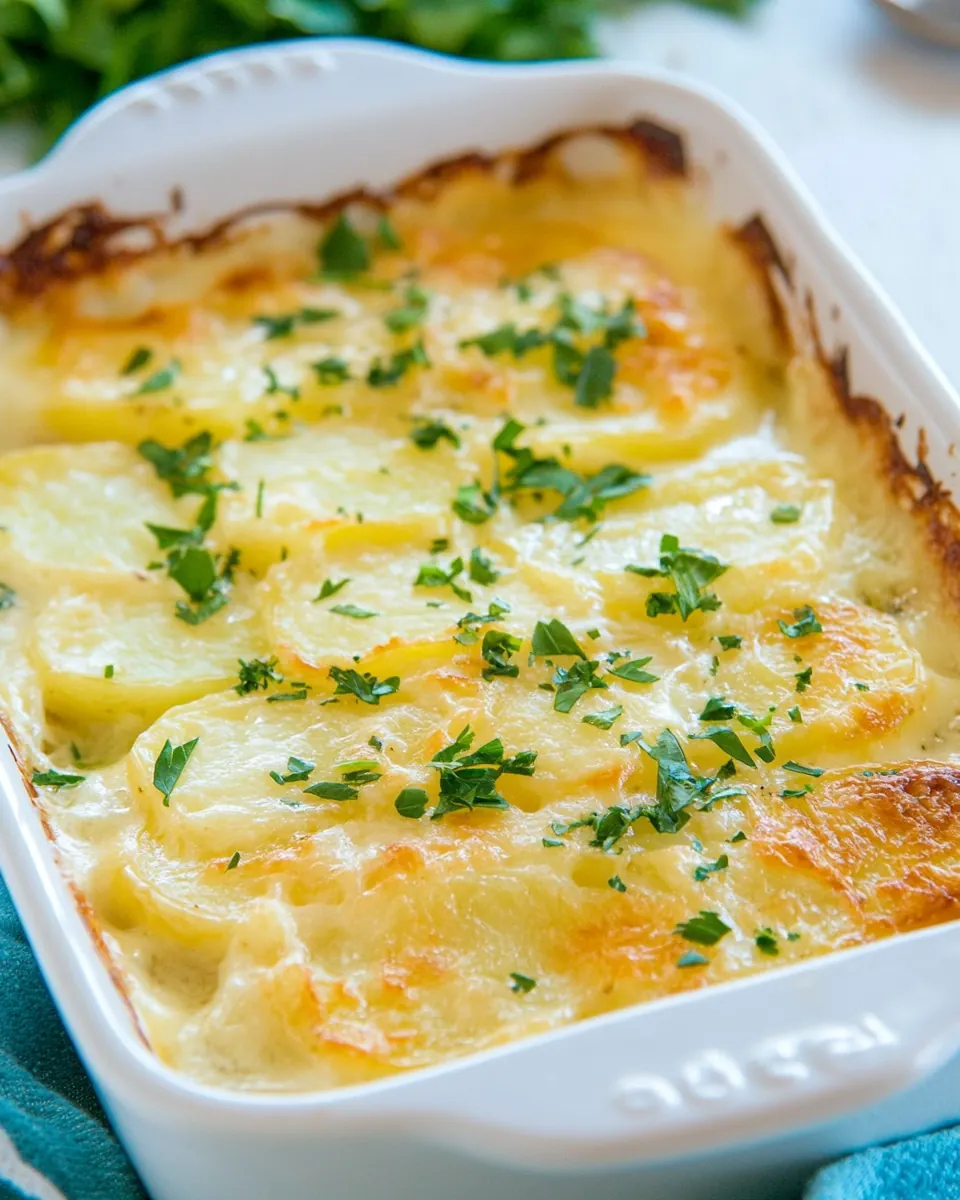
Scalloped Potato Gratin
Scalloped Potato Gratin is the kind of dish that always finds its way onto my table when the weather leans cold and the house needs comforting food that feeds both belly and soul.
One evening last winter I pulled a pan of bubbling gratin from the oven after a long day, and the buttery aroma filled every corner of my kitchen. I remember the soft hiss as the foil came off and the top began to crisp, and how everyone paused what they were doing to come closer. I love that moment when simple ingredients transform into something that feels celebratory, without fuss.
I first learned to make this version while trying to lighten up an old family recipe, swapping a few techniques to keep it creamy yet not heavy. The result became my go to for weeknight dinners and holiday sides alike. I often plate a portion as a centerpiece for a cozy supper, and the leftovers reheat beautifully the next day, tasting even more cohesive after the flavors have had time to mingle.
Recipe Snapshot
1 hr 15 mins
15 mins
60 mins
Medium
220 kcal
American
Gluten-Free, Low FODMAP
Side Dishes
9 x 13 casserole dish, Mandolin, Medium saucepan, Aluminum foil
What’s Great About This Scalloped Potato Gratin
Comfort that is approachable
I adore how Scalloped Potato Gratin delivers warm, familiar flavors without needing complicated skills. The layers of tender potatoes and a gently seasoned sauce mean you get comfort food that is approachable on busy nights.
Texture contrast
The creamy interior paired with a golden, slightly crisp top gives a texture contrast that keeps every bite interesting. I like to aim for that bubbling center and lightly bronzed crust, because it signals the right balance between softness and structure.
Minimal but impactful ingredients
This recipe relies on a handful of pantry staples, which is why I turn to it when I want flavor without a long shopping list. Each ingredient, from the savory parmesan cheese to the aromatic onion and garlic, plays a clear role in building depth.
Flexible and forgiving
One reason I recommend this dish is that it forgives small mistakes. If your slices are a bit thicker, bake a little longer. If your sauce seems thin, a few extra minutes on the stove will tighten it up. Those forgiving traits make it ideal for cooks at any skill level.
Great for gatherings
I often use this when entertaining because it scales easily and pairs well with many mains. It reheats well, so you can prep ahead and spend more time with guests, which is always my goal.
What You Need for Scalloped Potato Gratin
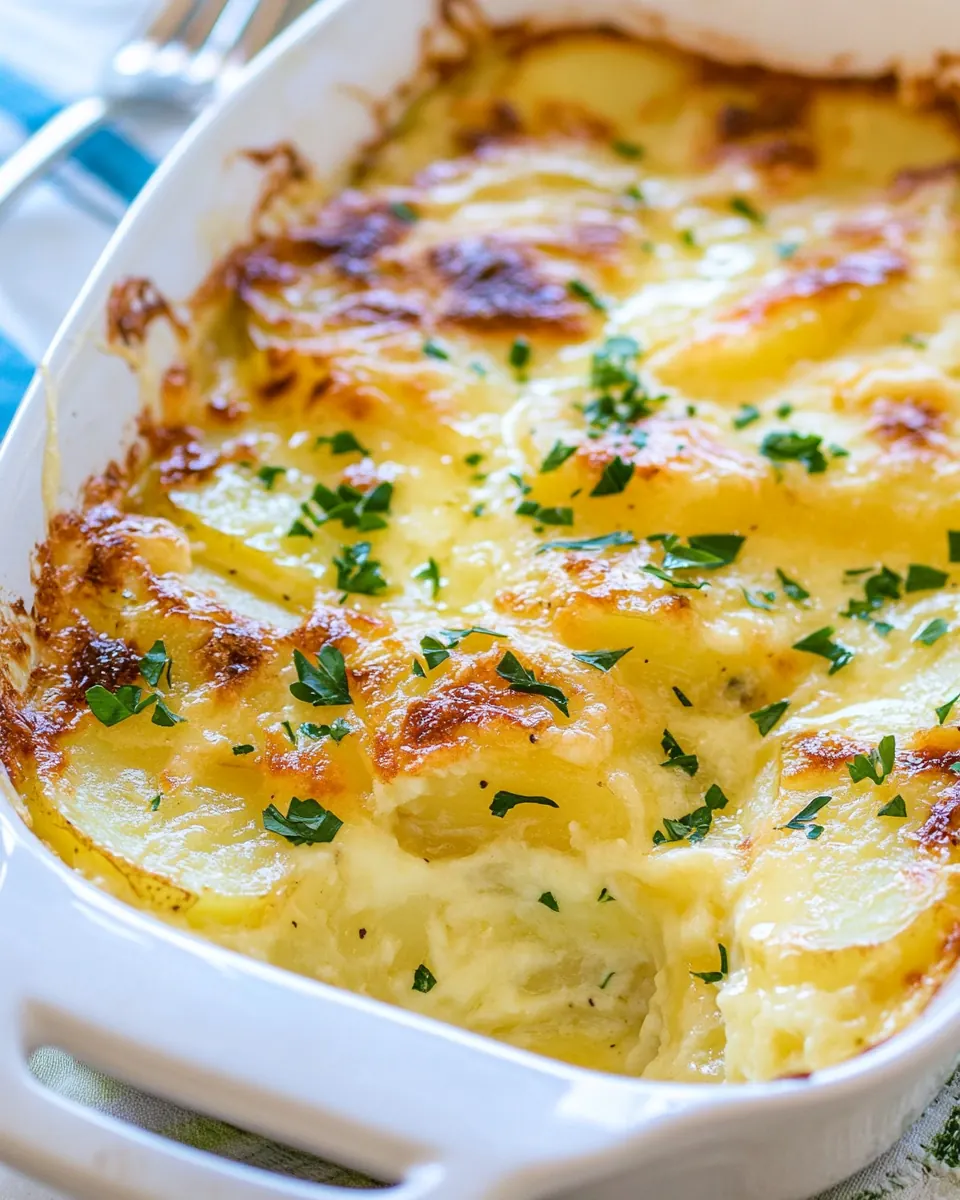
These ingredients are deliberately chosen to create a silky, savory sauce that clings to each slice of potatoes. The key players are the starchy Yukon Gold potatoes for their tender texture, the butter and flour to form a light roux, and the combination of milk and chicken broth to build a creamy yet slightly savory liquid base. Parmesan cheese adds umami and helps form the golden top, while onion and garlic layer aromatic complexity.
- 3 lbs Yukon Gold Potatoes, peeled: Provide thin, even slices that form the body of the gratin, melting into creamy layers as they bake and absorbing the surrounding sauce; choose consistent thickness for uniform cooking and tender texture.
- 4 tbsp unsalted butter: Add rich, silky flavor and help brown the top and edges; melt into the pan to create a glossy base for the roux and to introduce buttery mouthfeel throughout the gratin.
- 1/2 large yellow onion, or 1 medium, finely diced: Offer a subtle sweet-savory backbone when finely diced and sautéed; cook until translucent to mellow sharpness and contribute aromatic depth to the layered dish.
- 2 large garlic cloves: Impart a pungent, aromatic note when minced or crushed and lightly cooked; release savory oils that blend into the sauce and enhance overall flavor complexity.
- 2 tbsp all-purpose flour: Thicken the milk-and-broth mixture into a smooth sauce when cooked briefly with fat; whisk in to create a light roux that helps the gratin set without becoming gluey.
- 1/2 tbsp sea salt: Season the potatoes and sauce to bring out natural flavors and balance richness; dissolve into the liquid so each layer is evenly seasoned and the dish is well-rounded.
- 1/2 tsp black pepper: Add mild heat and aromatic complexity when freshly ground; sprinkle to taste to lift other seasonings and create a subtle background bite.
- 3/4 cup parmesan cheese, divided into 1/4 cup for center, 1/2 cup for topping: Contribute nutty, savory umami in two parts: a smaller portion layered in the center for melty pockets and a larger portion grated on top to brown and crisp, enhancing flavor and texture.
- 1 1/2 cups milk, any kind: Provide the creamy base of the sauce and help bind layers together; heat gently with the roux to avoid scalding while contributing richness and softness to the gratin.
- 1 cup low sodium chicken broth: Introduce savory depth and a light brothiness to the sauce while keeping overall salt lower; combine with milk to add body and a delicate savory counterpoint.
- Green onions, to garnish (optional): Supply a bright, fresh garnish when thinly sliced; sprinkle over finished gratin to add color contrast and a mild oniony freshness, used optionally to taste.
Directions for Scalloped Potato Gratin
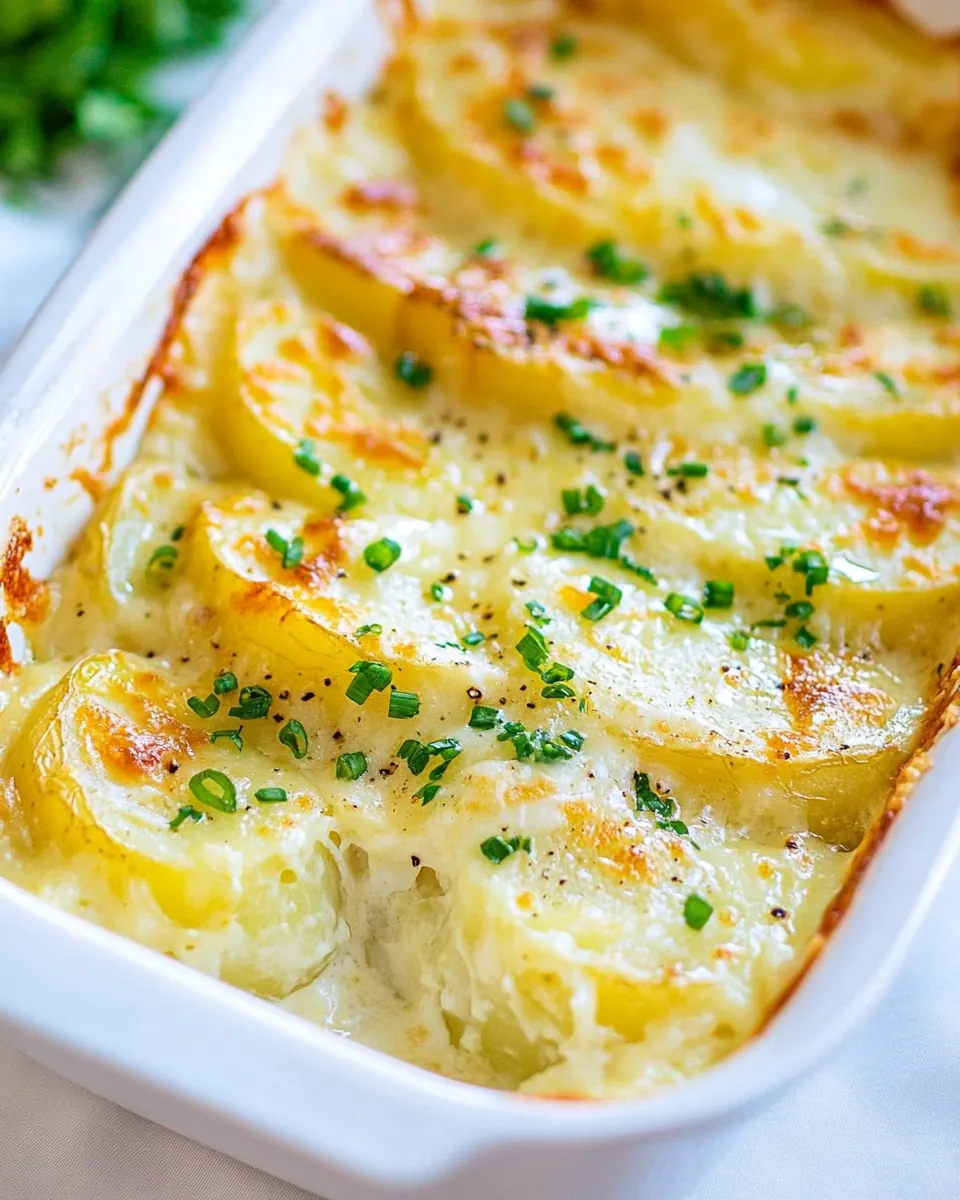
These directions will walk you through building a layered gratin, from preparing the potatoes to achieving a golden, bubbling top. Follow sensory cues and timing carefully to ensure even cooking and a richly flavored sauce.
- Prep: Butter the bottom and sides of a 9 x 13 casserole dish.: The air warms with a hint of butter when you rub the bottom and sides of the dish, which helps prevent sticking and encourages an even edge crust; use softened butter to coat thoroughly with your fingers or a paper towel. You'll feel the sheen on the pan, and the subtle scent of dairy signals the pan is ready. Avoid leaving big globs of butter pooled in corners, which can cause localized browning; spread it evenly for best results.
- Using a mandolin, thinly slice potatoes into rounds about 1/8" thick. Place potato slices in a bowl with cold water while you prep the sauce. This keeps them from discoloring and removes some of the starch. Drain potatoes well, just before you put them in your casserole dish.: When you slide the potatoes across a mandolin, they should produce clean, translucent rounds that shimmer slightly. Submerge them in cold water immediately to stop oxidation and wash away surface starch, which helps prevent gluey layers. Drain just before layering so they are not waterlogged; too wet and the sauce will be thin, too dry and they will absorb more liquid and tighten. A common mistake is slicing unevenly, which leads to uneven cooking; keep a steady motion and consistent thickness.
- Preheat Oven to 400˚F. In a medium saucepan over medium/high heat, melt 4 Tbsp butter. Add finely diced yellow onion and sauté until soft and golden (5 min). Add pressed garlic cloves and sauté another 1-2 min, stirring constantly, until fragrant. Whisk in 2 Tbsp flour and cook another 1 min until flour is golden. Add 1 1/2 cups milk and 1 cup chicken broth. Whisk mixture until smooth and bring to a simmer. Stir in 1/2 Tbsp sea salt and 1/2 tsp pepper (or season to taste). Remove from heat.: You will notice warmth filling the oven as it reaches temperature, which sets the stage for steady baking. Preheating ensures the gratin begins cooking immediately and helps the sauce come up to temperature with the potatoes . If you skip full preheat, the dish may take longer and the texture can become gummy rather than tender.
- Drain potatoes and arrange half of them in the bottom of your casserole dish (it doesn't matter how the first layer is arranged, just separate the potato slices as you put them in). Pour half of your sauce over the top and sprinkle with 1/4 cup parmesan cheese. Repeat with remaining potatoes, sauce and top with 1/4 cup parmesan cheese. I made the second layer of potatoes prettier for presentation.: As the butter melts, it will sizzle softly and release a nutty scent; keep the heat steady so it foams then calms without burning. This step forms the flavor base, and maintaining medium/high heat helps the next aromatics to sweat rather than brown quickly. Watch closely because butter can brown in moments at high heat, which will change the sauce flavor.
- Cover with aluminum foil and bake in the center of the oven at 400˚F for 55 minutes then uncover and broil another 3-5 minutes or until the top is golden brown. Garnish with green onion if desired and serve.: The diced onion will become translucent then develop sweet, golden edges as natural sugars caramelize. Stir frequently so pieces cook evenly; you want softness and a touch of color, not deep browning. Overcooking to a dark brown will lend a roasted rather than sweet character, which alters the intended flavor balance.
- Add pressed garlic cloves and sauté another 1-2 min stirring constantly until fragrant: Once the garlic hits the warm butter and onion , it will release a quick, heady aroma indicating readiness. Stir constantly to prevent small bits from burning, which creates bitterness. The garlic should smell aromatic and sweet when done, not acrid; if it darkens, start the sauce step again or reduce heat next time.
- Whisk in 2 Tbsp flour and cook another 1 min until flour is golden: As you whisk the flour into the fat, the mixture will thicken into a smooth paste that loses its raw taste after about a minute. You should see the roux take on a pale golden hue and smell slightly nutty. This step is critical because the roux is what thickens the sauce, so undercooking leaves a pasty flavor, while overcooking will darken it too much and reduce thickening power.
- Add 1 1/2 cups milk and 1 cup chicken broth: Pouring in the liquid will produce a few hissy bubbles as the roux integrates; whisk vigorously to dissolve lumps and create a glossy sauce. The mixture should become silkier and begin to thicken on gentle simmer. If lumps form, strain or whisk harder until smooth. A thin sauce at this stage means either not enough roux or too much liquid; simmer to reduce, or add a touch more roux dissolved in cold liquid.
- Whisk mixture until smooth and bring to a simmer: When the sauce begins to ripple and small bubbles form at the edges, the starches are activating and the texture will thicken. You will smell a mild dairy fragrance and see the sauce coat a spoon. Keep it at a gentle simmer to avoid scorching the bottom, and stir often to maintain even heat. Boiling aggressively can separate the sauce or scald the milk, leaving an off taste.
- Stir in 1/2 Tbsp sea salt and 1/2 tsp pepper (or season to taste): Adding the sea salt and black pepper at this point seasons the sauce properly, lifting flavors of the potatoes and parmesan cheese . Taste carefully because the chicken broth and parmesan cheese also contribute salt. Over seasoning is common here, so season lightly and adjust after baking if needed.
- Remove from heat: The sauce should be smooth, warm, and slightly thickened when you take it off the heat, losing the small bubbles and becoming glossy. Removing it prevents it from reducing too much and allows for easier layering. Keep in mind residual heat will continue gentle thickening, so do not overreduce on the stove.
- Drain potatoes and arrange half of them in the bottom of your casserole dish: As you layer, the potatoes will feel cool and slightly starchy to the touch; space them so edges overlap but are not crowded, allowing the sauce to seep between slices. This layering helps even cooking and a coherent structure. Crowding slices causes inconsistent doneness and dense texture, so aim for a loose, single layer.
- Pour half of your sauce over the top and sprinkle with 1/4 cup parmesan cheese: The sauce should pool gently around each slice, creating pockets of creaminess, while the parmesan cheese begins to melt into the surface and add savory depth. Use a spoon to coax sauce into gaps so every slice is coated. A common slip is pouring sauce unevenly, leaving dry pockets, which results in inconsistent texture.
- Repeat with remaining potatoes sauce and top with 1/4 cup parmesan cheese: The second layer should mirror the first, and finishing with parmesan cheese on top creates the attractive browned crust after broiling. Make the top layer neater for presentation if you like, aligning edges for a tidy look. If the top is too dry before baking, brush a little extra sauce on it to encourage browning rather than burning.
- Cover with aluminum foil and bake in the center of the oven at 400˚F for 55 minutes: Covered baking steams the interior, producing tender potatoes , while keeping moisture in so the sauce infuses the layers. After the time elapses, the center should feel just set and the aroma will be thick and savory. Avoid removing the foil early, which can dry the interior; only uncover later for browning.
- Uncover and broil another 3-5 minutes or until the top is golden brown: Under the broiler you will hear a light crackle, and the parmesan cheese will form a golden, slightly crisp crust with toasted notes. Keep the dish a few inches from the heat source and watch constantly, since broiling can go from golden to burned in seconds. If the top darkens too quickly, lower the rack or reduce broil time.
- Garnish with green onion if desired and serve: A sprinkle of optional green onions adds fresh color and a gentle onion bite against the rich, creamy backdrop. Let the gratin rest a few minutes so the sauce sets slightly, making it easier to serve neat slices. Serving too hot may cause the sauce to run and lose shape, so a brief rest yields cleaner portions.
Tips for Success
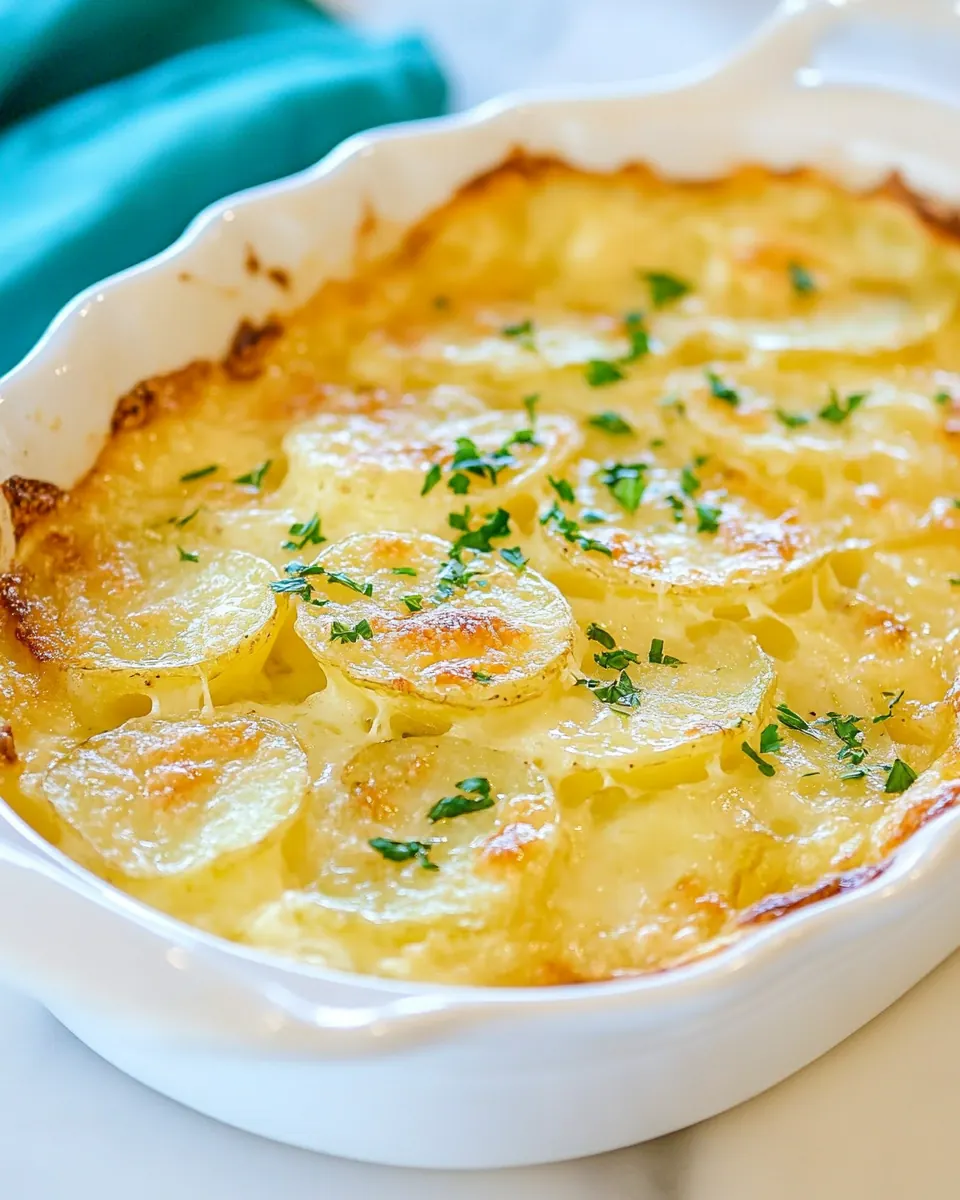
I like to share practical tips that transform a good gratin into a reliably excellent one. These notes cover texture control, seasoning, and timing so you feel confident from prep to table.
- Slice consistently Use a mandolin or a very sharp knife to achieve uniform 1/8 inch slices so every layer finishes at the same time.
- Control moisture After rinsing the potatoes, drain and pat them dry to prevent a watery sauce that dilutes flavor.
- Sweat aromatics Cook the onion and garlic slowly in butter until soft and fragrant, which builds a sweeter, more rounded sauce base.
- Adjust seasoning carefully Because the chicken broth and parmesan cheese add salt, season the sauce lightly and taste before baking to avoid oversalting.
- Watch the broiler Keep the dish under the broiler for only a few minutes to get a golden crust, and be ready to pull it as soon as color appears to avoid burning.
- Rest before serving Let the gratin sit for several minutes after baking so the sauce cools and sets slightly, making neat serving easier.
Perfect Matches for Scalloped Potato Gratin
This gratin is versatile and pairs beautifully with roasted mains or simple proteins. Serve it for family dinners or holiday gatherings where you want something comforting that also looks elegant on the table.
- Serve alongside roast chicken The creamy potatoes complement roasted poultry for a classic dinner pairing that balances texture and flavor.
- Pair with roasted vegetables A tray of seasonal roasted vegetables adds color and a caramelized contrast to the rich gratin.
- Holiday centerpiece Use the gratin as a comforting side for festive meals, where it coordinates with a variety of mains and feeds a crowd easily.
- Make ahead strategy Prepare through the layering step, refrigerate, then bake before serving to save time while still delivering fresh baked results.
- Storage tips Refrigerate leftovers in an airtight container for up to three days; reheat gently in the oven to preserve texture rather than microwaving, which can make it watery.
- Seasonal pairing In winter, pair with braised greens or citrus roasted beets to add bright notes that cut through the creaminess.
FAQ
Conclusion
This version of Scalloped Potato Gratin stands out for its balance of creamy interior and a golden, savory crust. The recipe is forgiving, uses familiar pantry ingredients, and scales well for weeknight dinners or holiday sides. Give it a try when you want comforting food that feels special without a lot of fuss. Let the aromas pull people to the table and enjoy the simple pleasure of warm, layered potatoes finished with a crisp, cheesy top.
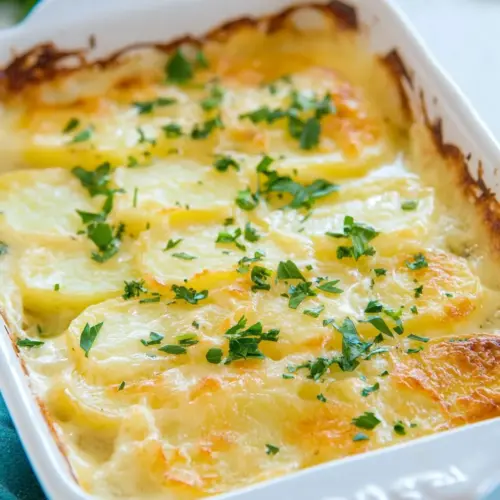
Scalloped Potato Gratin
Equipment
- 9 x 13 Casserole Dish
- Mandolin
- Medium Saucepan
- Aluminum Foil
Ingredients
- 3 lbs Yukon Gold Potatoes, peeled Provide thin, even slices that form the body of the gratin, melting into creamy layers as they bake and absorbing the surrounding sauce; choose consistent thickness for uniform cooking and tender texture.
- 4 tbsp unsalted butter Add rich, silky flavor and help brown the top and edges; melt into the pan to create a glossy base for the roux and to introduce buttery mouthfeel throughout the gratin.
- 1/2 large yellow onion, or 1 medium, finely diced Offer a subtle sweet-savory backbone when finely diced and sautéed; cook until translucent to mellow sharpness and contribute aromatic depth to the layered dish.
- 2 large garlic cloves Impart a pungent, aromatic note when minced or crushed and lightly cooked; release savory oils that blend into the sauce and enhance overall flavor complexity.
- 2 tbsp all-purpose flour Thicken the milk-and-broth mixture into a smooth sauce when cooked briefly with fat; whisk in to create a light roux that helps the gratin set without becoming gluey.
- 1/2 tbsp sea salt Season the potatoes and sauce to bring out natural flavors and balance richness; dissolve into the liquid so each layer is evenly seasoned and the dish is well-rounded.
- 1/2 tsp black pepper Add mild heat and aromatic complexity when freshly ground; sprinkle to taste to lift other seasonings and create a subtle background bite.
- 3/4 cup parmesan cheese, divided into 1/4 cup for center, 1/2 cup for topping Contribute nutty, savory umami in two parts: a smaller portion layered in the center for melty pockets and a larger portion grated on top to brown and crisp, enhancing flavor and texture.
- 1 1/2 cups milk, any kind Provide the creamy base of the sauce and help bind layers together; heat gently with the roux to avoid scalding while contributing richness and softness to the gratin.
- 1 cup low sodium chicken broth Introduce savory depth and a light brothiness to the sauce while keeping overall salt lower; combine with milk to add body and a delicate savory counterpoint.
- Green onions, to garnish, optional Supply a bright, fresh garnish when thinly sliced; sprinkle over finished gratin to add color contrast and a mild oniony freshness, used optionally to taste.
Instructions
- Prep: Butter the bottom and sides of a 9 x 13 casserole dish.: The air warms with a hint of butter when you rub the bottom and sides of the dish, which helps prevent sticking and encourages an even edge crust; use softened butter to coat thoroughly with your fingers or a paper towel. You'll feel the sheen on the pan, and the subtle scent of dairy signals the pan is ready. Avoid leaving big globs of butter pooled in corners, which can cause localized browning; spread it evenly for best results.
- Using a mandolin, thinly slice potatoes into rounds about 1/8" thick. Place potato slices in a bowl with cold water while you prep the sauce. This keeps them from discoloring and removes some of the starch. Drain potatoes well, just before you put them in your casserole dish.: When you slide the potatoes across a mandolin, they should produce clean, translucent rounds that shimmer slightly. Submerge them in cold water immediately to stop oxidation and wash away surface starch, which helps prevent gluey layers. Drain just before layering so they are not waterlogged; too wet and the sauce will be thin, too dry and they will absorb more liquid and tighten. A common mistake is slicing unevenly, which leads to uneven cooking; keep a steady motion and consistent thickness.
- Preheat Oven to 400˚F. In a medium saucepan over medium/high heat, melt 4 Tbsp butter. Add finely diced yellow onion and sauté until soft and golden (5 min). Add pressed garlic cloves and sauté another 1-2 min, stirring constantly, until fragrant. Whisk in 2 Tbsp flour and cook another 1 min until flour is golden. Add 1 1/2 cups milk and 1 cup chicken broth. Whisk mixture until smooth and bring to a simmer. Stir in 1/2 Tbsp sea salt and 1/2 tsp pepper (or season to taste). Remove from heat.: You will notice warmth filling the oven as it reaches temperature, which sets the stage for steady baking. Preheating ensures the gratin begins cooking immediately and helps the sauce come up to temperature with the potatoes . If you skip full preheat, the dish may take longer and the texture can become gummy rather than tender.
- Drain potatoes and arrange half of them in the bottom of your casserole dish (it doesn't matter how the first layer is arranged, just separate the potato slices as you put them in). Pour half of your sauce over the top and sprinkle with 1/4 cup parmesan cheese. Repeat with remaining potatoes, sauce and top with 1/4 cup parmesan cheese. I made the second layer of potatoes prettier for presentation.: As the butter melts, it will sizzle softly and release a nutty scent; keep the heat steady so it foams then calms without burning. This step forms the flavor base, and maintaining medium/high heat helps the next aromatics to sweat rather than brown quickly. Watch closely because butter can brown in moments at high heat, which will change the sauce flavor.
- Cover with aluminum foil and bake in the center of the oven at 400˚F for 55 minutes then uncover and broil another 3-5 minutes or until the top is golden brown. Garnish with green onion if desired and serve.: The diced onion will become translucent then develop sweet, golden edges as natural sugars caramelize. Stir frequently so pieces cook evenly; you want softness and a touch of color, not deep browning. Overcooking to a dark brown will lend a roasted rather than sweet character, which alters the intended flavor balance.
- Add pressed garlic cloves and sauté another 1-2 min stirring constantly until fragrant: Once the garlic hits the warm butter and onion , it will release a quick, heady aroma indicating readiness. Stir constantly to prevent small bits from burning, which creates bitterness. The garlic should smell aromatic and sweet when done, not acrid; if it darkens, start the sauce step again or reduce heat next time.
- Whisk in 2 Tbsp flour and cook another 1 min until flour is golden: As you whisk the flour into the fat, the mixture will thicken into a smooth paste that loses its raw taste after about a minute. You should see the roux take on a pale golden hue and smell slightly nutty. This step is critical because the roux is what thickens the sauce, so undercooking leaves a pasty flavor, while overcooking will darken it too much and reduce thickening power.
- Add 1 1/2 cups milk and 1 cup chicken broth: Pouring in the liquid will produce a few hissy bubbles as the roux integrates; whisk vigorously to dissolve lumps and create a glossy sauce. The mixture should become silkier and begin to thicken on gentle simmer. If lumps form, strain or whisk harder until smooth. A thin sauce at this stage means either not enough roux or too much liquid; simmer to reduce, or add a touch more roux dissolved in cold liquid.
- Whisk mixture until smooth and bring to a simmer: When the sauce begins to ripple and small bubbles form at the edges, the starches are activating and the texture will thicken. You will smell a mild dairy fragrance and see the sauce coat a spoon. Keep it at a gentle simmer to avoid scorching the bottom, and stir often to maintain even heat. Boiling aggressively can separate the sauce or scald the milk, leaving an off taste.
- Stir in 1/2 Tbsp sea salt and 1/2 tsp pepper (or season to taste): Adding the sea salt and black pepper at this point seasons the sauce properly, lifting flavors of the potatoes and parmesan cheese . Taste carefully because the chicken broth and parmesan cheese also contribute salt. Over seasoning is common here, so season lightly and adjust after baking if needed.
- Remove from heat: The sauce should be smooth, warm, and slightly thickened when you take it off the heat, losing the small bubbles and becoming glossy. Removing it prevents it from reducing too much and allows for easier layering. Keep in mind residual heat will continue gentle thickening, so do not overreduce on the stove.
- Drain potatoes and arrange half of them in the bottom of your casserole dish: As you layer, the potatoes will feel cool and slightly starchy to the touch; space them so edges overlap but are not crowded, allowing the sauce to seep between slices. This layering helps even cooking and a coherent structure. Crowding slices causes inconsistent doneness and dense texture, so aim for a loose, single layer.
- Pour half of your sauce over the top and sprinkle with 1/4 cup parmesan cheese: The sauce should pool gently around each slice, creating pockets of creaminess, while the parmesan cheese begins to melt into the surface and add savory depth. Use a spoon to coax sauce into gaps so every slice is coated. A common slip is pouring sauce unevenly, leaving dry pockets, which results in inconsistent texture.
- Repeat with remaining potatoes sauce and top with 1/4 cup parmesan cheese: The second layer should mirror the first, and finishing with parmesan cheese on top creates the attractive browned crust after broiling. Make the top layer neater for presentation if you like, aligning edges for a tidy look. If the top is too dry before baking, brush a little extra sauce on it to encourage browning rather than burning.
- Cover with aluminum foil and bake in the center of the oven at 400˚F for 55 minutes: Covered baking steams the interior, producing tender potatoes , while keeping moisture in so the sauce infuses the layers. After the time elapses, the center should feel just set and the aroma will be thick and savory. Avoid removing the foil early, which can dry the interior; only uncover later for browning.
- Uncover and broil another 3-5 minutes or until the top is golden brown: Under the broiler you will hear a light crackle, and the parmesan cheese will form a golden, slightly crisp crust with toasted notes. Keep the dish a few inches from the heat source and watch constantly, since broiling can go from golden to burned in seconds. If the top darkens too quickly, lower the rack or reduce broil time.
- Garnish with green onion if desired and serve: A sprinkle of optional green onions adds fresh color and a gentle onion bite against the rich, creamy backdrop. Let the gratin rest a few minutes so the sauce sets slightly, making it easier to serve neat slices. Serving too hot may cause the sauce to run and lose shape, so a brief rest yields cleaner portions.
Notes
- Slice consistently Use a mandolin or a very sharp knife to achieve uniform 1/8 inch slices so every layer finishes at the same time.
- Control moisture After rinsing the potatoes, drain and pat them dry to prevent a watery sauce that dilutes flavor.
- Sweat aromatics Cook the onion and garlic slowly in butter until soft and fragrant, which builds a sweeter, more rounded sauce base.
- Adjust seasoning carefully Because the chicken broth and parmesan cheese add salt, season the sauce lightly and taste before baking to avoid oversalting.
- Watch the broiler Keep the dish under the broiler for only a few minutes to get a golden crust, and be ready to pull it as soon as color appears to avoid burning.
- Rest before serving Let the gratin sit for several minutes after baking so the sauce cools and sets slightly, making neat serving easier.
