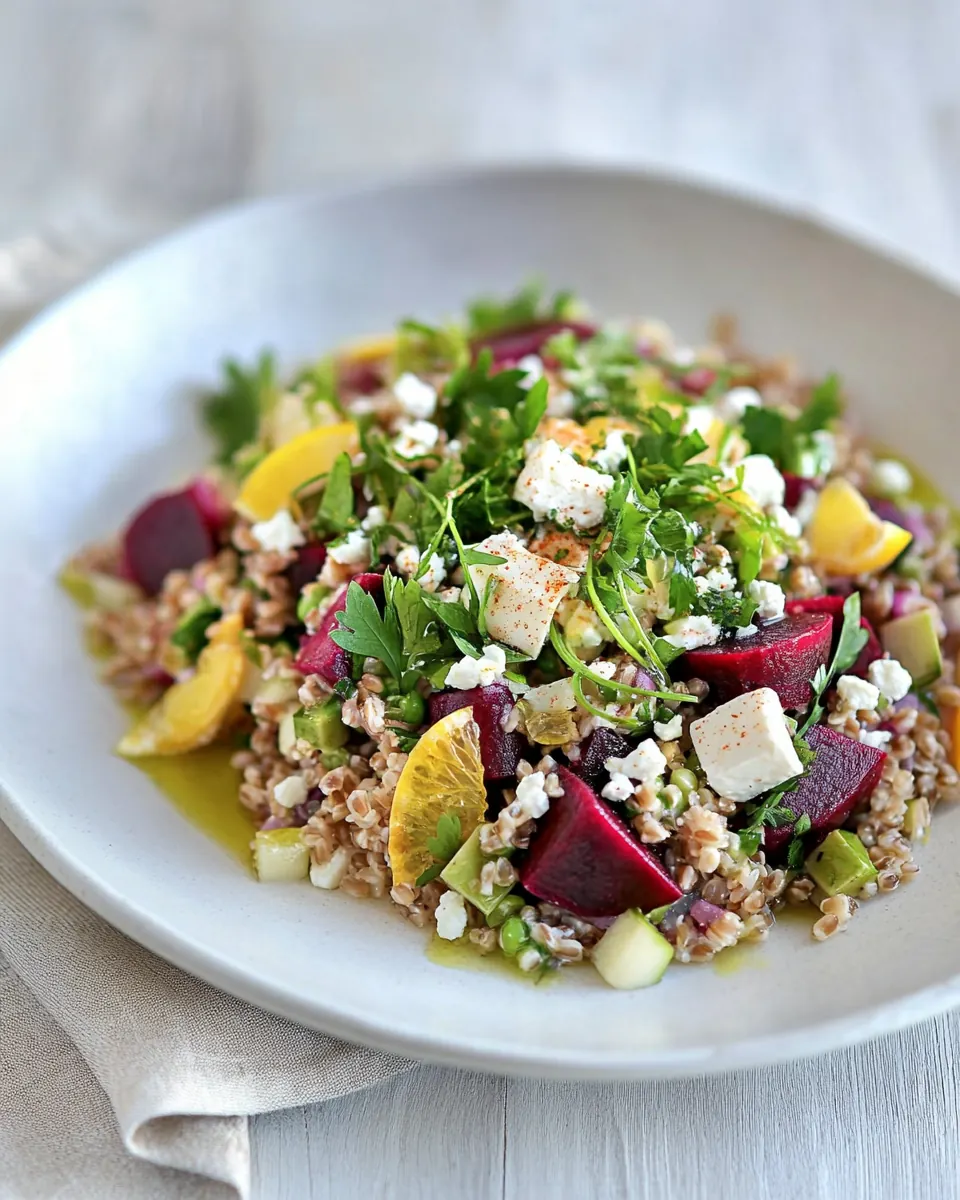
Roasted Beet and Farro Salad with Citrus Vinaigrette
Roasted Beet and Farro Salad with Citrus Vinaigrette has been one of those recipes I find myself turning to when I want a bright, textured salad that still feels like a full meal.
One autumn afternoon, I came home with a crate of beets from the farmer’s market and felt inspired to pair their earthy sweetness with a chewy grain and lively citrus. I remember rubbing the skins off the warm beets, the air filling with that sweet, roasted aroma, and thinking how good simple components could taste when they play together. As I tossed the salad, the crunchy candied pistachios clicked against the fork and the vinaigrette glazed everything with a sunlit sheen.
This is not just a salad to me, it is a little ritual: roast, chop, assemble, and then pause for that first bite where the peppery arugula meets the nutty farro and the tart citrus cut through the richness. I like to make a generous batch of the vinaigrette because it keeps well, and having extra on hand means I can dress bowls all week and still feel like I made something special. Friends always ask for the recipe when I bring this to a casual dinner, and I love that it feels both approachable and elevated.
Recipe Snapshot
1 hr 20 mins
20 mins
60 mins
Medium
300 kcal
American
Vegan, Gluten-Free
Salads
Oven, Baking sheet, Aluminum foil, Pot, Blender or food processor, Mixing bowl
Why Try This Roasted Beet and Farro Salad with Citrus Vinaigrette
Bold, layered textures
I love how Roasted Beet and Farro Salad with Citrus Vinaigrette balances chew and crunch. The farro provides a satisfying bite that holds up to tossing, while the candied pistachios add an addictive snap. That contrast keeps every forkful interesting, so the salad never feels one note.
Bright citrus lift
The citrus vinaigrette is the heart of this dish. Between the zests and juices of the oranges and lemons, plus a hit of Dijon mustard, you get acidity that brightens the naturally sweet beets. I appreciate that the dressing is emulsified with olive oil, which makes it glossy and clingy, so each ingredient gets a flavorful coating.
Make ahead friendly
I often roast the beets and cook the farro the day before. Both store well, which makes this salad ideal for busy evenings. The dressing keeps in the fridge for up to two weeks, so whipping up a lunch bowl takes minutes. That kind of convenience is why I cook extra whenever I can.
Seasonal and flexible
This salad feels perfectly at home in fall when beets are at their peak, yet it also translates across seasons because the citrus keeps it feeling fresh. I find it equally suitable for a light lunch, a side at dinner, or a potluck contribution.
Textural finishing touches
Finishing with shaved Parmesan cheese and the candied pistachios is where the salad earns applause. The salty, creamy cheese plays beautifully with the sweet beets and tart dressing, while the nuts add a caramelized crunch that makes the experience memorable.
What’s In This Roasted Beet and Farro Salad with Citrus Vinaigrette
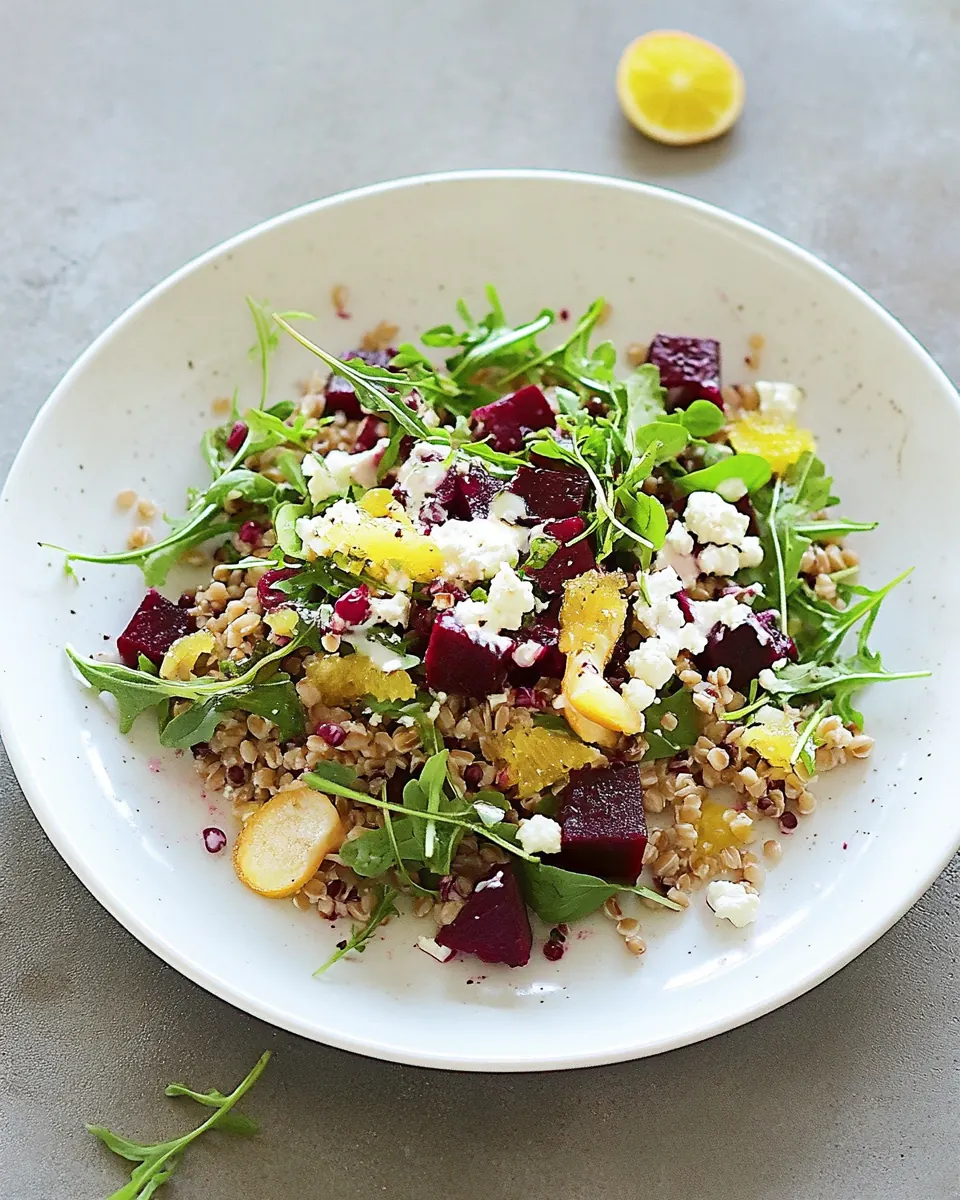
I think of these ingredients as a small team, each with a clear job. The beets bring earthiness and color, the farro gives chew and substance, the greens provide peppery freshness, and the vinaigrette ties everything together with bright acidity and silky texture. Small accents like candied pistachios and shaved Parmesan cheese add contrast that keeps the salad from feeling flat.
- 2 large beets, rinsed and stemmed: Roasted to concentrate earthy sweetness and provide tender texture; contributes vibrant color and a hearty base for the salad when sliced or cubed after roasting or boiling.
- 1/2 cup farro, rinsed: Cooked until tender to add chewy, nutty whole-grain body and chewy texture; soaks up citrus vinaigrette and balances the salad with substantial bite.
- 4 cups baby arugula: Washed and lightly dressed to introduce a peppery, leafy green contrast; adds freshness, volume, and a slightly bitter counterpoint to sweet beets and citrus.
- 1 cup mixed micro greens: Gently tossed or sprinkled atop the salad to lend delicate texture and a mild, varied green flavor; elevates presentation with a mix of tiny leaves and subtle bitterness.
- 1/2 cup shaved Parmesan cheese: Shaved thinly over the salad to add savory, umami-rich creaminess and a salty finish; provides a silky, slightly nutty topping that complements both grains and greens.
- 2 oranges, zested and juiced: Zested and juiced to provide bright citrus aroma and sweet-tart flavor; balances earthy beets and enriches the vinaigrette with floral, juicy notes.
- 2 lemons, zested and juiced: Zested and juiced to add bright acidity and fragrant citrus layers; helps cut richness from oil and cheese while adding tart complexity to the dressing.
- 1 clove garlic, finely chopped: Finely chopped and incorporated into the vinaigrette to contribute pungent depth and aromatic warmth; helps bind flavors and enhances savory balance.
- 1 tablespoon Dijon mustard: Emulsified into the dressing to stabilize oil and vinegar, adding tang and a subtle sharpness that lifts the vinaigrette's flavor profile.
- 1/4 cup honey: Added to vinaigrette for sweetness and to balance acidity; dissolves into the dressing to create a smooth, harmonious glaze for the salad.
- 1 cup olive oil (also ok to use half grapeseed or light olive oil for a lighter flavor): Whisked into the vinaigrette as the primary fat to provide rich mouthfeel and carry flavors; contributes fruity or neutral oil notes depending on type used.
- 1/2 cup raw shelled pistachios: Lightly chopped and sprinkled for crunchy texture and buttery, bright nut flavor; offers color contrast and a salty-sweet element when toasted.
- 1 tablespoon maple syrup: Drizzled sparingly to enhance nutty-sweet complexity and add another layer of natural sweetness; pairs well with honey and citrus in the dressing or as a finishing touch.
- 2 tablespoons maple or white sugar: Used as an additional sweetening option or finishing sprinkle to adjust sweetness level; dissolves into dressings or can be used to caramelize nuts or fruits.
Step by Step Guide for Roasted Beet and Farro Salad with Citrus Vinaigrette
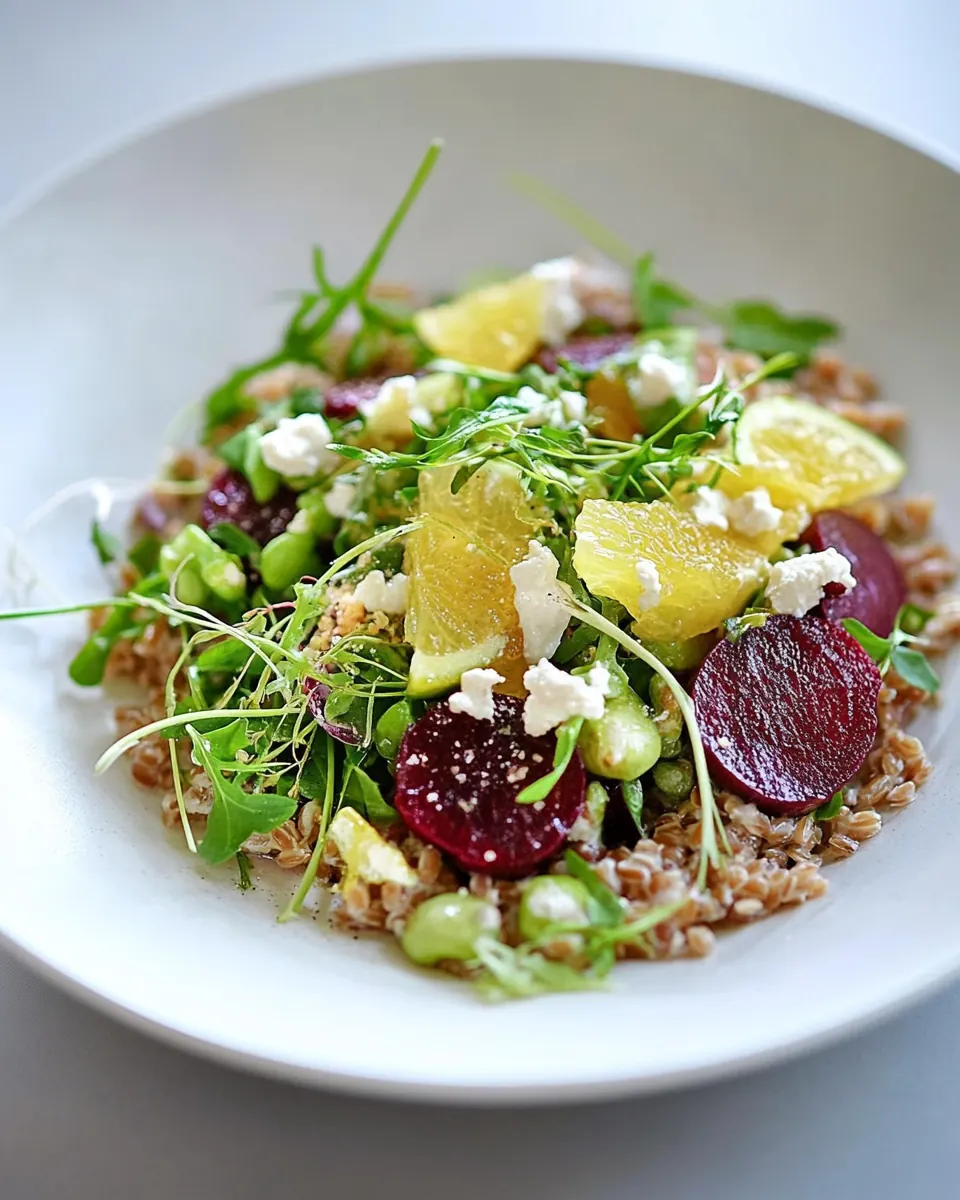
This salad comes together in stages, and I like to move through them with intention so each component sings. Take your time when roasting and candying, because those steps develop flavor that pays off in the final toss. Keep your mise en place ready, and assemble just before serving so the greens stay crisp.
- Preheat oven to 375 degrees F. Rub beets all over with olive oil. Wrap in aluminum foil and place on a baking sheet. Bake for 30 to 40 minutes (depending on size) or until beets are fork tender. When beets are cool enough to handle, rub between two paper towels; skins should come off cleanly. Slice and dice into 1/2-inch chunks and set aside.: The warm, enveloping smell of roasting creates caramelized notes in the beets , and you will notice a mellow sweetness rising from the oven as they cook. Use a rimmed baking sheet to catch any juices, and wrapping the beets in aluminum foil traps steam, helping them cook evenly. A common mistake is baking at too high a temperature, which can char the exterior without softening the center. Keep an eye on size variants, as larger beets need more time to become fork tender.
- Bring a pot of lightly salted water to a boil. Cook farro according to package instructions, until al dente. Drain any excess water and set aside to cool. Farro can be made ahead of time and stored in airtight container in the refrigerator.: Rubbing the beets with olive oil before roasting encourages even browning and helps the skins loosen for easy peeling. The oil also carries aromatics if you choose to add any, and it gives the roasted beets a glossy finish. If you skip the oil, the beets may dry at the surface and the skins can cling, making them harder to peel.
- For vinaigrette, combine citrus zest and juice, garlic, mustard, and honey in a blender or food processor and blend well. Slowly drizzle in oil with machine on the lowest speed until emulsified and evenly pale yellow in color. This recipe makes enough dressing for about 8 servings; store it in a jar or airtight container in the fridge for up to 2 weeks.: Wrapping creates a steamy environment that speeds gentle cooking, resulting in tender, evenly roasted flesh. As the steam condenses, the skins slip away more readily when cool. A troubleshooting tip is to space the beets so they do not steam into one another, which keeps roasting even. Avoid puncturing the foil, because juices escaping can cause uneven roasting.
- For candied pistachios, preheat oven to 275 degrees F. Toss pistachios with maple syrup. Sprinkle with sugar and toss to coat. Pour onto a foil-lined baking sheet and spread into a single layer. Bake for 20 minutes or until lightly colored and crispy.: At the tail end of roasting you will notice a sweet, earthy perfume. Test doneness by inserting a fork into the center; it should sink easily with little resistance. Overbaking can make them mushy, while underbaking leaves a raw, chalky texture. Rotate the pan halfway to ensure even heat exposure for a consistent result.
- To assemble, divide arugula among serving dishes. Top with cool cooked farro. Sprinkle with chopped beets, micro greens, and candied pistachios. Drizzle with vinaigrette. Top with shaved Parmesan cheese. Serve at room temperature.: The tactile act of rubbing brings satisfaction as the skins release and the vivid interior is exposed. Removing the skins while the beets are still slightly warm is easiest. If the skins cling, letting them cool a touch more or using a small paring knife can help. Avoid scraping too aggressively, which can waste the tender flesh.
- Slice and dice into 1/2-inch chunks and set aside: Cutting into uniform chunks ensures consistent texture and even distribution in the salad. The pieces should be bite sized so they mingle with the farro and greens in each forkful. A common error is cutting too large pieces, which overwhelms a single bite and upsets balance.
- Bring a pot of lightly salted water to a boil: Salted water seasons the farro from the inside out and enhances its nutty flavor. The sound of a steady, rolling boil signals readiness to add the grain. If the water is under salted, the farro can taste bland, so be generous without overdoing it.
- Cook farro according to package instructions, until al dente: Al dente farro has a satisfying chew that stands up to dressing without becoming mushy. Drain and cool slightly to stop the cooking process. Overcooking will produce a soft, paste like texture that lacks contrast with the roasted beets . If your package lacks guidance, start checking for tenderness after 20 minutes.
- Drain any excess water and set aside to cool: Allowing the farro to cool prevents wilting of the greens when assembled and helps the dressing cling rather than making everything soggy. Spread on a tray to cool faster if you need to speed things up. A trap is tossing hot farro directly onto delicate greens, which will collapse them.
- Farro can be made ahead of time and stored in airtight container in the refrigerator: Making the grain ahead saves time and lets flavors rest. Refrigerated farro will firm up slightly, making it easier to handle when assembling. Reheat gently if you want a warm salad, or use cold for a refreshing contrast. Avoid long storage beyond a few days to keep texture and taste fresh.
- For vinaigrette, combine citrus zest and juice, garlic, mustard, and honey in a blender or food processor and blend well: The blender releases aromatic oils from the zests, creating a bright, fragrant base. Blending the acid with the honey and mustard creates a cohesive flavor profile that will coat the ingredients evenly. If you mix by hand, whisk vigorously until the honey dissolves. A common misstep is failing to zest before juicing, which wastes fragrant oils.
- Slowly drizzle in oil with machine on the lowest speed until emulsified and evenly pale yellow in color: A slow drizzle while blending creates a stable emulsion, giving the vinaigrette a silky, glossy texture. Watch the color shift to a pale yellow as it emulsifies. If you add the oil too quickly, the dressing can break and become separated. If that happens, start with a fresh spoonful of mustard and whisk the broken dressing into it to bring it back together.
- This recipe makes enough dressing for about 8 servings; store it in a jar or airtight container in the fridge for up to 2 weeks: Having extra dressing on hand simplifies future meals and keeps flavors vivid. Refrigeration slows the breakdown of fresh citrus, though the texture may thicken; bring to room temperature and whisk if needed. A tip is to label the jar with the date to monitor freshness.
- For candied pistachios, preheat oven to 275 degrees F: Low and slow heat encourages even caramelization without burning the syrup. The warm, sugary aroma that develops as you bake signals progress. High heat risks scorching, which produces bitter notes, so maintain a gentle oven temperature for the best results.
- Toss pistachios with maple syrup: Coating the pistachios ensures the sweet layer adheres and becomes glossy as it bakes. The sticky texture helps the sugar cling and form a crisp shell. If the nuts are wet or unevenly coated, the candying may be patchy, so toss thoroughly for uniform coverage.
- Sprinkle with sugar and toss to coat: The added sugar promotes caramelization and enhances crunch. Even distribution helps avoid clumps that bake unevenly. Be careful not to overcoat, which can lead to overly hard, clumpy candy rather than an ideal crisp shell.
- Pour onto a foil-lined baking sheet and spread into a single layer: A single layer allows hot air to circulate and ensures even color and texture. Space prevents steaming that could produce soggy nuts. If clumping occurs after baking, break them apart while still slightly warm for easier separation.
- Bake for 20 minutes or until lightly colored and crispy: Watch for a fragrant, toasty aroma and a light golden color. The nuts will firm as they cool, so resist the urge to bake until very dark. Overbaking leads to bitterness and a dry texture that lacks the desired snap.
- To assemble, divide arugula among serving dishes: The aroma of fresh arugula sets the base, and layering the greens first prevents heavier components from weighing them down. Use clean, dry greens to avoid a soggy salad. Packing the bowl too tightly can prevent even dressing distribution.
- Top with cool cooked farro: The contrast between the peppery greens and the nutty farro is immediate, offering substance with a tender chew. Ensure the farro is not hot to preserve the crispness of the greens. A common mistake is adding warm grain, which wilts delicate leaves.
- Sprinkle with chopped beets, micro greens, and candied pistachios: The vivid colors of the beets and micro greens make the salad visually inviting, while the candied pistachios add the final textural pop. Distribute toppings evenly so every portion gets a balance of flavors. Overloading a single area may leave other bites bland.
- Drizzle with vinaigrette: A measured drizzle ensures the dressing enhances without overpowering. Watch for the glossy coating on the ingredients as your cue that enough has been added. If you overdress, gently blot with a paper towel or add more greens to absorb excess.
- Top with shaved Parmesan cheese: The salty, umami punch of shaved Parmesan cheese brings the salad together, cutting through sweetness and brightening the overall flavor. Use a vegetable peeler for delicate shavings that melt slightly onto warm components. Adding too much cheese can mask the citrus notes, so taste as you go.
- Serve at room temperature: Serving at room temperature lets the flavors meld, with the vinaigrette giving a silky finish and the textures remaining distinct. Cold desserts or overly chilled salads can mute flavors, so allow the salad to rest briefly before serving. Be mindful of long sit times to prevent greens from wilting.
Recipe Variations about Roasted Beet and Farro Salad with Citrus Vinaigrette
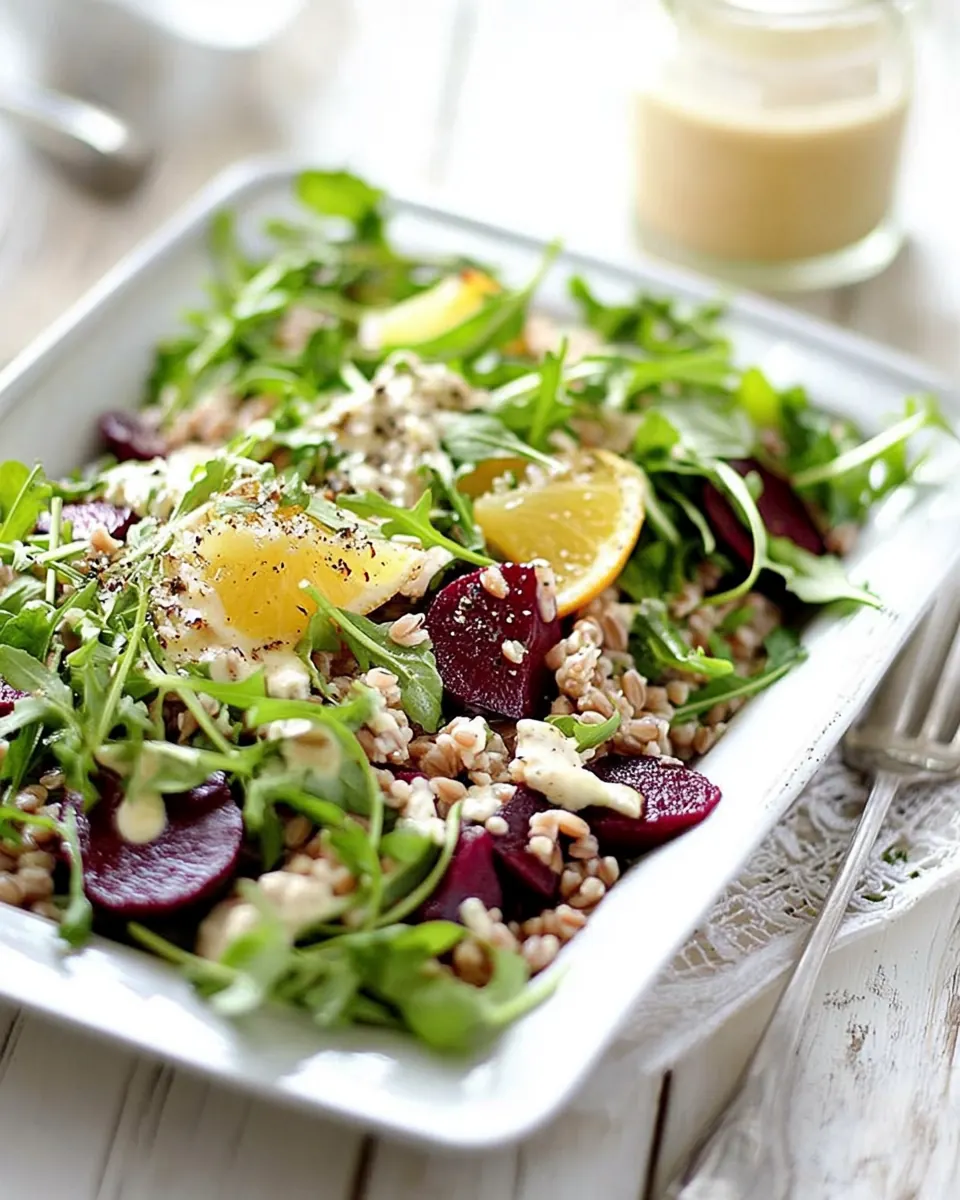
If you like experimenting, a few simple tweaks can shift the salad’s profile without changing its spirit. Below are practical variations I use depending on mood and what is in my pantry. Each tip starts with a bold phrase to guide you.
- Warm bowl version Serve the farro warm for a comforting take, which slightly softens the beets and makes the dressing meld into the grain.
- Extra citrus punch Add more orange or lemon zest for an aromatic boost, especially if your beets are particularly sweet and need extra brightness.
- Dress lightly Start with a smaller amount of vinaigrette and add more as needed so the salad never becomes soggy; the right balance keeps textures crisp.
- Nut swap If you want a different crunch, try pistachios toasted without candying for a savory contrast while preserving the nutty quality.
- Make ahead strategy Roast the beets and cook the farro up to two days in advance to save time, and toss right before serving for best texture.
Serving Ideas for Roasted Beet and Farro Salad with Citrus Vinaigrette
This salad is versatile at the table and works across occasions. Below are serving ideas that highlight how I present it for different moments, from weeknight dinners to festive gatherings.
- Light lunch bowl Serve a generous portion on its own with extra vinaigrette on the side for a satisfying, healthy midday meal.
- Side dish for dinner Present alongside grilled vegetables or roasted proteins as a bright counterpoint to richer mains.
- Potluck contribution Make the salad ahead and transport the dressing separately; assemble at the host’s home to keep greens fresh and crisp.
- Seasonal pairing This salad shines in fall when beets are peak, and the citrus keeps it lively enough for winter gatherings as well.
- Storage tip Store components separately, with vinaigrette in a sealed jar and candied pistachios in an airtight container to retain crunch for several days.
- Occasion ideas Serve at a casual lunch, an elegant brunch, or as a starter for a holiday meal where you want something colorful and vegetable forward.
FAQ
Conclusion
The Roasted Beet and Farro Salad with Citrus Vinaigrette stands out because it balances earthiness, chew, bright acidity, and crunchy sweetness in every bite. It is an approachable yet elevated dish that you can make ahead in stages, which makes weeknight meals and gatherings easier. Give it a try the next time you want a vegetable forward meal that feels thoughtful and complete, and enjoy how the layers of flavor come together to make something memorable.
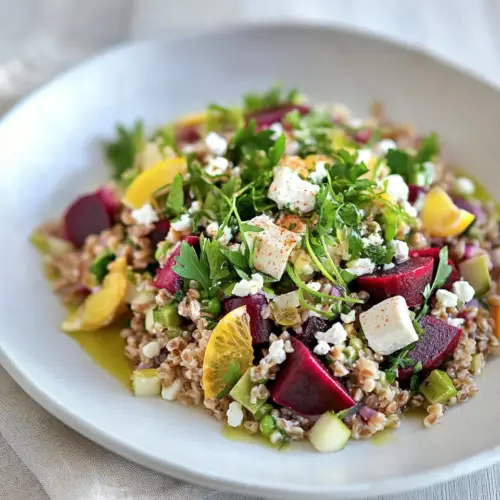
Roasted Beet and Farro Salad with Citrus Vinaigrette
Equipment
- Oven
- Baking Sheet
- Aluminum Foil
- Pot
- Blender or food processor
- Mixing Bowl
Ingredients
- 2 large beets, rinsed and stemmed Roasted to concentrate earthy sweetness and provide tender texture; contributes vibrant color and a hearty base for the salad when sliced or cubed after roasting or boiling.
- 1/2 cup farro, rinsed Cooked until tender to add chewy, nutty whole-grain body and chewy texture; soaks up citrus vinaigrette and balances the salad with substantial bite.
- 4 cups baby arugula Washed and lightly dressed to introduce a peppery, leafy green contrast; adds freshness, volume, and a slightly bitter counterpoint to sweet beets and citrus.
- 1 cup mixed micro greens Gently tossed or sprinkled atop the salad to lend delicate texture and a mild, varied green flavor; elevates presentation with a mix of tiny leaves and subtle bitterness.
- 1/2 cup shaved Parmesan cheese Shaved thinly over the salad to add savory, umami-rich creaminess and a salty finish; provides a silky, slightly nutty topping that complements both grains and greens.
- 2 oranges, zested and juiced Zested and juiced to provide bright citrus aroma and sweet-tart flavor; balances earthy beets and enriches the vinaigrette with floral, juicy notes.
- 2 lemons, zested and juiced Zested and juiced to add bright acidity and fragrant citrus layers; helps cut richness from oil and cheese while adding tart complexity to the dressing.
- 1 clove garlic, finely chopped Finely chopped and incorporated into the vinaigrette to contribute pungent depth and aromatic warmth; helps bind flavors and enhances savory balance.
- 1 tablespoon Dijon mustard Emulsified into the dressing to stabilize oil and vinegar, adding tang and a subtle sharpness that lifts the vinaigrette's flavor profile.
- 1/4 cup honey Added to vinaigrette for sweetness and to balance acidity; dissolves into the dressing to create a smooth, harmonious glaze for the salad.
- 1 cup olive oil (also ok to use half grapeseed or light olive oil for a lighter flavor) Whisked into the vinaigrette as the primary fat to provide rich mouthfeel and carry flavors; contributes fruity or neutral oil notes depending on type used.
- 1/2 cup raw shelled pistachios Lightly chopped and sprinkled for crunchy texture and buttery, bright nut flavor; offers color contrast and a salty-sweet element when toasted.
- 1 tablespoon maple syrup Drizzled sparingly to enhance nutty-sweet complexity and add another layer of natural sweetness; pairs well with honey and citrus in the dressing or as a finishing touch.
- 2 tablespoons maple or white sugar Used as an additional sweetening option or finishing sprinkle to adjust sweetness level; dissolves into dressings or can be used to caramelize nuts or fruits.
Instructions
- Preheat oven to 375 degrees F. Rub beets all over with olive oil. Wrap in aluminum foil and place on a baking sheet. Bake for 30 to 40 minutes (depending on size) or until beets are fork tender. When beets are cool enough to handle, rub between two paper towels; skins should come off cleanly. Slice and dice into 1/2-inch chunks and set aside.: The warm, enveloping smell of roasting creates caramelized notes in the beets , and you will notice a mellow sweetness rising from the oven as they cook. Use a rimmed baking sheet to catch any juices, and wrapping the beets in aluminum foil traps steam, helping them cook evenly. A common mistake is baking at too high a temperature, which can char the exterior without softening the center. Keep an eye on size variants, as larger beets need more time to become fork tender.
- Bring a pot of lightly salted water to a boil. Cook farro according to package instructions, until al dente. Drain any excess water and set aside to cool. Farro can be made ahead of time and stored in airtight container in the refrigerator.: Rubbing the beets with olive oil before roasting encourages even browning and helps the skins loosen for easy peeling. The oil also carries aromatics if you choose to add any, and it gives the roasted beets a glossy finish. If you skip the oil, the beets may dry at the surface and the skins can cling, making them harder to peel.
- For vinaigrette, combine citrus zest and juice, garlic, mustard, and honey in a blender or food processor and blend well. Slowly drizzle in oil with machine on the lowest speed until emulsified and evenly pale yellow in color. This recipe makes enough dressing for about 8 servings; store it in a jar or airtight container in the fridge for up to 2 weeks.: Wrapping creates a steamy environment that speeds gentle cooking, resulting in tender, evenly roasted flesh. As the steam condenses, the skins slip away more readily when cool. A troubleshooting tip is to space the beets so they do not steam into one another, which keeps roasting even. Avoid puncturing the foil, because juices escaping can cause uneven roasting.
- For candied pistachios, preheat oven to 275 degrees F. Toss pistachios with maple syrup. Sprinkle with sugar and toss to coat. Pour onto a foil-lined baking sheet and spread into a single layer. Bake for 20 minutes or until lightly colored and crispy.: At the tail end of roasting you will notice a sweet, earthy perfume. Test doneness by inserting a fork into the center; it should sink easily with little resistance. Overbaking can make them mushy, while underbaking leaves a raw, chalky texture. Rotate the pan halfway to ensure even heat exposure for a consistent result.
- To assemble, divide arugula among serving dishes. Top with cool cooked farro. Sprinkle with chopped beets, micro greens, and candied pistachios. Drizzle with vinaigrette. Top with shaved Parmesan cheese. Serve at room temperature.: The tactile act of rubbing brings satisfaction as the skins release and the vivid interior is exposed. Removing the skins while the beets are still slightly warm is easiest. If the skins cling, letting them cool a touch more or using a small paring knife can help. Avoid scraping too aggressively, which can waste the tender flesh.
- Slice and dice into 1/2-inch chunks and set aside: Cutting into uniform chunks ensures consistent texture and even distribution in the salad. The pieces should be bite sized so they mingle with the farro and greens in each forkful. A common error is cutting too large pieces, which overwhelms a single bite and upsets balance.
- Bring a pot of lightly salted water to a boil: Salted water seasons the farro from the inside out and enhances its nutty flavor. The sound of a steady, rolling boil signals readiness to add the grain. If the water is under salted, the farro can taste bland, so be generous without overdoing it.
- Cook farro according to package instructions, until al dente: Al dente farro has a satisfying chew that stands up to dressing without becoming mushy. Drain and cool slightly to stop the cooking process. Overcooking will produce a soft, paste like texture that lacks contrast with the roasted beets . If your package lacks guidance, start checking for tenderness after 20 minutes.
- Drain any excess water and set aside to cool: Allowing the farro to cool prevents wilting of the greens when assembled and helps the dressing cling rather than making everything soggy. Spread on a tray to cool faster if you need to speed things up. A trap is tossing hot farro directly onto delicate greens, which will collapse them.
- Farro can be made ahead of time and stored in airtight container in the refrigerator: Making the grain ahead saves time and lets flavors rest. Refrigerated farro will firm up slightly, making it easier to handle when assembling. Reheat gently if you want a warm salad, or use cold for a refreshing contrast. Avoid long storage beyond a few days to keep texture and taste fresh.
- For vinaigrette, combine citrus zest and juice, garlic, mustard, and honey in a blender or food processor and blend well: The blender releases aromatic oils from the zests, creating a bright, fragrant base. Blending the acid with the honey and mustard creates a cohesive flavor profile that will coat the ingredients evenly. If you mix by hand, whisk vigorously until the honey dissolves. A common misstep is failing to zest before juicing, which wastes fragrant oils.
- Slowly drizzle in oil with machine on the lowest speed until emulsified and evenly pale yellow in color: A slow drizzle while blending creates a stable emulsion, giving the vinaigrette a silky, glossy texture. Watch the color shift to a pale yellow as it emulsifies. If you add the oil too quickly, the dressing can break and become separated. If that happens, start with a fresh spoonful of mustard and whisk the broken dressing into it to bring it back together.
- This recipe makes enough dressing for about 8 servings; store it in a jar or airtight container in the fridge for up to 2 weeks: Having extra dressing on hand simplifies future meals and keeps flavors vivid. Refrigeration slows the breakdown of fresh citrus, though the texture may thicken; bring to room temperature and whisk if needed. A tip is to label the jar with the date to monitor freshness.
- For candied pistachios, preheat oven to 275 degrees F: Low and slow heat encourages even caramelization without burning the syrup. The warm, sugary aroma that develops as you bake signals progress. High heat risks scorching, which produces bitter notes, so maintain a gentle oven temperature for the best results.
- Toss pistachios with maple syrup: Coating the pistachios ensures the sweet layer adheres and becomes glossy as it bakes. The sticky texture helps the sugar cling and form a crisp shell. If the nuts are wet or unevenly coated, the candying may be patchy, so toss thoroughly for uniform coverage.
- Sprinkle with sugar and toss to coat: The added sugar promotes caramelization and enhances crunch. Even distribution helps avoid clumps that bake unevenly. Be careful not to overcoat, which can lead to overly hard, clumpy candy rather than an ideal crisp shell.
- Pour onto a foil-lined baking sheet and spread into a single layer: A single layer allows hot air to circulate and ensures even color and texture. Space prevents steaming that could produce soggy nuts. If clumping occurs after baking, break them apart while still slightly warm for easier separation.
- Bake for 20 minutes or until lightly colored and crispy: Watch for a fragrant, toasty aroma and a light golden color. The nuts will firm as they cool, so resist the urge to bake until very dark. Overbaking leads to bitterness and a dry texture that lacks the desired snap.
- To assemble, divide arugula among serving dishes: The aroma of fresh arugula sets the base, and layering the greens first prevents heavier components from weighing them down. Use clean, dry greens to avoid a soggy salad. Packing the bowl too tightly can prevent even dressing distribution.
- Top with cool cooked farro: The contrast between the peppery greens and the nutty farro is immediate, offering substance with a tender chew. Ensure the farro is not hot to preserve the crispness of the greens. A common mistake is adding warm grain, which wilts delicate leaves.
- Sprinkle with chopped beets, micro greens, and candied pistachios: The vivid colors of the beets and micro greens make the salad visually inviting, while the candied pistachios add the final textural pop. Distribute toppings evenly so every portion gets a balance of flavors. Overloading a single area may leave other bites bland.
- Drizzle with vinaigrette: A measured drizzle ensures the dressing enhances without overpowering. Watch for the glossy coating on the ingredients as your cue that enough has been added. If you overdress, gently blot with a paper towel or add more greens to absorb excess.
- Top with shaved Parmesan cheese: The salty, umami punch of shaved Parmesan cheese brings the salad together, cutting through sweetness and brightening the overall flavor. Use a vegetable peeler for delicate shavings that melt slightly onto warm components. Adding too much cheese can mask the citrus notes, so taste as you go.
- Serve at room temperature: Serving at room temperature lets the flavors meld, with the vinaigrette giving a silky finish and the textures remaining distinct. Cold desserts or overly chilled salads can mute flavors, so allow the salad to rest briefly before serving. Be mindful of long sit times to prevent greens from wilting.
Notes
- Warm bowl version Serve the farro warm for a comforting take, which slightly softens the beets and makes the dressing meld into the grain.
- Extra citrus punch Add more orange or lemon zest for an aromatic boost, especially if your beets are particularly sweet and need extra brightness.
- Dress lightly Start with a smaller amount of vinaigrette and add more as needed so the salad never becomes soggy; the right balance keeps textures crisp.
- Nut swap If you want a different crunch, try pistachios toasted without candying for a savory contrast while preserving the nutty quality.
- Make ahead strategy Roast the beets and cook the farro up to two days in advance to save time, and toss right before serving for best texture.