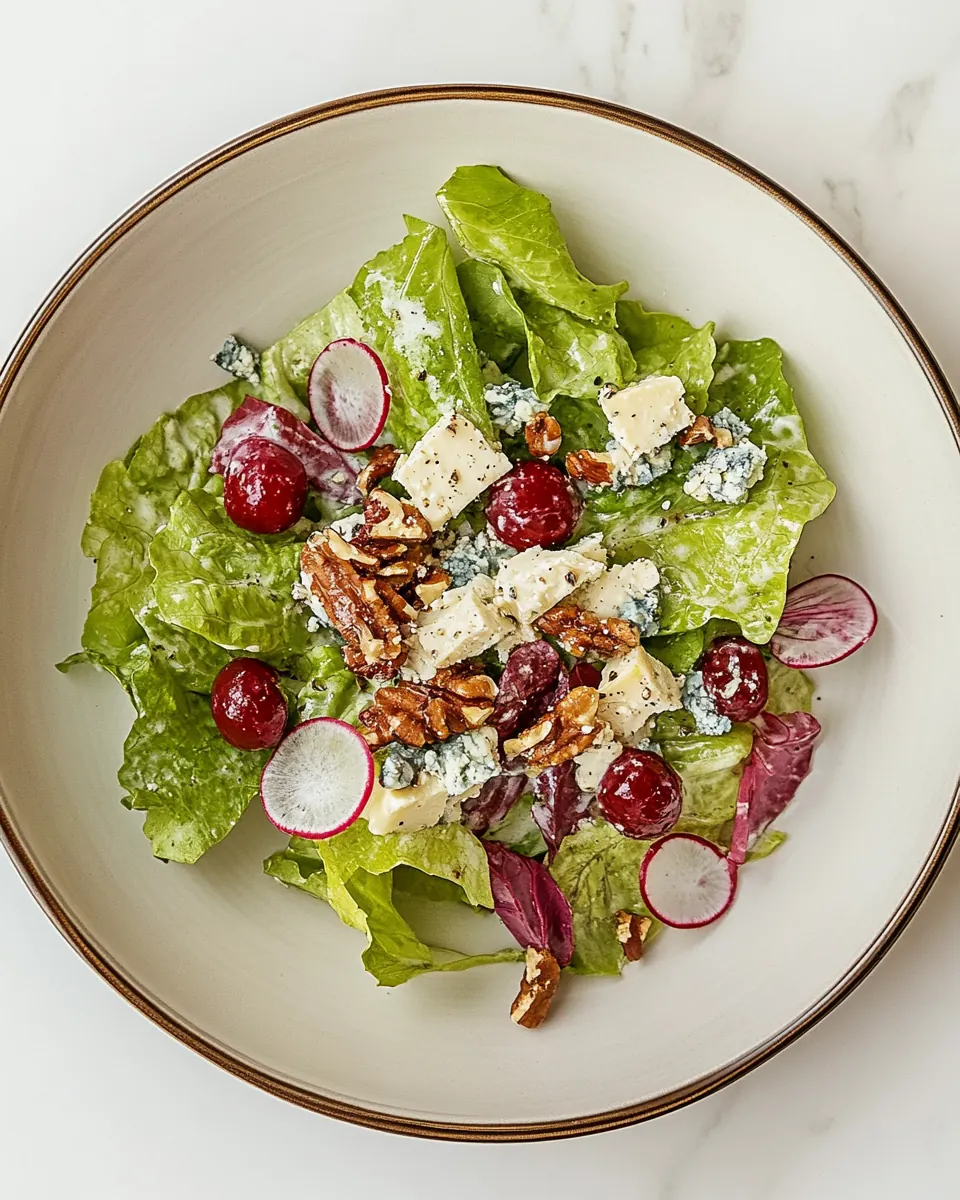
Blue Cheese Salad
Blue Cheese Salad has been my quick answer on busy weeknights when I want something bright, crunchy, and a little bit indulgent.
I first tossed together this combination on a summer evening when the farmers market had the sweetest cherry tomatoes and a neighbor sent over walnuts from her tree. The mix of crisp romaine lettuce, the tang from blue cheese, and the soft acidity of balsamic vinegar felt like a tiny celebration, simple but layered. Over time I’ve learned small touches matter, like toasting the walnut halves until they bloom with aroma, and taking care to finely dice the red onion so you get a hint of bite without overpowering each forkful. I still remember serving it to a friend who declared it the best salad they’d had in ages, which is when I knew this recipe deserved a permanent spot in my rotation.
What I love is how flexible it is. You can make it in minutes, and it travels well to picnics if you keep the dressing separate until serving. I often double the dressing because it clings so nicely to the leaves, and I like the contrast when the cherry tomatoes burst with juice. This salad is one of those reliably pleasing dishes that looks elegant on the table, yet is forgiving to make. I hope you find the same comfort and ease in it as I do, whether you whip it up for a casual lunch or a light dinner shared with friends.
Recipe Snapshot
11 mins
10 mins
1 mins
Easy
250 kcal
American
Gluten-Free, Keto
Salads
Skillet, Large bowl, Small bowl, Whisk
What We Adore About This Blue Cheese Salad
Bold, Balanced Flavors
I keep coming back to how the strong, tangy character of blue cheese balances the sweet acidity of balsamic vinegar and the mild freshness of romaine lettuce. The contrast is exciting, and I love that each bite offers something different without feeling muddled.
Texture That Keeps You Interested
The crunch from toasted walnut halves against soft blue cheese crumbles and juicy cherry tomatoes makes every forkful engaging. I intentionally toast the walnut halves to add warmth and a slight bitterness that plays off the creamy cheese.
Speed and Simplicity
This recipe is a go to when time is short. With a few strategic steps, you can assemble everything in under 15 minutes. I appreciate recipes that respect my schedule while still delivering vibrant results.
Versatility on the Table
I use this salad as a starter, a light main, or a side for grilled vegetables. Because it travels well, I often bring it to potlucks and keep the dressing separate until the last minute so the leaves stay crisp.
Approachable Ingredients
Everything here is available year round, and you do not need specialty items to make it shine. The simple combination of olive oil, balsamic vinegar, and a touch of Dijon mustard pulls the flavors together in an elegant way.
Key Ingredients for Blue Cheese Salad
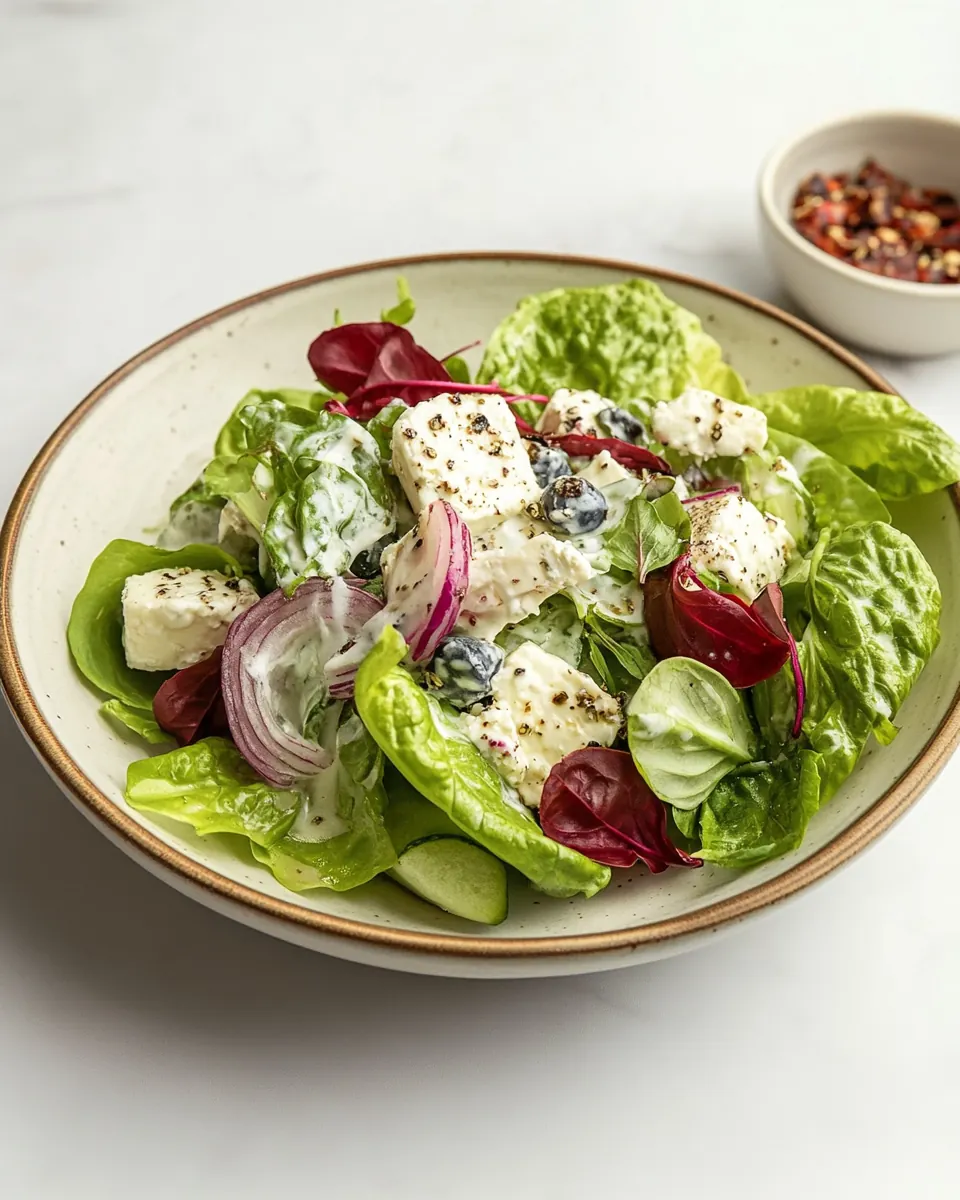
These ingredients work in harmony to create a salad that is both texturally interesting and flavor forward. The key players are the crisp greens, the creamy, pungent blue cheese, crunchy toasted walnut halves, and a simple vinaigrette that ties it all together. Together they balance sweet, salty, creamy, and acidic notes so every bite feels composed and satisfying.
- 1/4 cup walnut halves: Toast the walnut halves lightly to deepen their nutty flavor and add a crunchy contrast to the salad; cool before tossing to retain crispness. Chop or leave whole depending on desired texture and distribute evenly for balanced bites.
- 1 head romaine lettuce roughly chopped: Chop romaine lettuce roughly to create a crisp, sturdy base that holds dressing without becoming soggy; remove any wilted outer leaves first. Layer chopped leaves to provide volume and a refreshing, mild backbone for the bold flavors.
- 3/4 cup cherry tomatoes halved: Halve cherry tomatoes to release a burst of sweet, acidic juices that brighten the overall salad profile; spread evenly to ensure each forkful has a pop of freshness. Choose ripe tomatoes for best flavor and firm texture.
- 1/3 cup red onion finely diced: Finely dice red onion to introduce a sharp, slightly sweet bite that contrasts creamy and rich elements; soak briefly in cold water if a milder flavor is preferred. Distribute sparingly so the onion complements rather than overpowers.
- 1/2 cup crumbled blue cheese: Crumble blue cheese to add intense, tangy creaminess and salty depth that anchors the salad’s flavor profile; use room-temperature cheese for easier crumbling and more pronounced aroma. Scatter evenly so its boldness is balanced across the salad.
- 3 tablespoons balsamic vinegar: Whisk balsamic vinegar to provide a sweet-tart acidity that brightens and ties together the salad components; use high-quality vinegar for richer flavor. Combine with oil and mustard to form a cohesive dressing.
- 3 tablespoons olive oil: Emulsify olive oil into the dressing to bring smooth, fruity richness and to carry fat-soluble flavors; choose extra-virgin for pronounced taste. Drizzle gradually while whisking to achieve a glossy, stable emulsion.
- 1 1/2 teaspoons Dijon mustard: Incorporate Dijon mustard to stabilize the dressing while adding a subtle tangy, pungent note that enhances depth; whisk thoroughly to integrate with oil and vinegar. Adjust quantity to balance sharpness with other flavors.
- Salt and freshly ground black pepper to taste: Season with salt and freshly ground black pepper to heighten and balance flavors across the salad; taste and adjust sparingly to avoid overpowering delicate ingredients. Grind pepper freshly for optimal aroma.
How to Cook Blue Cheese Salad
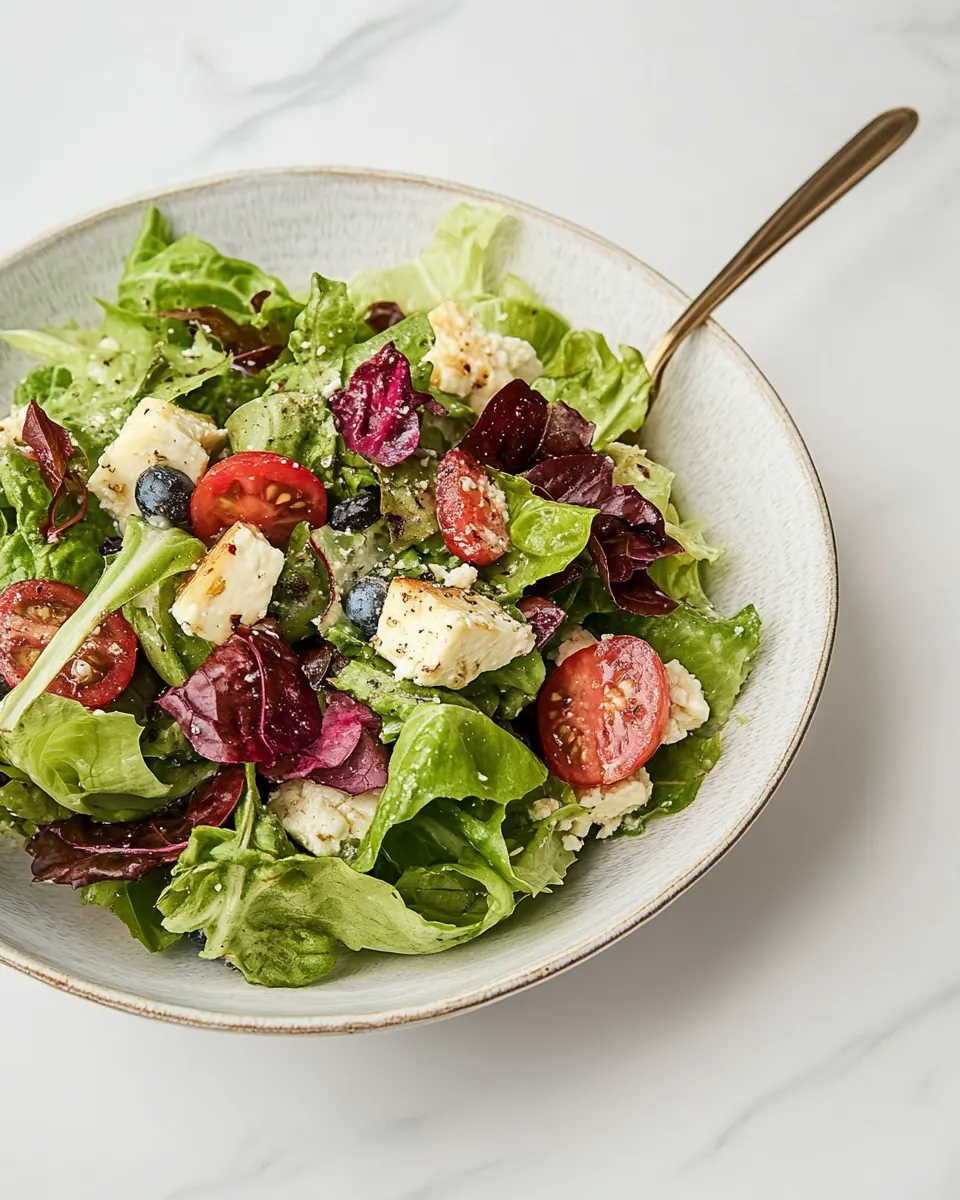
This is an effortless assembly with a few small techniques that make a big difference. Below I walk through each action with sensory cues and troubleshooting tips so you can nail the texture and balance. Follow along and trust your senses as you go.
- Toast the walnut halves in a dry skillet over medium heat until fragrant and lightly browned, about 3-5 minutes.: As the nuts warm, you will smell a toasty, slightly sweet aroma and see their surface take on a deeper, golden brown color; this signals the oils have released and the flavor has intensified. Keep the skillet at medium so they do not scorch, and stir frequently so each piece browns evenly. Listen for a low crackle when moisture leaves the nuts, and remove them the moment they turn golden to prevent bitterness. If you leave them too long they will burn, which produces an acrid taste that cannot be rescued. Let them cool on a plate before adding to the salad so they stay crisp.
- In a large bowl, combine the lettuce, tomatoes, onion, toasted walnuts, and blue cheese crumbles.: When combining, notice the contrast of textures, from the crispness of the romaine lettuce to the creamy patches of blue cheese and the crunchy walnut halves . Toss gently so the leaves do not bruise and the tomatoes do not release all their juices prematurely. A gentle lift and fold motion helps distribute ingredients without mashing the tomatoes. A common mistake is over tossing, which wilts the lettuce and mutes the crisp mouthfeel you want. Aim for an even scatter of components so every portion has a balanced bite.
- In a small bowl, whisk together balsamic vinegar, olive oil, Dijon mustard, salt, and pepper. Adjust seasonings to taste.: You will see the vinaigrette come together into a glossy emulsion; the mustard acts as a binder so the oil and vinegar do not separate immediately. Whisk until the dressing slightly thickens and looks cohesive, then taste for balance. The dressing should be bright and tangy with a silky finish, not overly sharp. If it tastes too acidic add a whisper more olive oil , but if it seems flat, add a dot more balsamic vinegar or a pinch of salt. Over seasoning at this stage can make the salad too salty, especially once the blue cheese is mixed in.
- Drizzle the dressing over the salad or toss gently to combine. Serve immediately.: After dressing, the salad should glisten with a light sheen, each leaf coated but not soaked. Use a gentle tossing motion so the blue cheese crumbles disperse without breaking down completely. Watch for visual cues like a slight shine on the leaves and the vinaigrette clinging to the tomato skins. If the salad looks watery, you may have used too much dressing, so reserve some and add gradually. Serve immediately to preserve the toasted crunch of the walnut halves and the crispness of the romaine lettuce .
How to Switch It Up
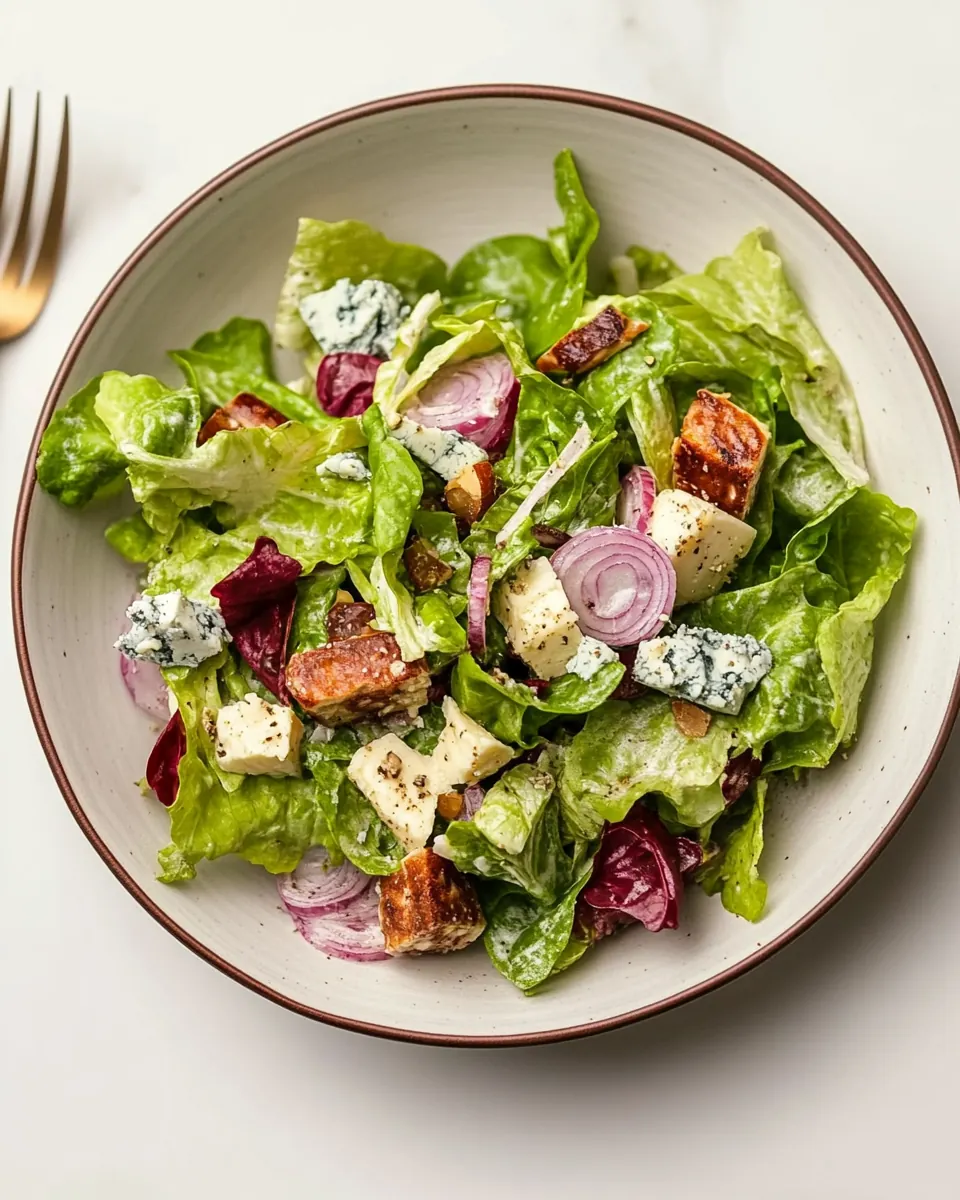
Small swaps or additions can refresh the salad while keeping its core personality. Below are practical, tested variations and ideas to adapt the salad to different occasions and flavor preferences.
- Swap the nuts Use toasted walnuts for their buttery bitterness, or substitute toasted almonds for a milder crunch, keeping the same toasting technique so you still get that warm aroma.
- Adjust the cheese intensity If you prefer less pungency, use a milder blue or reduce the blue cheese amount; crumble it finely so flavor distributes evenly without overwhelming any single bite.
- Make it heartier Add more cherry tomatoes or a larger head of romaine lettuce to stretch servings and increase volume for a main course portion.
- Dressing variations Swap a portion of the balsamic vinegar for lemon juice for a brighter, lighter dressing while keeping the emulsifying role of the Dijon mustard.
- Prep ahead Keep the dressing and toasted walnut halves in separate containers and combine just before serving to maintain texture and freshness.
What to Serve Alongside Blue Cheese Salad
This salad pairs easily with many dishes and fits multiple occasions from casual lunches to small dinner gatherings. Below are thoughtful serving suggestions and pairing ideas to complement the salad’s bold flavors.
- Light mains Serve the salad as a companion to grilled fish or roasted vegetables for a balanced plate that highlights fresh textures.
- Weekend lunches Pair with crusty bread and a simple bean salad for a relaxed midday meal that feels satisfying without being heavy.
- Seasonal occasions I like this on spring and summer tables when tomatoes are sweetest, but it also works in cooler months using greenhouse tomatoes or roasted alternatives.
- Storage tips Keep the dressing separate and store the salad in an airtight container for up to one day; add the toasted walnut halves just before serving to preserve crunch.
- Entertaining Present the salad in a large bowl and serve dressing on the side so guests can control how dressed they want their portions.
FAQ
Conclusion
This Blue Cheese Salad stands out because it balances bold, creamy cheese with crisp greens, toasted nuts, and a bright vinaigrette. Give it a try when you want a quick, flavorful dish that feels both elegant and unfussy. I hope it becomes a reliable favorite in your repertoire, whether for weeknight dinners or casual gatherings.
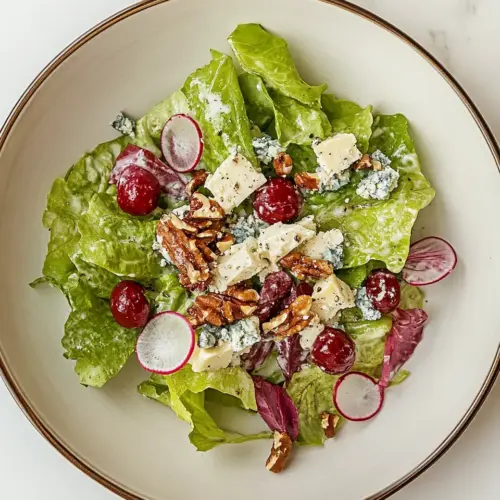
Blue Cheese Salad
Equipment
- Skillet
- Large Bowl
- Small Bowl
- Whisk
Ingredients
- 1/4 cup walnut halves Toast the walnut halves lightly to deepen their nutty flavor and add a crunchy contrast to the salad; cool before tossing to retain crispness. Chop or leave whole depending on desired texture and distribute evenly for balanced bites.
- 1 head romaine lettuce roughly chopped Chop romaine lettuce roughly to create a crisp, sturdy base that holds dressing without becoming soggy; remove any wilted outer leaves first. Layer chopped leaves to provide volume and a refreshing, mild backbone for the bold flavors.
- 3/4 cup cherry tomatoes halved Halve cherry tomatoes to release a burst of sweet, acidic juices that brighten the overall salad profile; spread evenly to ensure each forkful has a pop of freshness. Choose ripe tomatoes for best flavor and firm texture.
- 1/3 cup red onion finely diced Finely dice red onion to introduce a sharp, slightly sweet bite that contrasts creamy and rich elements; soak briefly in cold water if a milder flavor is preferred. Distribute sparingly so the onion complements rather than overpowers.
- 1/2 cup crumbled blue cheese Crumble blue cheese to add intense, tangy creaminess and salty depth that anchors the salad’s flavor profile; use room-temperature cheese for easier crumbling and more pronounced aroma. Scatter evenly so its boldness is balanced across the salad.
- 3 tablespoons balsamic vinegar Whisk balsamic vinegar to provide a sweet-tart acidity that brightens and ties together the salad components; use high-quality vinegar for richer flavor. Combine with oil and mustard to form a cohesive dressing.
- 3 tablespoons olive oil Emulsify olive oil into the dressing to bring smooth, fruity richness and to carry fat-soluble flavors; choose extra-virgin for pronounced taste. Drizzle gradually while whisking to achieve a glossy, stable emulsion.
- 1 1/2 teaspoons Dijon mustard Incorporate Dijon mustard to stabilize the dressing while adding a subtle tangy, pungent note that enhances depth; whisk thoroughly to integrate with oil and vinegar. Adjust quantity to balance sharpness with other flavors.
- Salt and freshly ground black pepper to taste Season with salt and freshly ground black pepper to heighten and balance flavors across the salad; taste and adjust sparingly to avoid overpowering delicate ingredients. Grind pepper freshly for optimal aroma.
Instructions
- Toast the walnut halves in a dry skillet over medium heat until fragrant and lightly browned, about 3-5 minutes.: As the nuts warm, you will smell a toasty, slightly sweet aroma and see their surface take on a deeper, golden brown color; this signals the oils have released and the flavor has intensified. Keep the skillet at medium so they do not scorch, and stir frequently so each piece browns evenly. Listen for a low crackle when moisture leaves the nuts, and remove them the moment they turn golden to prevent bitterness. If you leave them too long they will burn, which produces an acrid taste that cannot be rescued. Let them cool on a plate before adding to the salad so they stay crisp.
- In a large bowl, combine the lettuce, tomatoes, onion, toasted walnuts, and blue cheese crumbles.: When combining, notice the contrast of textures, from the crispness of the romaine lettuce to the creamy patches of blue cheese and the crunchy walnut halves . Toss gently so the leaves do not bruise and the tomatoes do not release all their juices prematurely. A gentle lift and fold motion helps distribute ingredients without mashing the tomatoes. A common mistake is over tossing, which wilts the lettuce and mutes the crisp mouthfeel you want. Aim for an even scatter of components so every portion has a balanced bite.
- In a small bowl, whisk together balsamic vinegar, olive oil, Dijon mustard, salt, and pepper. Adjust seasonings to taste.: You will see the vinaigrette come together into a glossy emulsion; the mustard acts as a binder so the oil and vinegar do not separate immediately. Whisk until the dressing slightly thickens and looks cohesive, then taste for balance. The dressing should be bright and tangy with a silky finish, not overly sharp. If it tastes too acidic add a whisper more olive oil , but if it seems flat, add a dot more balsamic vinegar or a pinch of salt. Over seasoning at this stage can make the salad too salty, especially once the blue cheese is mixed in.
- Drizzle the dressing over the salad or toss gently to combine. Serve immediately.: After dressing, the salad should glisten with a light sheen, each leaf coated but not soaked. Use a gentle tossing motion so the blue cheese crumbles disperse without breaking down completely. Watch for visual cues like a slight shine on the leaves and the vinaigrette clinging to the tomato skins. If the salad looks watery, you may have used too much dressing, so reserve some and add gradually. Serve immediately to preserve the toasted crunch of the walnut halves and the crispness of the romaine lettuce .
Notes
- Swap the nuts Use toasted walnuts for their buttery bitterness, or substitute toasted almonds for a milder crunch, keeping the same toasting technique so you still get that warm aroma.
- Adjust the cheese intensity If you prefer less pungency, use a milder blue or reduce the blue cheese amount; crumble it finely so flavor distributes evenly without overwhelming any single bite.
- Make it heartier Add more cherry tomatoes or a larger head of romaine lettuce to stretch servings and increase volume for a main course portion.
- Dressing variations Swap a portion of the balsamic vinegar for lemon juice for a brighter, lighter dressing while keeping the emulsifying role of the Dijon mustard.
- Prep ahead Keep the dressing and toasted walnut halves in separate containers and combine just before serving to maintain texture and freshness.
