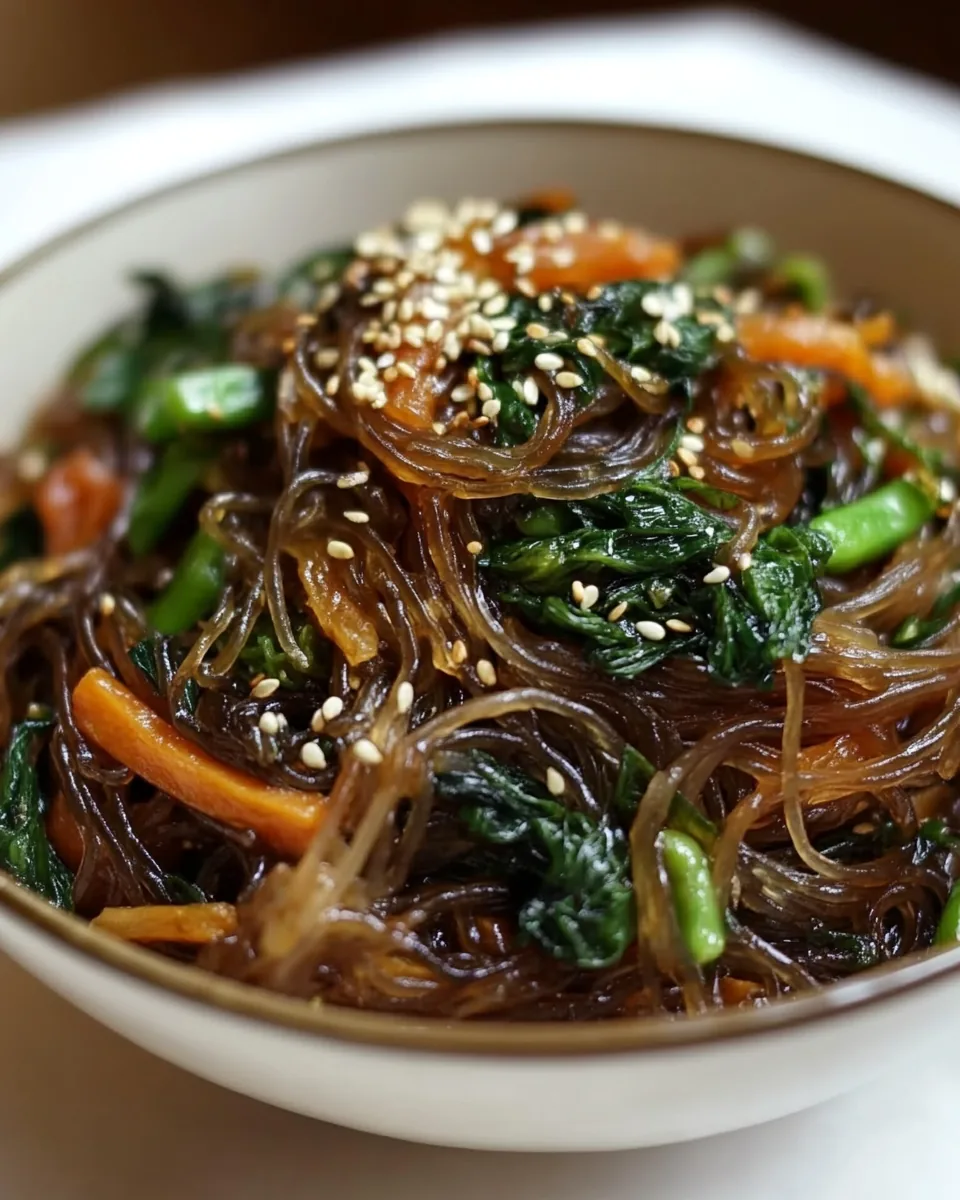
Vegetarian Korean Japchae Noodle Recipe
Every time I prepare Vegetarian Korean Japchae Noodle Recipe, I’m transported to a bustling Korean market filled with the enchanting aromas of sizzling vegetables and savory sauces. This dish has a special place in my heart; it was one of the first meals I learned to cook by watching my grandmother in her kitchen. The way she tossed the vibrant ingredients together, creating a colorful masterpiece, inspired me to recreate it. Japchae, with its chewy glass noodles and fresh veggies, is not just a meal; it’s a celebration of flavors and textures. Whether you’re gathering friends for a cozy dinner or preparing a delightful weeknight meal, Vegetarian Korean Japchae Noodle Recipe is sure to impress. It’s quick, healthy, and absolutely delicious, making it perfect for any occasion.
Recipe Snapshot
25 mins
15 mins
10 mins
Medium
320 kcal
8 g
Paleo, Vegan, Gluten-Free
7 g
Wooden Spoon, Skillet, Chef’s Knife, Whisk, Baking Sheet, Cutting Board, Large Pot
Why You Need This Vegetarian Korean Japchae Noodle Recipe
1. A Flavorful Harmony
One of the things I love most about Vegetarian Korean Japchae Noodle Recipe is the harmony of flavors. Each ingredient shines while contributing to a unified taste that’s hard to beat. The chewy glass noodles soak up the sauce, while the crisp vegetables add a refreshing crunch.
2. Nutrient-Packed Goodness
This dish is loaded with healthy ingredients. The sweet potatoes provide carbohydrates for energy, while the leafy greens are rich in vitamins and minerals. It’s a colorful plate that not only looks good but also nourishes the body.
3. Quick and Easy
With busy schedules, we often struggle to find time for cooking. That’s why Vegetarian Korean Japchae Noodle Recipe is a go-to for me. It comes together in under thirty minutes, making it perfect for those nights when you want a homemade meal without too much hassle.
4. Versatility is Key
Another reason I adore this dish is its adaptability. You can easily swap out ingredients according to what you have on hand or your dietary preferences. Whether you want to add more vegetables or try different protein sources, Japchae allows for creativity.
5. Perfect for Meal Prep
If you’re someone who loves to meal prep, this recipe is ideal. It holds up well in the fridge, and the flavors deepen over time, making leftovers even more delicious.
6. A Dish for Everyone
Finally, Vegetarian Korean Japchae Noodle Recipe caters to various dietary needs. It’s naturally vegetarian and can also be made gluten-free by using rice noodles or another alternative. This makes it a perfect dish for gatherings, ensuring everyone can enjoy it.
What to Gather for Vegetarian Korean Japchae Noodle Recipe
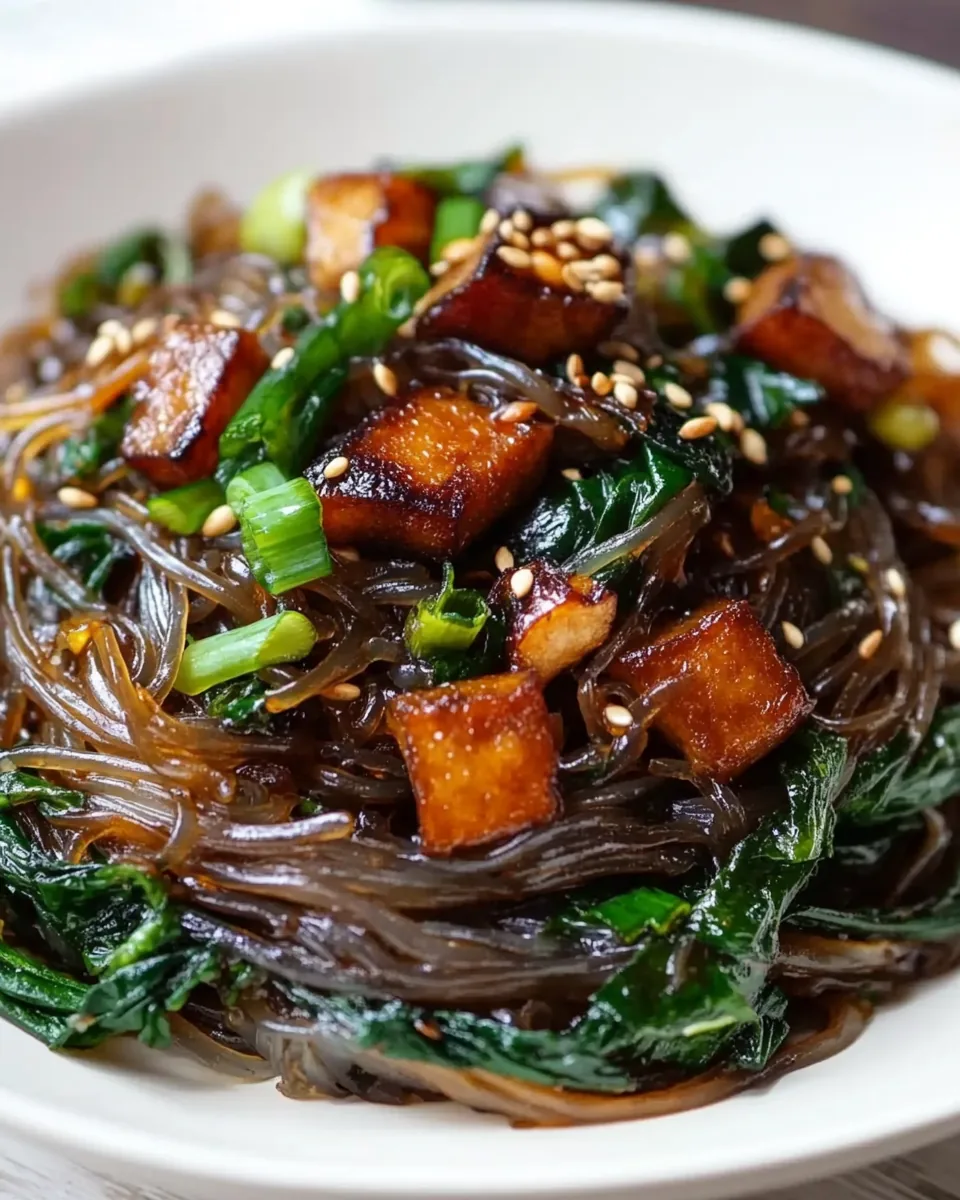
The ingredients for Vegetarian Korean Japchae Noodle Recipe come together beautifully, each playing its unique role in creating this dish. The key players include chewy glass noodles made from sweet potato, vibrant greens, and a savory sauce that ties everything together. These ingredients not only complement each other in flavor but also in texture, resulting in a satisfying meal that’s as enjoyable to eat as it is to make.
- 6 oz dried Korean glass noodles (sweet potato): These noodles are the star of the dish, offering a chewy texture that absorbs the flavors of the sauce beautifully.
- 1 medium sweet potato: Sweet potatoes add a subtle sweetness and are packed with nutrients.
- 4 big handfuls kale and swiss chard: These leafy greens contribute vitamins and a lovely color to the dish.
- 1 onion: Onions bring a sweet and savory flavor that enhances the overall taste.
- 1 stalk green onion: Green onions add a fresh, mild onion flavor and a nice pop of color.
- 3-4 cloves garlic: Garlic brings a robust flavor that elevates the entire dish.
- 1/2 cup soy sauce: This sauce adds depth and umami flavor, crucial for a delicious Japchae.
- 2 tablespoons brown sugar: Brown sugar balances the saltiness of the soy sauce with a hint of sweetness.
- 1 tablespoon sesame oil: This oil adds a nutty flavor that enhances the dish’s overall appeal.
- 1 tablespoon roasted sesame seeds: Sesame seeds provide a delightful crunch and nutty taste for garnish.
- 1 tablespoon cooking oil: Used for stir-frying, it helps achieve a great texture in the vegetables.
Step by Step Instructions for Vegetarian Korean Japchae Noodle Recipe
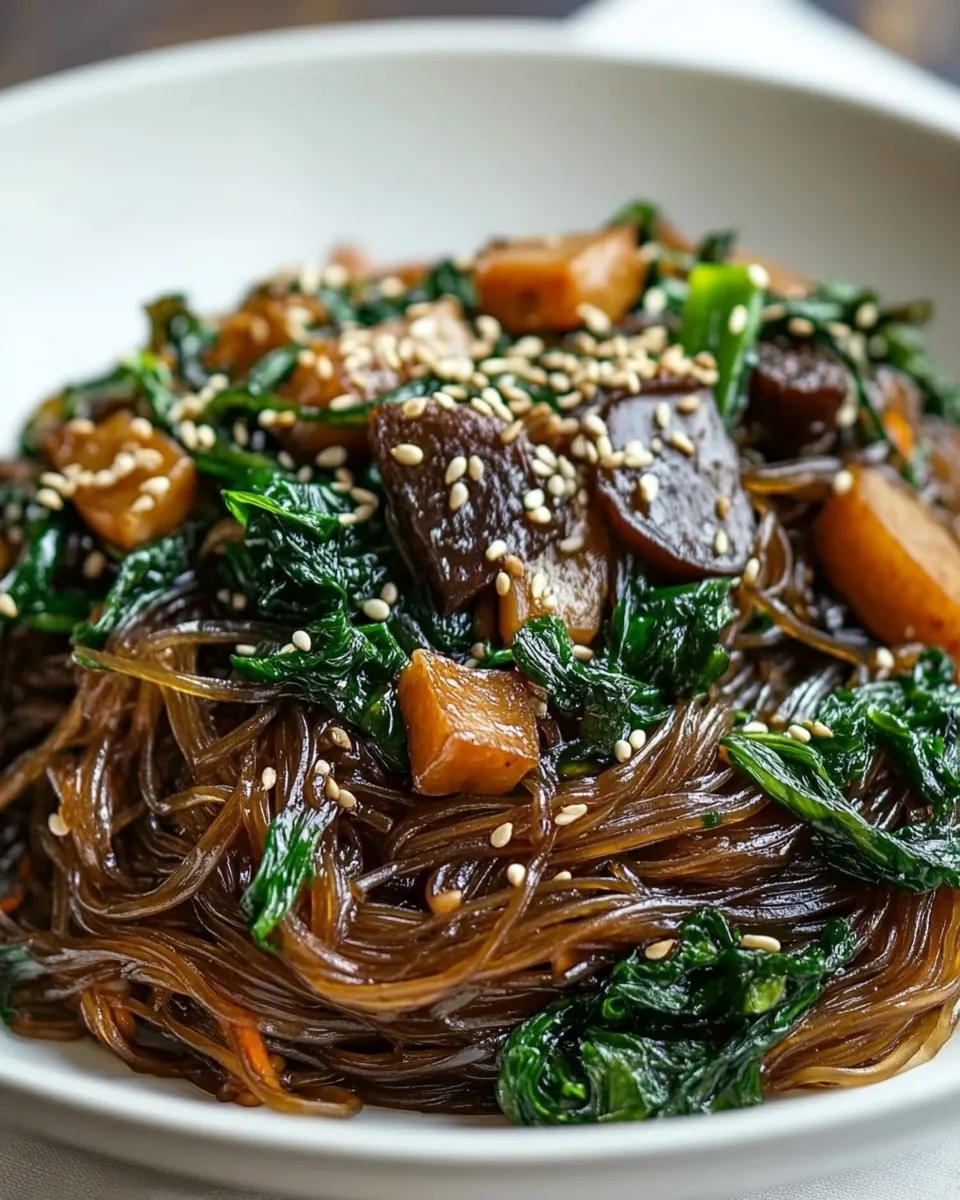
Making Vegetarian Korean Japchae Noodle Recipe is a straightforward and enjoyable process. Each step is designed to maximize the flavor and texture of the ingredients, ensuring a delicious result. Let’s dive into the process!
- Start by boiling a pot of water (about 2 quarts). Once it’s boiling, turn off the heat and add in the glass noodles. Let them sit for about ten minutes to soften.
- While the noodles are soaking, prepare the vegetables. For the kale and swiss chard, fold the leaves in half, tear away the tough stem, and cut the leafy parts into bite-sized pieces.
- Next, dice the sweet potato into half-inch cubes, as the smaller you cut them, the quicker they’ll cook.
- Slice the onion into thin strips to ensure they cook evenly and quickly.
- Chop the green onion finely and set aside to add later for a fresh flavor.
- Finely mince the garlic, which will lend a fragrant aroma to the dish.
- In a bowl, whisk together the soy sauce, brown sugar, and sesame oil until the sugar has dissolved. This will be your savory sauce.
- Once ten minutes have passed for the noodles, drain them carefully and set aside.
- Heat a wok over medium heat and add the cooking oil. Once hot, add in the sweet potatoes and cook for about three minutes on each side until they turn lightly browned and are almost cooked through.
- Increase the heat to medium-high and add the onions. Stir-fry them for around two minutes until they become translucent.
- Add the minced garlic and chopped green onion. Toss everything in the wok and cook until fragrant, about one minute.
- Next, add the leafy vegetables to the mix. Using tongs, toss them well and cook for about one and a half minutes until they begin to wilt.
- Finally, add in the prepared noodles and pour your sauce over everything. Toss to combine, ensuring all ingredients are well-coated. Finish off with a sprinkle of sesame seeds for garnish.
Things Worth Knowing
- Cooking noodles: It’s important to not overcook the glass noodles. They should be chewy but not mushy, so keep an eye on them while they soak.
- Vegetable variations: Feel free to swap in other vegetables like bell peppers, mushrooms, or carrots based on your preferences or seasonal availability.
- Stir-frying technique: Make sure your wok or pan is hot before adding oil to achieve a nice sear on the sweet potatoes and vegetables.
- Storage tips: Leftovers can be stored in an airtight container in the fridge for up to three days. The flavors will deepen as it sits.
Tips and Variations
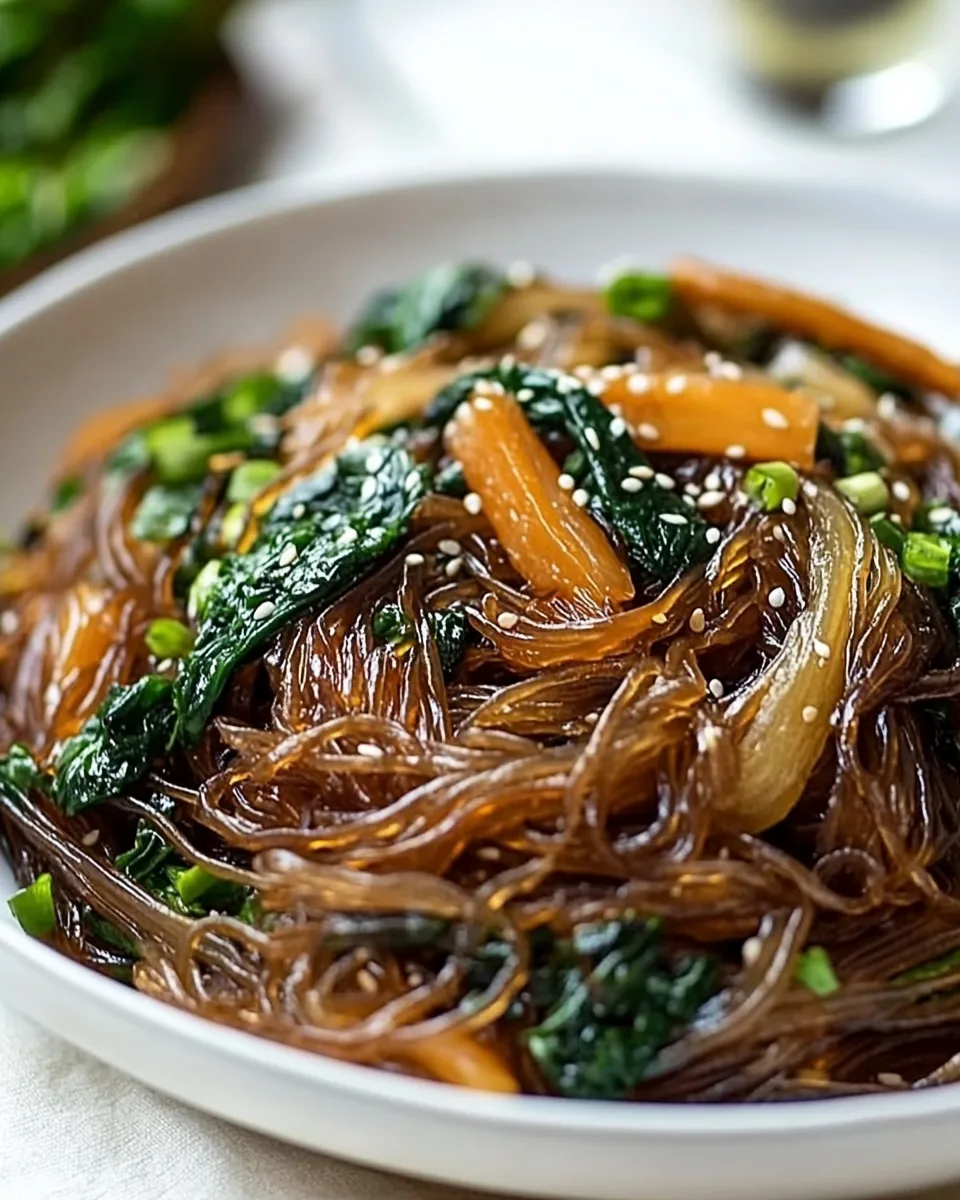
Creating the perfect Vegetarian Korean Japchae Noodle Recipe can be enhanced by a few smart tips. Here are some suggestions to keep in mind:
- Storage: Leftover Japchae can be stored in a sealed container in the refrigerator for up to three days. Reheat it in a skillet over medium heat to restore some of the original texture.
- Freezing: While it’s best enjoyed fresh, you can freeze cooked Japchae for up to one month. Thaw in the fridge overnight before reheating.
- Pairing: Serve your Japchae as a main dish or as a side alongside other Korean dishes like kimchi or bulgogi.
- Customizations: Add your favorite protein, such as tofu or tempeh, for a heartier meal.
- Garnish: Top with additional sesame seeds or even sliced chili for a spicy kick.
Serve This Vegetarian Korean Japchae Noodle Recipe With
When it comes to serving Vegetarian Korean Japchae Noodle Recipe, the options are vast and varied. Here are some ideas:
- Kimchi: A classic Korean side that adds a spicy and tangy contrast to the sweet noodles.
- Rice: Serve Japchae over a bed of steamed rice for a heartier meal.
- Salad: A simple cucumber salad drizzled with sesame oil complements the warmth of the noodle dish.
- Korean BBQ: It pairs wonderfully with grilled vegetables or meats if you have non-vegetarian guests.
- Lunchboxes: The leftovers make for a fantastic lunch option, easily packed and enjoyed at work or school.
- Seasonal touches: Consider adding seasonal vegetables, such as zucchini in summer or root vegetables in winter, to keep the dish fresh and exciting.
FAQ
Conclusion
The Vegetarian Korean Japchae Noodle Recipe is a delightful blend of textures and flavors that makes it a standout dish in any meal lineup. With its vibrant colors and wholesome ingredients, it’s perfect for any occasion, be it a casual dinner or a festive gathering. I encourage you to give it a try and experience the joy it brings to your table. You won’t regret making this delicious and nutritious meal!
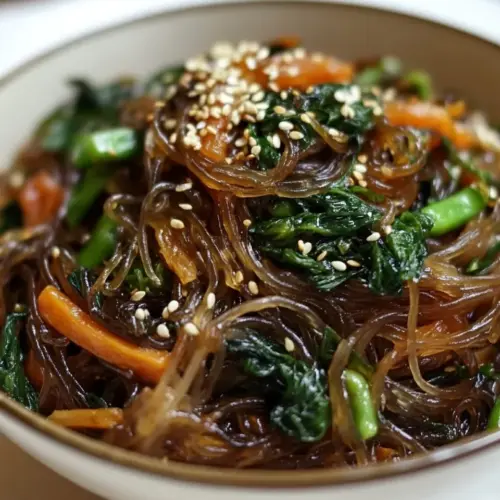
Vegetarian Korean Japchae Noodle Recipe
Equipment
- Wooden Spoon
- Skillet
- Chef's Knife
- Whisk
- Baking Sheet
- Cutting Board
- Large Pot
Ingredients
- 6 oz dried Korean glass noodles sweet potato
- 1 medium sweet potato
- 4 big handfuls kale and swiss chard
- 1 medium onion
- 1 stalk green onion
- 3-4 cloves garlic
- 1/2 cup soy sauce
- 2 tablespoons brown sugar
- 1 tablespoon sesame oil
- 1 tablespoon roasted sesame seeds
- 1 tablespoon cooking oil
Instructions
- Boil a pot of water (about 2 quarts). Turn off heat and add in the glass noodles. Let sit for 10 minutes.
- Kale/Swiss Chard: Fold leaves in half, tear away the leafy part from tough stem (discard stem). Cut or tear leaves into bite sized pieces.
- Dice the sweet potatoes into 1/2" dice (the smaller you dice, the quicker it will cook).
- Onion: Slice onion into thin slices.
- Green Onion: chop.
- Finely mince the garlic.
- In bowl, whisk together soy sauce, brown sugar, and sesame oil.
- If 10 minutes have passed for the noodles, drain the noodles.
- Heat wok with cooking oil over medium heat. Add in the sweet potatoes and cook for 3 minutes each side. The sweet potatoes should be lightly browned, darker orange and just nearly cooked through.
- Turn heat to medium-high and add in the onions. Stir-fry for 2 minutes, until onions become translucent.
- Add in the garlic and green onion. Toss well and cook until fragrant, about 1 minute.
- Add in the leafy vegetables. Use tongs to toss well and cook for 1 1/2 minutes or until the vegetables are wilting.
- Add in the noodles and pour in the sauce. Toss well again to combine everything. Finish off with sesame seeds.
Notes
- Tip 1: Leftover Japchae can be stored in a sealed container in the refrigerator for up to three days. Reheat it in a skillet over medium heat to restore some of the original texture.
- Tip 2: While it’s best enjoyed fresh, you can freeze cooked Japchae for up to one month. Thaw in the fridge overnight before reheating.
- Tip 3: Serve Japchae over a bed of steamed rice for a heartier meal.
- Tip 4: Add your favorite protein, such as tofu or tempeh, for a heartier meal.
- Tip 5: Top with additional sesame seeds or even sliced chili for a spicy kick.