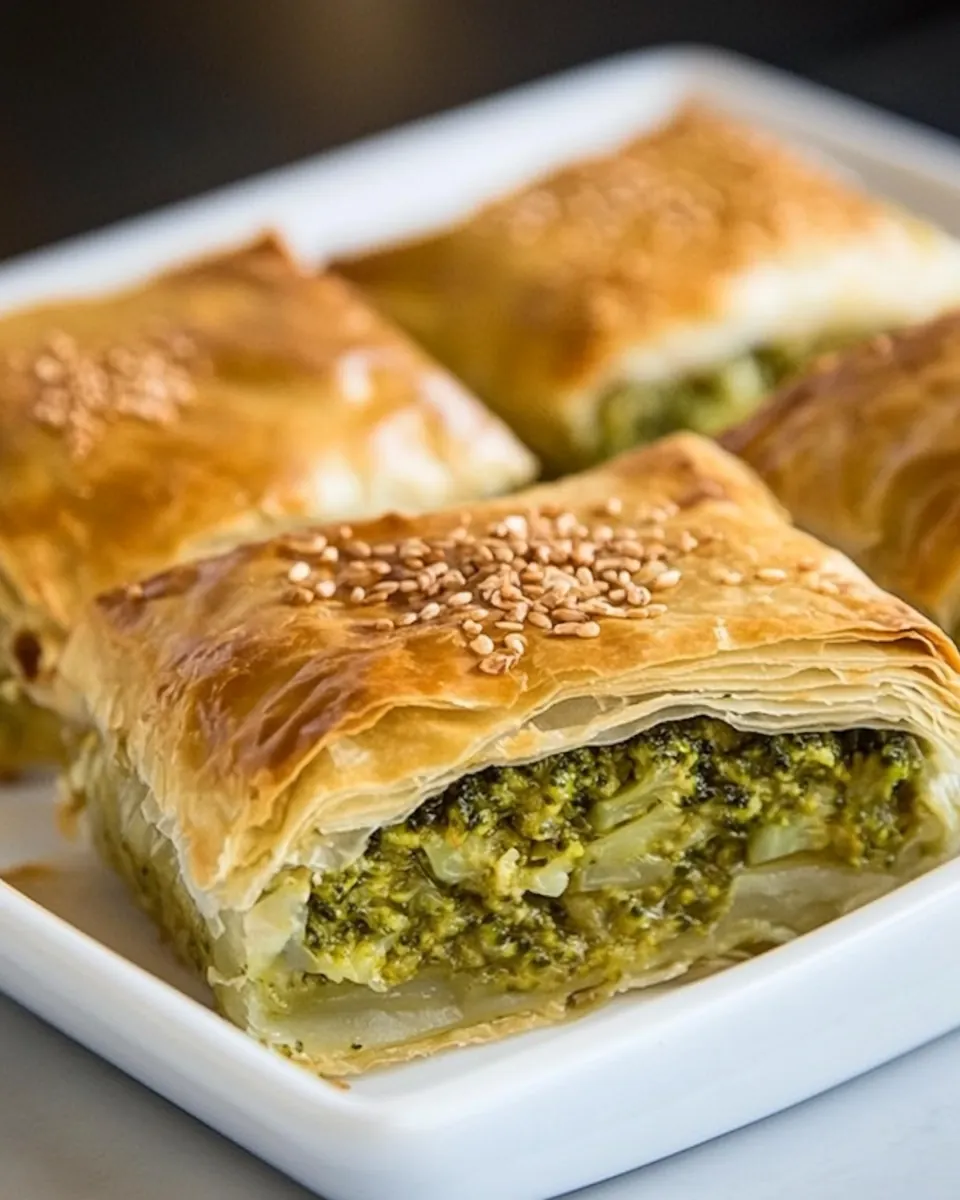
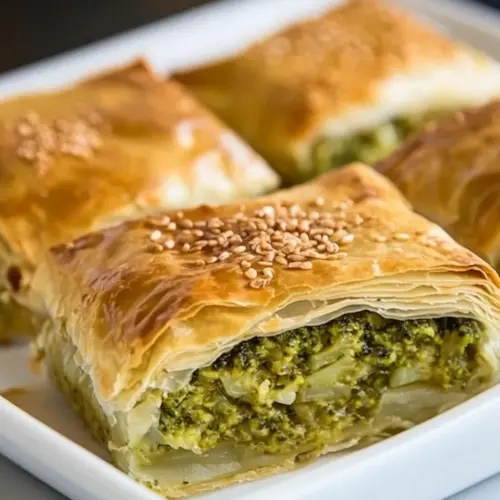
Broccoli Spanakopita
Broccoli Spanakopita is the kind of dish that sneaks into a weeknight and turns it into something cozy and celebratory at once.
I still remember the first time I made these rolls for a friend’s spring gathering, balancing a platter on my lap as people reached for the flaky parcels. The filling was verdant and bright, the scent of garlic and onion warming the room, while the feta cheese added that salty tang that made everyone pause mid-bite. I loved how the filo dough made each mouthful crisp and delicate, giving way to a soft, slightly creamy interior studded with little pieces of broccoli.
Over time I adjusted the seasoning, learning to hold back just a touch on the salt because the feta cheese can sing on its own. I also began brushing the sheets generously with butter to coax that glistening, golden exterior. This recipe became my answer when I want something simple but impressive enough to bring to a potluck, or when I want a hands on project that rewards patience with crunchy, savory perfection. Every time I make Broccoli Spanakopita, it reminds me of laughter around the table and the small, stubborn pleasures of flaky pastry and bright vegetables.
Recipe Snapshot
40 mins
20 mins
20 mins
Easy
250 kcal
Mediterranean
Keto, Gluten-Free
Appetizers
Saute pan, Oven, Baking sheet, Brush
What’s Great About This Broccoli Spanakopita
Flavor Contrast That Works
I adore the way Broccoli Spanakopita balances textures and flavors. The crisp, buttery filo dough contrasts the tender, slightly earthy broccoli and the briny pop from feta cheese. That contrast keeps every bite interesting, and it means you can serve these hot or at room temperature and they still deliver.
Flexible and Friendly for Gatherings
I’ve brought these rolls to brunches and casual suppers because they travel well. The rolls hold up on a platter, and guests can grab one or two without fuss. They also rehearse beautifully, so I often prepare extra to warm later, which is a huge advantage for hosting.
Simple Techniques, Big Reward
What I like most is how a few straightforward steps create something that looks like it took much longer. Once you master brushing the filo dough and rolling neatly, you get consistent results, and that confidence makes cooking more fun. The technique also leaves room for small adjustments, like how much feta cheese you add to tune the saltiness.
Bright, Seasonal Appeal
Because this recipe highlights green ingredients, it feels especially at home in spring, when tender broccoli is at its best. The lightness of the filling keeps the rolls from feeling heavy, so they’re perfect for an afternoon snack, a picnic, or a light lunch alongside a salad.
Kid Friendly and Vegetarian
I often make these when I want a vegetarian option that still satisfies omnivores. Kids tend to be curious about the flaky exterior and rarely resist trying a roll. The mildness of the broccoli together with the familiar comfort of buttery pastry makes them approachable for all ages.
Recipe Ingredients for Broccoli Spanakopita
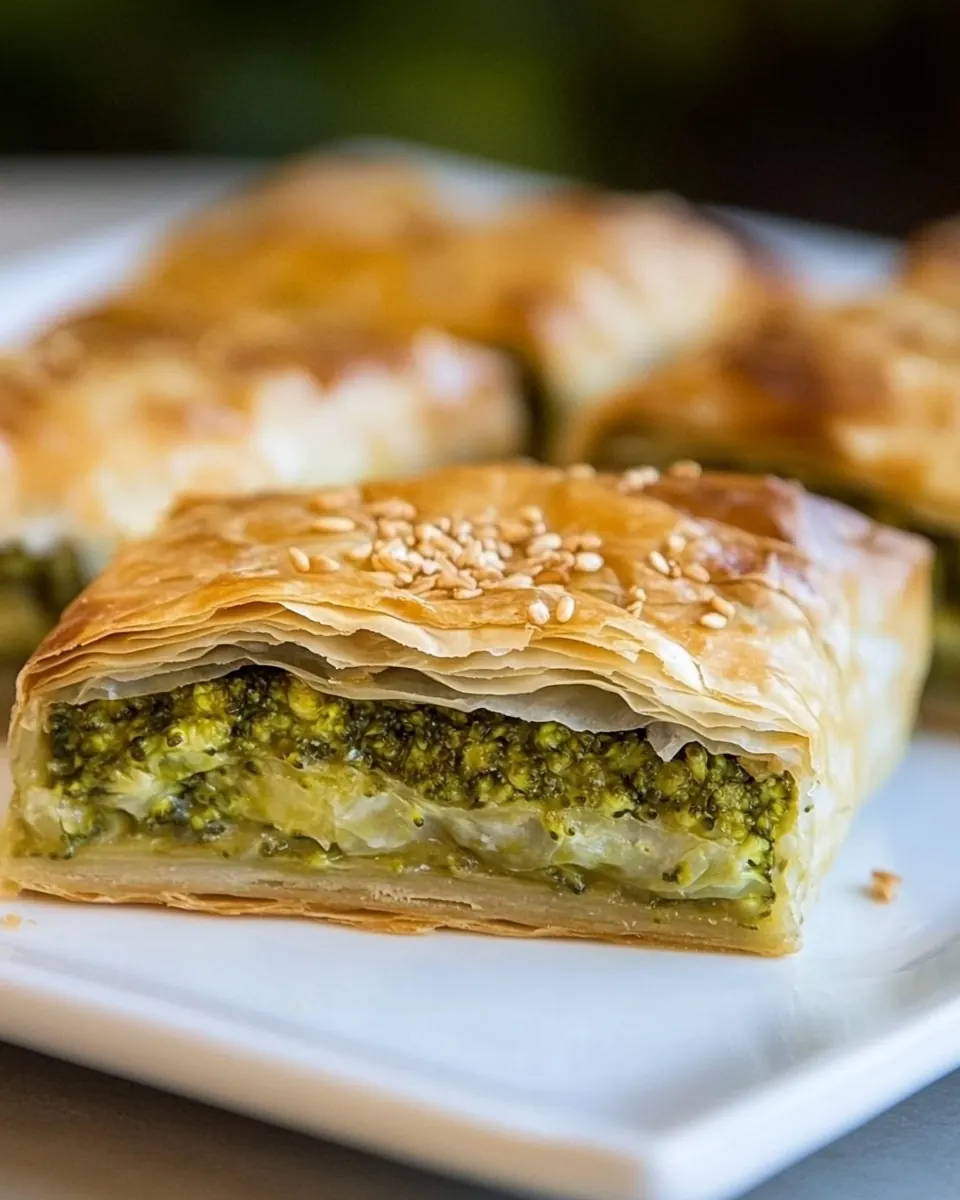
These ingredients are intentionally straightforward, each playing a clear role. The filo dough brings delicate crunch, while the broccoli offers bright vegetable body. Feta cheese provides savory, tangy depth and the egg binds the filling. Olive oil and butter layer flavor and texture so the finished rolls are golden and richly aromatic.
- 2 tablespoons olive oil: Heat and sauté other aromatics while adding a rich, fruity base flavor that helps cook and soften vegetables and filo; contributes to a golden, crisp finish when brushed on pastry edges.
- 1/2 onion, diced: Sweat and provide a sweet, savory backbone that becomes translucent and melds with garlic and broccoli; finely dicing ensures even cooking and distribution throughout the filling.
- 1 clove garlic, finely minced: Infuse and brighten the filling with a pungent, aromatic note; finely mincing allows it to release flavor quickly and evenly during sautéing.
- 1 head broccoli, finely chopped: Chop and serve as the primary vegetable component offering texture, bulk, and a slightly earthy, green flavor; finely chopping speeds cooking and helps the filling bind together.
- pinch ground nutmeg: Season and add a warm, slightly sweet, aromatic undertone that complements the greens without overpowering; use sparingly to enhance depth of flavor.
- salt and freshly ground black pepper: Season and balance flavors by enhancing natural tastes and controlling bitterness; freshly ground black pepper adds a pungent, bright bite for contrast.
- 1/2 teaspoon fresh lemon juice: Brighten and lift the filling with a touch of acidity that balances richness and cuts through the saltiness of cheese; fresh lemon juice contributes a clean, zesty note.
- 3/4 cup feta cheese: Crumble and contribute a salty, tangy, creamy element that binds with egg and seasonings to create a savory filling; feta also adds textural contrast.
- 1 egg, whisked: Bind and enrich the filling by adding structure and a silky texture that helps the filling set during baking; whisking ensures uniform distribution for consistent results.
- 20 sheets filo dough (about 1/2 package), covered with barely-damp towel: Layer and form the pastry component that provides flakiness and structure; keeping sheets covered with a barely–damp towel prevents drying and tearing while assembling.
- 4 tablespoons melted butter: Brush and create a golden, crisp finish while adding a rich, buttery flavor to the filo layers; melting ensures even application and prevents soggy spots.
Putting Together Broccoli Spanakopita
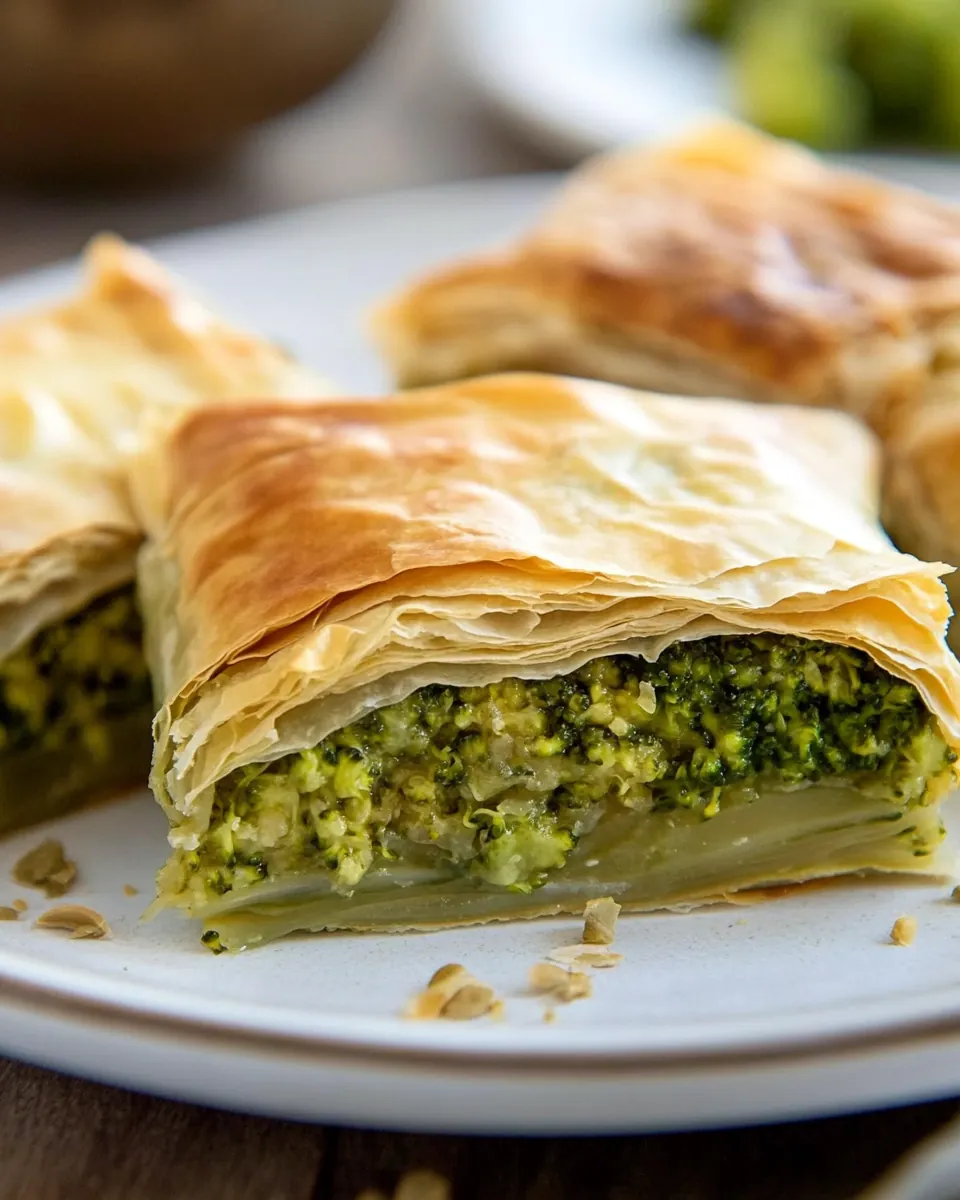
These directions turn simple ingredients into flaky, savory rolls. Follow the sequence and timing to get tender filling and crisp pastry. Work steadily with the filo dough, keeping unused sheets covered so they stay pliable.
- Heat a large saute pan over medium-high heat. Swirl in the olive oil and saute the onions until translucent. Add in the garlic and the broccoli and saute for 3 minutes, or until the broccoli is just starting to get tender but still bright green. Season with nutmeg, salt, pepper and lemon juice. Remove from heat and let cool until no longer steaming. Stir in the egg and the feta cheese.: The pan will give off a warm, savory aroma as the olive oil heats and onion softens, with the garlic releasing a nutty, fragrant note; when you add the chopped broccoli , you will hear a gentle sizzle and see the green brighten to a vivid hue which signals that the vegetable is cooking properly. The reason to stop at that tender crisp stage is to preserve texture and fresh flavor, and letting the mixture cool prevents the egg from scrambling when mixed in, which could create an uneven curd in the filling. A frequent mistake here is cooking the broccoli until mushy, which yields a watery filling and dulls the visual appeal; aim for a lively green and slight bite. When you stir in the crumbled feta cheese , notice how its salty creaminess melds with the other aromatics, and fold gently to keep the mixture light. If the pan smells acrid at any point, you likely overheated the garlic , so reduce the heat and add the broccoli promptly next time. The cool, bound filling should hold together without being wet, and that texture is what gives each roll a clean bite.
- Preheat oven to 400 F.: As the filling cools, set the oven to 400 F so it reaches a steady, high heat for crisping the tops. A hot oven is crucial because it creates rapid steam in the thin layers of filo dough , helping them puff and separate into crisp, flaky sheets while the interior sets pleasantly. If your oven does not preheat fully, the rolls can absorb more fat and become greasy instead of crisp, so allow ample time for the temperature to stabilize. You should also position a rack in the center to promote even browning. A common oversight is starting to bake before the oven is truly hot, resulting in pale, under-crisped pastry.
- Lay 1 filo sheet on clean surface. Brush completely with melted butter. Lay another sheet on top. Spoon 2 tablespoons of the broccoli filling 1" from the bottom edge, in the middle. Fold the left side of the filo sheet over, then fold the right side over. Fold the bottom edge towards to top and roll. Place on baking sheet seam side down. Brush the top with melted butter. Repeat with remaining to make 10 rolls.: Working with the filo dough is tactile and rewarding, you will feel the paper thin sheets as you lay them and the gentle resistance as you fold; brushing with warmed butter adds a glossy sheen and separates the layers so they crisp individually. Placing the filling one inch from the bottom edge helps ensure a clean roll and prevents filling leakage; folding sides in first creates a tidy, compact cylinder that bakes evenly. You will hear a faint flake of filo dough tearing if a sheet is too dry, so keep the stack covered and move briskly. If a sheet tears while rolling, patch it by overlapping another brushed sheet rather than forcing the roll, which can cause a soggy seam. As you spoon the filling, notice its texture and season it slightly if needed before rolling; consistent two tablespoon portions help all rolls finish baking at the same moment.
- Bake for 20 minutes or until tops are golden brown and crispy.: The oven will fill with buttery, toasty aromas as the filo dough browns and the filling sets; look for a deep golden color and an audible crisp when you tap a top, both signs that the pastry is done. The short, focused baking time ensures the outside becomes shatteringly crisp while the inside warms through without drying. Pulling them out too early yields pale, floppy tops, and leaving them too long risks an overly dark, brittle crust and drier filling, so check visually at about 15 minutes and then again at 20. Letting the rolls rest briefly on the baking sheet before transferring to a rack helps the interior finish setting and keeps them intact when moved. If the bottoms seem too brown, lower the rack slightly next time or reduce oven temperature by 10 F to control browning.
Tips and Tricks about Broccoli Spanakopita
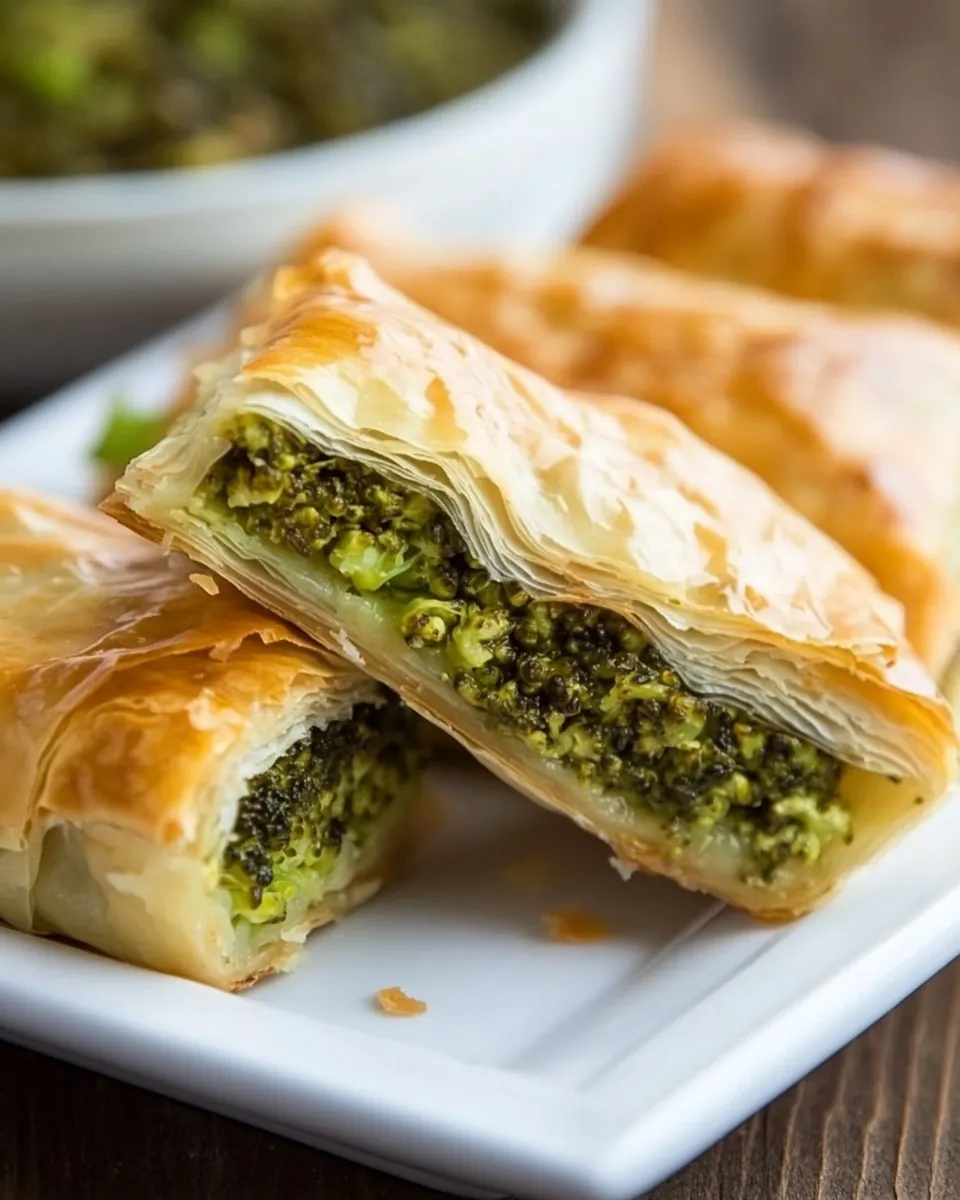
These practical tips will help you get professional results at home. Read them before you start and keep the filo dough covered as you work to maintain pliability.
- Work quickly with filo because it dries fast; keep the stack covered with a barely–damp towel to prevent cracking and tearing which can lead to uneven rolls.
- Control moisture in the filling by chopping the broccoli finely and cooking it just until tender so excess water does not make the rolls soggy during baking.
- Adjust feta saltiness by tasting the cooled filling before rolling, this helps you avoid over-salting since feta cheese can vary widely in brininess.
- Brush filo layers generously with melted butter to get crisp, golden sheets; a thin brush will produce paler, less flaky results.
- Use small, even portions of filling for consistent rolls; two tablespoons per roll ensures uniform baking and a nice ratio of filling to pastry.
What Complements This Broccoli Spanakopita
This section explores serving ideas and pairings to elevate your meal. These suggestions suit casual lunches, light dinners, and spring gatherings, and they include storage notes so you can plan ahead.
- Serve warm with a simple salad, such as a dressed leaf salad, to add freshness and a crisp counterpoint to the buttery rolls; a zippy lemon dressing echoes the splash of lemon juice in the filling and ties the plate together.
- Offer a yogurt dip flavored with herbs for dipping, its cool creaminess complements the flaky texture and salty feta cheese, making the rolls feel more indulgent and balanced.
- Pack for picnics by letting the rolls cool fully and storing them in an airtight container; they travel well and keep their texture, making them ideal for outdoor gatherings in spring.
- Reheat gently in a moderate oven to restore crispness; microwave reheating can make the pastry limp, whereas a 10 to 12 minute oven stint at a moderate temperature brings back the flaky layers.
- Plan for brunch or light dinner as these rolls work beautifully alongside roasted vegetables or a grain salad for a more substantial meal, and they shine on a buffet alongside other small plates.
- Store leftovers properly by refrigerating in a single layer if possible, with parchment between layers to preserve the crisp surface; consume within 2 to 3 days for best texture.
FAQ
Conclusion
Broccoli Spanakopita shines because it marries flaky, buttery filo dough with a bright, savory broccoli and feta cheese filling to create a snack that feels both elegant and homey. Give these rolls a try the next time you want something that travels well, reheats nicely, and disappears fast at gatherings. With a little practice handling the pastry, you will find the technique rewarding and the results consistently impressive, making this a go-to for spring entertaining and cozy nights in.
Broccoli Spanakopita
Equipment
- Sauté Pan
- Oven
- Baking Sheet
- Brush
Ingredients
- 2 tablespoons olive oil Heat and sauté other aromatics while adding a rich, fruity base flavor that helps cook and soften vegetables and filo; contributes to a golden, crisp finish when brushed on pastry edges.
- 1/2 onion, diced Sweat and provide a sweet, savory backbone that becomes translucent and melds with garlic and broccoli; finely dicing ensures even cooking and distribution throughout the filling.
- 1 clove garlic, finely minced Infuse and brighten the filling with a pungent, aromatic note; finely mincing allows it to release flavor quickly and evenly during sautéing.
- 1 head broccoli, finely chopped Chop and serve as the primary vegetable component offering texture, bulk, and a slightly earthy, green flavor; finely chopping speeds cooking and helps the filling bind together.
- pinch ground nutmeg Season and add a warm, slightly sweet, aromatic undertone that complements the greens without overpowering; use sparingly to enhance depth of flavor.
- salt and freshly ground black pepper Season and balance flavors by enhancing natural tastes and controlling bitterness; freshly ground black pepper adds a pungent, bright bite for contrast.
- 1/2 teaspoon fresh lemon juice Brighten and lift the filling with a touch of acidity that balances richness and cuts through the saltiness of cheese; fresh lemon juice contributes a clean, zesty note.
- 3/4 cup feta cheese Crumble and contribute a salty, tangy, creamy element that binds with egg and seasonings to create a savory filling; feta also adds textural contrast.
- 1 egg, whisked Bind and enrich the filling by adding structure and a silky texture that helps the filling set during baking; whisking ensures uniform distribution for consistent results.
- 20 sheets filo dough (about 1/2 package), covered with barely-damp towel Layer and form the pastry component that provides flakiness and structure; keeping sheets covered with a barely-damp towel prevents drying and tearing while assembling.
- 4 tablespoons melted butter Brush and create a golden, crisp finish while adding a rich, buttery flavor to the filo layers; melting ensures even application and prevents soggy spots.
Instructions
- Heat a large saute pan over medium-high heat. Swirl in the olive oil and saute the onions until translucent. Add in the garlic and the broccoli and saute for 3 minutes, or until the broccoli is just starting to get tender but still bright green. Season with nutmeg, salt, pepper and lemon juice. Remove from heat and let cool until no longer steaming. Stir in the egg and the feta cheese.: The pan will give off a warm, savory aroma as the olive oil heats and onion softens, with the garlic releasing a nutty, fragrant note; when you add the chopped broccoli , you will hear a gentle sizzle and see the green brighten to a vivid hue which signals that the vegetable is cooking properly. The reason to stop at that tender crisp stage is to preserve texture and fresh flavor, and letting the mixture cool prevents the egg from scrambling when mixed in, which could create an uneven curd in the filling. A frequent mistake here is cooking the broccoli until mushy, which yields a watery filling and dulls the visual appeal; aim for a lively green and slight bite. When you stir in the crumbled feta cheese , notice how its salty creaminess melds with the other aromatics, and fold gently to keep the mixture light. If the pan smells acrid at any point, you likely overheated the garlic , so reduce the heat and add the broccoli promptly next time. The cool, bound filling should hold together without being wet, and that texture is what gives each roll a clean bite.
- Preheat oven to 400 F.: As the filling cools, set the oven to 400 F so it reaches a steady, high heat for crisping the tops. A hot oven is crucial because it creates rapid steam in the thin layers of filo dough , helping them puff and separate into crisp, flaky sheets while the interior sets pleasantly. If your oven does not preheat fully, the rolls can absorb more fat and become greasy instead of crisp, so allow ample time for the temperature to stabilize. You should also position a rack in the center to promote even browning. A common oversight is starting to bake before the oven is truly hot, resulting in pale, under-crisped pastry.
- Lay 1 filo sheet on clean surface. Brush completely with melted butter. Lay another sheet on top. Spoon 2 tablespoons of the broccoli filling 1" from the bottom edge, in the middle. Fold the left side of the filo sheet over, then fold the right side over. Fold the bottom edge towards to top and roll. Place on baking sheet seam side down. Brush the top with melted butter. Repeat with remaining to make 10 rolls.: Working with the filo dough is tactile and rewarding, you will feel the paper thin sheets as you lay them and the gentle resistance as you fold; brushing with warmed butter adds a glossy sheen and separates the layers so they crisp individually. Placing the filling one inch from the bottom edge helps ensure a clean roll and prevents filling leakage; folding sides in first creates a tidy, compact cylinder that bakes evenly. You will hear a faint flake of filo dough tearing if a sheet is too dry, so keep the stack covered and move briskly. If a sheet tears while rolling, patch it by overlapping another brushed sheet rather than forcing the roll, which can cause a soggy seam. As you spoon the filling, notice its texture and season it slightly if needed before rolling; consistent two tablespoon portions help all rolls finish baking at the same moment.
- Bake for 20 minutes or until tops are golden brown and crispy.: The oven will fill with buttery, toasty aromas as the filo dough browns and the filling sets; look for a deep golden color and an audible crisp when you tap a top, both signs that the pastry is done. The short, focused baking time ensures the outside becomes shatteringly crisp while the inside warms through without drying. Pulling them out too early yields pale, floppy tops, and leaving them too long risks an overly dark, brittle crust and drier filling, so check visually at about 15 minutes and then again at 20. Letting the rolls rest briefly on the baking sheet before transferring to a rack helps the interior finish setting and keeps them intact when moved. If the bottoms seem too brown, lower the rack slightly next time or reduce oven temperature by 10 F to control browning.
Notes
- Work quickly with filo because it dries fast; keep the stack covered with a barely-damp towel to prevent cracking and tearing which can lead to uneven rolls.
- Control moisture in the filling by chopping the broccoli finely and cooking it just until tender so excess water does not make the rolls soggy during baking.
- Adjust feta saltiness by tasting the cooled filling before rolling, this helps you avoid over-salting since feta cheese can vary widely in brininess.
- Brush filo layers generously with melted butter to get crisp, golden sheets; a thin brush will produce paler, less flaky results.
- Use small, even portions of filling for consistent rolls; two tablespoons per roll ensures uniform baking and a nice ratio of filling to pastry.
